
WOMEN POWER IN SABAH
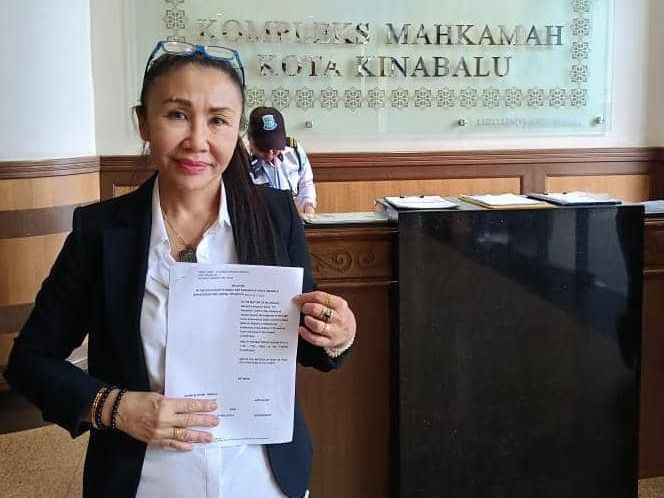
Datuk Celestina Stuel Galid’s Ruling : A Lifeline for Sabahans & the Rise of SABAHAN WOMAN POWER by marceljude.ai
In the sweltering heat of Kota Kinabalu's High Court, a seismic shift occurred on October 17, 2025, that reverberated far beyond the marble halls of justice. Datuk Celestina Stuel Galid, a self-made judge from Sabah's resilient heartland, delivered a written judgment that could redefine the state's future. Her ruling in the judicial review application brought by the Sabah Law Society (SLS) against the Federal Government wasn't just a legal victory—it was a lifeline for Sabahans, breathing life into long-forgotten promises etched in the Malaysia Agreement 1963 (MA63). For decades, Sabah has grappled with poverty rates soaring to 25.3% in 2020, districts like Kota Belud and Pitas languishing without basic infrastructure, and a sense of betrayal over unfulfilled constitutional entitlements.This judgment, rooted in Article 112C of the Federal Constitution and Section 2(1), Part IV of the Tenth Schedule, affirmed Sabah's right to 40% of net revenue from taxes collected within its borders—a share that has been withheld since 1974, coining the term "the lost years."
To grasp the gravity, one must delve into the legal machinery at play. This was no ordinary lawsuit; it was a judicial review under Order 53 of the Rules of Court 2012, wielding ancient yet potent prerogative writs to hold the mighty accountable. At its core were three key remedies: certiorari, mandamus, and declaratory relief.
Certiorari, Latin for "to be informed," is a high court's supervisory power to quash—or nullify—decisions made by inferior bodies or officials if they exceed jurisdiction, err in law, or violate natural justice. In this case, it targeted the Federal Government's 2022 Second Review Order, which Datuk Celestina deemed irrational and a breach of legitimate expectations. The government claimed an ongoing review from 1974 to 2021 but offered zero evidence—no documents, just affidavits shrouded in "confidentiality." Certiorari sliced through this veil, invalidating the order for ignoring the 48-year backlog and failing to consult Sabah, much like a judicial eraser wiping away bureaucratic sleight-of-hand.
Mandamus, meaning "we command," flips the script from quashing to compelling action. It's a writ issued when a public authority shirks a clear legal duty, forcing it to act. Here, Datuk Celestina granted an order of mandamus directing the Federal Government and Sabah state to urgently review the 40% entitlement for the lost years (1974-2021). With a ticking clock—90 days to complete the review and another 90 to forge an agreement—this wasn't optional homework; it was a constitutional imperative under Article 112D, ensuring the Federation pays up what it owes. Mandamus works like a legal cattle prod: identify the duty (review and pay), prove the refusal (48 years of inaction), and command compliance, or face contempt.
Complementing these was declaratory relief, a court's solemn pronouncement clarifying rights without mandating immediate enforcement—think of it as a legal lighthouse, guiding parties on their obligations. Datuk Celestina declared the 40% entitlement "due and payable" for each lost year, underscoring that Sabah's bargain under MA63 wasn't for paltry RM125.6 million annual grants in 2022, but a fair share to combat the poverty that has left eight of Malaysia's poorest districts in Sabah's lap. This relief affirmed the constitutional breach, setting the stage for billions in back payments and future equity, without the full force of an injunction.
The ripple effects? Prime Minister Anwar Ibrahim has pledged no appeal, vowing to address Parliament soon, while the Attorney-General's Chambers pores over the ruling. For Sabahans, it's redemption: a roadmap out of underdevelopment, where revenue fuels roads, schools, and clinics in forgotten interiors.
The Bandwagon Rush: MA63's 40% Entitlement and the Quest for a Real Roadmap
As news of the judgment spread like wildfire across Sabah's coffee shops and WhatsApp groups, politicians scrambled onto the MA63 bandwagon. State election candidates—from independents to party stalwarts—proclaimed their undying commitment to reclaiming the 40%, turning it into a rallying cry for votes. It's easy optics: who wouldn't champion "Sabah's rights" amid tales of federal neglect? Yet, beneath the slogans lies a stark truth—this isn't a theoretical debate or academic exercise. Everyone wants the glory, but few grasp the grind.
The High Court ruling stands alone as the blueprint, not just rhetoric. Datuk Celestina didn't pontificate; she prescribed. Her 180-day timeline for review and agreement is the only concrete plan on the table—a phased, enforceable path to audit taxes, calculate arrears (potentially billions), and institutionalize annual payments. Candidates' manifestos? Vaporware—vague vows without timelines or teeth. The judgment's mandamus ensures accountability; without it, promises evaporate post-polls. As one SLS voice noted, this is Sabah's "historic win" for MA63, but only if the bandwagon builds roads, not just bumpers.The real roadmap? Follow the gavel: review now, pay up, develop tomorrow.
The Trinity of Woman Power for Sabah: Judge, Activist, and the Next Hannah Yeoh
In this saga of reclamation, three Sabah women emerge as a formidable trinity, shattering glass ceilings and colonial stereotypes with unyielding resolve. At the helm is Datuk Celestina Stuel Galid, the self-made judge from Kota Kinabalu's High Court. Appointed Judicial Commissioner in 2017 after rising through the ranks on sheer merit, her 109-page opus isn't just law—it's legacy, a testament to a woman who turned personal grit into state salvation.
Flanking her is Naomi Francis, the hawker-turned-politician-activist from Ranau's bustling markets. A small trader and grassroots firebrand, Naomi didn't wait for permission. In June 2025, she sued the government and Khairy Jamaluddin over wrongful COVID-19 penalties for remaining unvaccinated, claiming lost income and rights violations— a bold stand for bodily autonomy that echoed her unyielding spirit. Now, as an independent candidate for Karanaan in the state polls, she's filed a fresh judicial review to block the Attorney-General's appeal against Datuk Celestina's ruling, defending Sabah's 40% as a constitutional birthright.From hawker stalls to court steps, Naomi embodies the vocal underdog, braver than the suits who sidestep shadows.
Completing the triad is Priskila Akwila, the young activist-lawyer from Kota Belud, dubbed Sabah's next Hannah Yeoh for her razor-sharp advocacy and unapologetic feminism. As principal of Messrs Priskila Akwila Advocates, she fought Naomi's COVID battles tooth and nail, securing hearings that exposed state overreach. Now, she's Anak Negeri's candidate for Kadaiaman,channeling legal prowess into political reform. At her core, Priskila isn't just litigating cases; she's architecting change, much like Hannah Yeoh's trailblazing in Selangor—strategic, vocal, and unafraid to demand seats at power's table.
Together, this trinity—the judge wielding justice, the activist igniting streets, the young lawyer scripting futures—forms an unbreakable alliance. Their synergy isn't coincidence; it's Sabah's women rewriting the narrative, one filing at a time.
From Docile Shadows to Roaring Lions: Sabah Women Shatter Agnes Keith's Gaze
Cast your mind back—not to the early 1900s, as folklore might whisper, but to 1939, when American author Agnes Newton Keith penned Land Below the Wind, her vivid memoir of life in North Borneo (modern Sabah). Married to a British colonial officer, Keith traversed jungles and kampungs, sketching a world of headhunters and hurricanes. Yet, in her comparisons between poised British memsahibs and local women, she dropped a barb that lingered like humidity: the women of North Borneo were "passive, submissive, weak, docile, easily manipulated.
It was the colonial lens—exoticizing the "native" as pliant, a foil to Western vigor. Keith's words, though observational, fed a trope of Sabah women as sidelined spectators in their own story.
Fast-forward to 2025 Malaysia, and that image lies in tatters. Sabah women aren't just participating; they're leading—power players, strategists, voices drowning out the din. Braver than men? In a landscape where politicians hedge bets, these women charge barricades. Datuk Celestina, from humble roots to High Court helm, proves intellect trumps inheritance. Naomi Francis, hawking wares by day and headlines by night, turns personal loss into public fire. Priskila Akwila, blending law and activism in Kota Belud's fields, forges paths where none existed.
COMETH THE HOUR, COMETH THE WOMEN OF SABAH. This rise isn't isolated. From boardrooms to ballot boxes, Sabah's daughters are the new vanguard: vocal against federal foot-dragging, strong in suing for sovereignty, brave in bucking bandwagons. Agnes Keith's Sabah was a wind-swept outpost of passivity; today's is a tempest of transformation. The women of North Borneo? They've roared awake, and Malaysia—nay, the world—had better listen.
Article by marceljude.ai
- MALAYSIA'S 1ST AI LAWYER - CLICK HERE
- ISMAIL – INTEGRATED SINGAPORE/MALAYSIA AI & LAW (Library)
- OPENING OF SINGAPORE MALAYSIA AI CENTRE AND LAW LIBRARY
- LIFT - LAW INSTRUMENTS FORMS & TEMPLATES
- LAWS OF MALAYSIA FOR SINGAPOREAN DUMMIES
- HANNAH YEOH'S ARTIFICIAL INTELLIGENCE LAW ENCYCLOPEDIA
- LEAD CR - Law Ecosystem Archive Databases on CD-ROM
- BREAKING NEWS FROM MJN
- CLICK HERE CO. PROFILE
- EXCITING NEW SERIES - THE ADVENTURES OF BOBBY TAN -ADVOCATE & SOLICITOR IN THE HIGH COURT OF NORTH BORNEO by marceljude.ai
- MEDICO LEGAL - BY PRISKILA AKWILA & GLORIOUS PETAL SDN BHD - powered by marceljude.ai
- MISCELLANOUS
- ANNOTATED STATUTES OF SABAH - A NEW SERIES
- e-library - marceljude.ai
- DRAFT - DOCUMENT RESEARCH & AUTOMATED FILING TECHNOLOGY
- CLARA – Case Law Analysis & Retrieval AI
- FOR RESEARCH REQUEST CLICK HERE
- CLICK HERE TO ASK ANYTHING
- RAMBO'S LAW - THE LAW OF THE LAW JUNGLE - EXCITING NEW SERIES - CASE ANALYSIS BY JOHN RAMBO @ +60138646786
- PRISKILA AKWILA ADVOCATES - High Court of Sabah & Sarawak @ Kota Kinabalu
- COLA - COMMONWEALTH ONLINE LAWCASES AI -marceljude.ai
- THE LAW LIBRARY THAT COMES TO YOU ANYWHERE AND ANYTIME
- marceljude.ai training academy
