
WHY YOU SHOULD NOT LET CHAT GPT DRAFT POWERS OF ATTORNEY - ENCYCLOPAEDIA OF FORMS & PRECEDENTS


Description
WHY YOU SHOULD NOT LET CHAT GPT DRAFT POWERS OF ATTORNEY - ENCYCLOPAEDIA OF FORMS & PRECEDENTS
Book Review by marceljude.ai
MALAYSIA'S 1ST AI LAWYER
THE MALAYSIA & SINGAPORE AI & LAW LIBRARY
ISMAIL - INDEPENDENT SINGAPORE & MALAYSIA AI LAWYER
Powers of Attorney — In-Depth Review
These days there are many self made legal experts around. They will refer to chat gpt and suddenly they feel they are already lawyers and will even resort not just to advise but even drafting documents for lawyers.
Now marceljude.ai is not against self representation or self help but read this commentary and you will be humbled. Without proper and conclusive research whatever you generate from chat gpt is unverified and useless. At least if you engaged a lawyer and anything goes wrong the lawyer will be liable for professional negligence. Chap Gpt is a good servant but a bad master.
A note for Sabah practitioners. Many liberally apply the Contracts Act 1950 without due cognizance of the Civil Law Act namely Section 5 which reads:-
Section 5(1) of CLA states that all questions or issues which arise or which have to be decided inthe States of Peninsular Malaysia other than Melaka and Penang with respect to the law of partnerships, corporations, banks and banking, principals and agents, carriers by air, land and sea, marine insurance, average, life and fire insurance, and with respect to mercantile law generally, the law to be administered shall be the same as would be administered in England in the like case(provided that/according) at the date of the coming into force of this Act, if such question or issue had arisen or had to be decided in England, unless in any case other provision isor shall be made by any written law.
Section 5(2) states that in all questions or issues which arise or which have to be decided in the States of Melaka, Penang, Sabah and Sarawak with respect to the law concerning any of the matters referred to in subsection (1), the law to be administered shall be the same as would be administered in England, in the like case at the corresponding period, if such question or issue had arisen or had to be decided in England, unless in any case other provision is or shall be made by any written law.
Note the reference to mercantile law. Mercantile law, also known as commercial law, governs trade, business transactions, and the legal relationships between merchants and businesses. And now we proceed to the book review
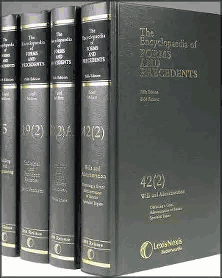
This is not a book that tries to charm the reader. It is a working manual: dense, careful, procedural, and intensely practical. Its real strength is that it does three jobs at once. It explains the legal ideas behind powers of attorney, it turns those ideas into drafting decisions, and it then supplies forms to execute those decisions. That design gives the book unusual authority. It does not merely tell you what a power of attorney is; it shows you how a lawyer would think, draft, protect, limit, register, revoke, and defend one.
Its deepest theme is control. Every chapter, even the dry ones, circles the same problem: how do you let one person act for another without losing legal validity, fiduciary discipline, or third-party certainty? The book’s answer is formal structure, carefully bounded authority, notice requirements, and documentary precision. That makes it extremely strong as a practitioner’s text. Its only real weakness is that it can feel more like a legal instrument warehouse than a reflective monograph. It is excellent on mechanics and risk; it is less interested in philosophy, social context, or narrative explanation. The three-part architecture—ordinary powers, enduring powers, and international powers—makes that purpose completely clear.
Part 1 — Ordinary Powers of Attorney
1. Sources of the law. A strong opening. The chapter does exactly what an opening chapter should do: it roots the subject in agency law, links it to fiduciary obligations, and explains why statute matters without pretending statute explains everything. It immediately tells the reader that powers of attorney sit at the intersection of contract, trust-like duties, and formal legal machinery.
2. Introduction. This is a short bridge chapter, but a useful one. It frames capacity as the first real gatekeeping issue and signals that common law still does a lot of the work. It is not intellectually flashy, but it prepares the reader for the architecture of the whole book.
3. Minors. A good example of the book’s method: it starts with uncertainty, then narrows toward a workable rule. The chapter is strongest when it shows that the question is not simply “Can a minor appoint an attorney?” but “Can the minor lawfully do the act that is being delegated?” That is a sharper and more practical way to think.
4. Persons suffering from mental disorder. This is one of the more important early chapters because it shows how validity collapses when the donor lacks capacity. The chapter’s value lies in its firmness: it does not sentimentalize incapacity, and it makes clear that a defective grant taints everything done under it.
5. Companies and corporations. This chapter prevents the book from becoming too individual-centered. It shows that powers of attorney are commercial tools as much as personal ones. The discussion of corporate execution and authority broadens the book’s usefulness and reminds the reader that delegation problems are not just domestic or family problems.
6. Necessity for a deed. A short but foundational chapter. The book is at its best when it shows that formalities are not trivial technicalities but the framework that makes later authority reliable. This chapter quietly tells you that everything else depends on getting the form right.
7. Execution. This is a highly practical chapter. It explains not only how execution should happen, but why witness requirements and execution by direction matter. The book’s drafting intelligence is already visible here: it anticipates real-life execution problems rather than teaching law in a vacuum.
8. Authentication: introduction. This is a transitional chapter, but it serves a useful orienting function. It signals the shift from creation to proof, which is one of the book’s recurring strengths: it never forgets that legal power must also be demonstrable.
9. Copies of powers of attorney. Excellent practical lawyering material. The chapter understands that in practice, the original document is often less important than the ability to prove its contents safely and efficiently. It turns a dry evidential point into a central drafting and transactional issue.
10. Land Registry requirements. One of the best examples of the book’s procedural realism. The chapter is narrow, but it shows why powers of attorney are never just abstract grants of authority; they must survive institutional scrutiny. The emphasis on proof of non-revocation is especially strong because it connects authority with transactional finality.
11. Duties of the attorney. This is the moral core of Part 1. The list of duties—acting within authority, avoiding conflicts, keeping funds separate, accounting, and not profiting secretly—shows that the book never treats the attorney as a mere convenience. It treats the attorney as a fiduciary risk point. That is exactly right.
12. Acts which a donor cannot delegate. One of the strongest chapters in the entire book. It clarifies a point many readers would otherwise miss: “general authority” is not total authority. The chapter is especially good on personal-status acts, wills, sworn declarations, and medical decisions. It defines the outer boundary of delegation with uncommon clarity.
13. Construction of ordinary power of attorney. This is a lawyer’s chapter in the best sense. The treatment of incidental powers, the ejusdem generis rule, and recitals shows how much turns on wording. The chapter’s real value is conceptual: it teaches that drafting is interpretation in advance.
14. Attorney’s remuneration. A sensible and balanced chapter. It recognizes that attorneys may be gratuitous or paid, and that professionals raise different expectations. It is not a dramatic chapter, but it is good on the practical relationship between service, reimbursement, and express drafting.
15. Attorneys for trustees. A very important and very dense chapter. The book becomes especially valuable when it handles trustees, co-trustees, personal representatives, and co-owners, because those are the areas where ordinary assumptions about agency start to fail. This chapter is one of the places where the book earns its seriousness.
16. Delegation. A compact but strong discussion. The chapter explains the classic rule against delegation and then maps the exceptions with care. It is especially useful because it distinguishes between what the attorney may do personally and what may be farmed out as ministerial activity.
17. Substitution. The distinction between delegation and substitution is one of the book’s small but sharp insights. The chapter is valuable because it explains that replacing the attorney is not the same as using assistants. That distinction matters enormously in drafting, and the book handles it well.
18. Ratification: introduction. A useful opening to the ratification cluster. It frames ratification as retrospective authorization and immediately shows why it matters: authority can be repaired, but only within limits. The chapter is brief, but it sets up the next three well.
19. Capacity to ratify. This chapter is precise and intellectually sound. It shows that ratification is not a casual “approval afterward,” but a doctrine with real preconditions. That precision protects the book from becoming too form-driven; it keeps doctrine in view.
20. Acts capable of ratification. A good boundary chapter. It highlights uncertainty without becoming vague, and it wisely emphasizes that void acts are not magically saved by later approval. The caution here is one of the book’s recurring virtues.
21. Methods of ratification. This chapter is practically strong because it asks not only whether ratification is possible, but how it must be done. The warning about advance ratification clauses is especially valuable. The book shows mature skepticism here.
22. Protection of the attorney. This chapter is short, but crucial. It recognizes that honest attorneys need protection when revocation is unknown. The book is good at balancing donor protection with fairness to the attorney, and this chapter illustrates that balance.
23. Protection of third parties. A strong transactional chapter. It explains why law must protect innocent third parties who deal with attorneys in good faith. This is where the book shows it is not merely about private relationships; it is also about market confidence and document reliability.
24. Revocation. One of the central chapters of Part 1. Its strength is comprehensiveness. It catalogs terminating events carefully and shows that revocation is not just a personal decision but a legal event with procedural consequences. The insistence on notice is particularly important.
25. Irrevocable powers of attorney. A very useful chapter because it explains that “irrevocable” is not a magic label. Irrevocability must rest on a real proprietary or security logic. The book is strong whenever it strips language down to legal substance, and this chapter does that well.
26. Disclaimer. Short, functional, and correct. It treats disclaimer as a serious legal step rather than a casual withdrawal. The emphasis on deed and notice is consistent with the book’s overall philosophy of controlled formality.
27. Conflict of laws. A brief but wise chapter. Its best feature is its humility. It does not pretend that a domestic drafting manual can solve cross-border complexity by itself. Instead, it urges caution, local advice, and jurisdiction-specific thinking.
Part 1 checklist and precedents
The Part 1 checklist is one of the book’s hidden strengths. It turns doctrine into intake discipline: Who is the client? What is the donor’s capacity? Should this be general, specific, trustee-related, or irrevocable? Who must be notified? That is real legal practice, not just exposition.
The precedents are the real engine room of Part 1. The range is impressive: general powers, irrevocable powers, partnership and company forms, powers for physical incapacity, forms for minors, probate-related powers, trustee delegation, property management, joint ownership, liquidation, and bankruptcy. The miscellaneous clauses are especially revealing. They show the book’s practical imagination—confidentiality, record keeping, conflict control, borrowing, gifts, pets, safe deposit boxes, cheques, notices, substitutes, and more. The forms are not decorative extras. They are the book’s unspoken thesis: in this area, drafting precision is substance.
Part 2 — Enduring Powers of Attorney
28. Background and purpose. A strong opening chapter. It clearly explains why enduring powers matter: they are designed to survive the donor’s later incapacity, but only within a supervised legal framework. That purpose gives Part 2 a more protective, almost regulatory tone.
29. Capacity to appoint an attorney. This is a very good capacity chapter. Its strongest point is that it focuses on understanding the nature and effect of the power, rather than requiring the donor to grasp every downstream transaction. That is a nuanced and workable test.
30. Capacity to act as an attorney. Short but significant. It makes clear that attorney qualification is part of the validity structure, not an afterthought. This chapter reinforces the idea that enduring powers demand more institutional discipline than ordinary ones.
31. Formalities. One of the most exacting chapters in the book. It is technical, but for good reason. The prescribed form, explanatory information, execution requirements, and special cases for disability or language barriers are handled carefully. The chapter is dry, but indispensable.
32. Characteristics of an enduring power. A structurally excellent chapter. It tells the reader not only what an enduring power is, but what it cannot be. The prohibition on attorney-appointed substitutes and the rules on multiple attorneys are particularly important.
33. Authentication. A short procedural chapter, but a useful one. It keeps the book’s attention on proof and institutional handling. The move from instrument to office copy is one more reminder that endurance requires documentary order.
34. Land Registry requirements. Like its Part 1 counterpart, this chapter is narrow but highly practical. It shows that enduring powers do not escape ordinary transactional scrutiny just because they are designed for incapacity situations. The book remains impressively detail-conscious here.
35. The duties of an attorney. This chapter is important because it adds a distinct enduring-power duty: the obligation to seek registration once the donor is, or is becoming, incapable. That transforms the attorney from mere agent into gatekeeper of a protective system.
36. Scope of authority. A strong chapter because it preserves flexibility without sacrificing control. General authority, specific authority, and restrictions all remain possible. The point that registration freezes the donor’s ability to reshape the power is especially important.
37. Attorneys for trustees. A major chapter. This is where Part 2 becomes more powerful than Part 1. The book shows that enduring powers can reach trust functions in ways ordinary powers cannot. It is one of the book’s most practically significant discussions.
38. Power of the attorney to benefit himself and others. A thoughtful and difficult chapter. It deals with the central ethical problem of enduring powers: how can the attorney help others, or even himself, without donor consent? The answer is cautious and expectation-based. The chapter is one of the book’s most humanly interesting.
39. Power of the attorney to make gifts. Very strong. The book balances reality and restraint well here. Gifts for family occasions and charities are permitted, but the donor’s estate remains the measuring standard. This is good lawyering because it acknowledges social life without opening the door to abuse.
40. Power of the attorney to make gifts in contemplation of death. A fascinating edge-case chapter. It is conceptually important because it shows how enduring powers approach death-adjacent decisions without collapsing into testamentary substitution. The chapter is careful, which is exactly what it should be.
41. Power of the attorney to execute a will. One of the most intellectually interesting chapters in the book. The answer is essentially no, not directly—but court supervision can provide a route for a statutory will. This chapter shows the book at its most sophisticated: it respects personal acts while still addressing practical necessity.
42. Power of the attorney to make tax returns. A brief but practical chapter. It has the feel of an answer to a real client problem. That realism is one of the reasons the book works so well as a manual.
43. Delegation. A restrained and sensible discussion. The chapter keeps ministerial delegation available while preventing the attorney from quietly remaking the office through substitution. It is a good example of the book’s disciplined caution.
44. Substitution. This chapter is strong because it distinguishes between what the attorney cannot do and what the donor can still design into the instrument. The book’s drafting intelligence shows again here: substitute structures are treated as architecture, not improvisation.
45. Ratification. A brief chapter, but a necessary one. It makes clear that an enduring power does not turn unlawful or ultra vires acts into salvageable mistakes. The chapter’s restraint is a virtue.
46. Protection under the ordinary-powers regime. A good bridging chapter. It explains that enduring powers inherit basic protective rules for innocent attorneys and third parties. That continuity makes the book’s overall system feel coherent.
47. Protection where enduring power is invalid. This is one of the book’s most practical liability chapters. It protects innocent conduct while still recognizing that defects matter. The balance here is well judged.
48. Protection where invalid enduring power is revoked by incapacity. A very technical chapter, but worthwhile. It handles a messy intermediate situation with care. That is a hallmark of this book: it does not stop at clean cases.
49. Revocation. A central chapter in Part 2. It is especially strong because it explains that revocation changes character once registration happens. Private intention gives way to supervised legality. That shift is one of the deep structural ideas of the book.
50. Disclaimer. Clear and efficient. The chapter recognizes that disclaimer in the enduring context has system consequences, not just personal ones. Notice requirements therefore make good sense.
51. Registration: introduction. This chapter is more than a preface. It reframes registration as protection rather than mere bureaucracy. That framing is important because the whole later procedure makes more sense under that lens.
52. Notice to the donor. A very good procedural fairness chapter. It ensures that the donor remains legally visible even at the point where capacity is in doubt. The chapter reflects a serious commitment to due process.
53. Notice to the donor’s relatives. This chapter shows the book’s awareness that incapacity is rarely a purely private matter. Family members become part of the protective architecture. The chapter is strong because it gives objections a procedural home.
54. Entitlement to receive notice. A careful, almost administrative chapter. Its value lies in precision. The book knows that procedural protection fails if notice rules are left vague.
55. Grounds on which objections may be raised. A powerful chapter because it turns suspicion into legal categories: invalidity, non-subsistence, prematurity, fraud, undue pressure, unsuitability. This is one of the clearest anti-abuse chapters in the book.
56. Powers of the court prior to registration. Excellent. This chapter is where the institutional spine of Part 2 becomes obvious. The court can interpret, direct, require information, authorize, and relieve. It is one of the book’s richest chapters.
57. Application to register. Highly practical and well structured. It turns the legal duty to register into a procedural sequence. This is one of those chapters that a practitioner would use directly.
58. Functions of the Public Trustee and the Court on application for registration. A very strong institutional chapter. It explains who does what, when objections matter, and how protective supervision is triggered. It gives the registration system real shape.
59. Functions of the Court after registration. This chapter complements chapter 56 well. Together they show that court supervision is not a single event but an ongoing jurisdiction. That makes the book feel systemically complete.
60. Applications to search the register. Brief but important. It reminds the reader that registration is not only protective for the donor; it also serves transparency and proof.
61. Cancellation of registration. A clear and well-organized chapter. It is especially strong because it identifies multiple routes to cancellation, including recovery, invalidity, unsuitability, and fraud. The chapter underscores that enduring powers remain reviewable.
62. Appeals. A short procedural close to the registration sequence. It is functional rather than analytic, but it rounds out the system neatly.
63. Living wills. An interesting final chapter, but also the one that feels least integrated with the rest of the book. It opens the door to advance directives and health-care decision-making, yet it is much shorter and more tentative than the property-and-affairs chapters. Still, it is valuable as a sign that autonomy questions do not stop at assets.
Part 2 checklists and forms
Part 2’s checklists are superb. They take the reader from initial instructions through registration and even cancellation on recovery. They are among the strongest parts of the book because enduring powers are procedural instruments as much as doctrinal ones.
The prescribed forms and supporting documents are a major strength. The registration notice, application forms, objection forms, memorandum of wishes, medical certificate, explanatory statement, accounting clauses, and substitute-attorney structures show the book at full power. The memorandum of wishes is especially smart. It recognizes that not every preference belongs on the face of the instrument, but that donors still need a way to express values, priorities, and anxieties.
Part 3 — International Powers of Attorney
64. General. This is a short but very honest chapter. Its best quality is caution. It admits that cross-border delegation resists full standardization, that local formalities matter, and that even a carefully designed form may need adaptation. That modesty makes the chapter more trustworthy, not less.
International forms and authority clauses
The international section is less a full comparative study than a specialist drafting appendix. The civil-law and common-law forms for individuals and companies are useful starting points, and the authority clauses for general powers, property transactions, company formation, and estate winding up are broad and adaptable. But this part is thinner than the rest of the book. It gives a framework, not a complete solution. Its role is to alert the reader, supply a model, and warn against false confidence.
Final verdict
This book is best read as a legal operating manual. It is strongest when it links doctrine to drafting and drafting to procedure. Its most impressive features are:
its clear grasp of fiduciary risk, its insistence on formal validity, its detailed treatment of revocation, notice, protection, and registration, and its massive bank of forms and clauses.
Its weakest feature is not inaccuracy but temperament: it is more interested in doing the job safely than in explaining the wider human, policy, or comparative implications of delegated decision-making. That means it is extraordinarily useful for lawyers, advanced students, and serious drafters, but less welcoming for a reader who wants a flowing theoretical narrative.
As a working legal book, though, it is formidable. It teaches that a power of attorney is never just a grant of trust. It is a carefully engineered legal relationship whose strength depends on wording, proof, limits, supervision, and the management of abuse risk. That is the book’s central lesson, and it delivers it with discipline.
 marceljude.ai +60128285778 |
- MALAYSIA'S 1ST AI LAWYER - CLICK HERE
- ISMAIL – INTEGRATED SINGAPORE/MALAYSIA AI & LAW (Library)
- OPENING OF SINGAPORE MALAYSIA AI CENTRE AND LAW LIBRARY
- LIFT - LAW INSTRUMENTS FORMS & TEMPLATES
- LAWS OF MALAYSIA FOR SINGAPOREAN DUMMIES
- HANNAH YEOH'S ARTIFICIAL INTELLIGENCE LAW ENCYCLOPEDIA
- LEAD CR - Law Ecosystem Archive Databases on CD-ROM
- BREAKING NEWS FROM MJN
- CLICK HERE CO. PROFILE
- EXCITING NEW SERIES - THE ADVENTURES OF BOBBY TAN -ADVOCATE & SOLICITOR IN THE HIGH COURT OF NORTH BORNEO by marceljude.ai
- MEDICO LEGAL - BY PRISKILA AKWILA & GLORIOUS PETAL SDN BHD - powered by marceljude.ai
- MISCELLANOUS
- ANNOTATED STATUTES OF SABAH - A NEW SERIES
- e-library - marceljude.ai
- DRAFT - DOCUMENT RESEARCH & AUTOMATED FILING TECHNOLOGY
- CLARA – Case Law Analysis & Retrieval AI
- FOR RESEARCH REQUEST CLICK HERE
- CLICK HERE TO ASK ANYTHING
- RAMBO'S LAW - THE LAW OF THE LAW JUNGLE - EXCITING NEW SERIES - CASE ANALYSIS BY JOHN RAMBO @ +60138646786
- PRISKILA AKWILA ADVOCATES - High Court of Sabah & Sarawak @ Kota Kinabalu
- COLA - COMMONWEALTH ONLINE LAWCASES AI -marceljude.ai
- THE LAW LIBRARY THAT COMES TO YOU ANYWHERE AND ANYTIME
- marceljude.ai training academy
