
STRIKING OUT - NASSER HAMID


Description
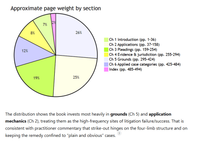
As a law professor, I would describe this book as a doctrinal handbook of civil procedure rather than a work of grand legal theory. Its center of gravity is the law and practice of striking out pleadings and actions, especially under Malaysian procedural law, and it presents itself as a practical tool for bench and bar, organized into six chapters that move from principle, to procedure, to pleading, to evidence, to grounds, and finally to applications in specific fields.
What gives the book its coherence is a recurring judicial idea: striking out is a necessary but dangerous power. Necessary, because courts must prevent abusive, hopeless, or procedurally improper litigation from consuming public resources; dangerous, because if used too readily it denies a litigant a full trial. The book returns again and again to that tension. It stresses that courts should dismiss only in “plain and obvious” cases, where there is no reasonable cause of action, or where the claim is frivolous, vexatious, abusive, or otherwise unarguable.
That theme is the spine of the entire book, and it is the right spine. A weaker author would have treated striking out as a mechanical rule-book topic. Hamid understands that it is a jurisprudence of restraint: the court must protect its own process without turning interlocutory procedure into a substitute for trial. That is the best thing about the book.
Chapter 1: Introduction
The first chapter is not a mere introductory sketch. It is the book’s conceptual foundation. It begins by acknowledging that striking out looks simple but is not simple in use, because its application depends on facts, judicial discretion, and the court’s sense of procedural fairness. It then sets out the core grounds on which courts will dismiss an action and explains the object of the striking-out jurisdiction: to stop cases that ought never to have been launched and to weed out claims that are clearly unfounded.
As a chapter, it performs three major functions.
First, it frames striking out as a summary power. That matters greatly. The author is careful to remind the reader that the court is being asked to end litigation without a full trial. That means caution must dominate. This insistence is doctrinally sound and pedagogically useful. A student or practitioner who reads only this chapter will already understand the basic judicial attitude: summary disposal is not a routine convenience.
Second, the chapter ties striking out to the law of pleadings. That is a very important move. The power exists not only to punish bad cases, but to enforce disciplined pleading. In other words, the court is not merely asking whether the claimant might ultimately lose. It is asking whether the claim is intelligibly and legally framed at all. That is a sophisticated point, and the chapter handles it well.
Third, the chapter broadens the discussion beyond Order 18 rule 19 into adjacent procedural ideas: declaratory relief, wrong procedure, multiplicity of proceedings, illegality, inherent jurisdiction, and the court’s power to prevent abuse. This makes the chapter richer, but also more sprawling. At times it reads less like a tightly argued introduction and more like a large preliminary digest of everything that might orbit the striking-out jurisdiction.
That is the first major criticism one may fairly make. Chapter 1 is intellectually serious, but it is over-inclusive. The author wants the reader to appreciate the whole procedural ecology in which striking out operates, and that ambition is admirable. But the result is that the chapter sometimes loses sharpness. It states the governing test clearly, then moves outward into many neighboring problems. A professor might say that the chapter is excellent on doctrinal mood but less disciplined on architectural economy.
Even so, it is a strong opening. It establishes the central paradox of the subject: the striking-out power exists to serve justice, but it can itself become an instrument of injustice if overused. That is exactly the right way to begin a book of this kind.
Chapter 2: Application to Strike Out
The second chapter turns from theory to litigation technique. The contents page shows its structure clearly: application, appearance, parties, locus standi, time, limitation, and appeal.
This is the chapter a practicing litigator is likely to annotate most heavily. It asks not merely, “What is striking out?” but, “How is it brought, resisted, framed, timed, and appealed?”
One of the chapter’s strengths is that it places the burden on the applicant where it belongs. The party seeking to strike out must bring the case squarely within the rule. That seems obvious, but in practice it is often blurred by rhetoric. Hamid’s treatment keeps the analysis orthodox: the applicant must justify summary termination; the respondent does not bear the primary burden of begging for a trial.
The discussion of the disjunctive structure of the grounds is also useful. The chapter emphasizes that the rule’s limbs are not to be sloppily fused together. This is not merely drafting pedantry. It goes to procedural fairness and doctrinal clarity. If a party says a pleading is scandalous, or vexatious, or abusive, those are not identical complaints. The chapter is right to insist on precision.
The treatment of affidavits is particularly valuable. The chapter shows that affidavits are not neutral procedural furniture. They can decide whether the application is treated as a pure pleading point or as a wider evidential contest. This is the kind of practical legal intelligence that separates a serviceable manual from an empty summary.
The portions on appearance and the controversy over unconditional versus conditional appearance are especially revealing of the book’s method. Hamid does not conceal conflict in the authorities. He collects the competing lines of cases and lets the reader see the procedural problem in motion. That is both a strength and a weakness.
It is a strength because litigation is messy, and a book on striking out that pretended the authorities were perfectly harmonious would be false to the law. It is a weakness because the chapter sometimes stops at mapping conflict rather than fully resolving it at the level of principle. The book is at its best when it tells the reader what the law is trying to protect. It is less satisfying when it becomes a warehouse of authorities that point in different directions.
The discussions of parties and locus standi are among the better parts of the chapter. Hamid rightly treats standing not as a fashionable abstraction but as a jurisdictional and procedural threshold question. He is also attentive to the policy behind standing rules: preventing mere busybodies from consuming the court’s time while preserving access for those with genuine legal grievance. That is a sound common-law instinct.
Then the chapter moves to time, limitation, and appeal. This makes the chapter feel slightly like several smaller chapters bound together. But the thematic unity is there: all of these are threshold mechanisms by which a court may or may not permit litigation to go forward.
As a chapter, this is immensely useful, though not elegant. It is procedural in the old common-law sense: full of tactical detail, sensitive to timing, highly case-driven, and sometimes resistant to compression. A student looking for a clean theoretical argument may find it heavy. A practitioner facing an actual application will find it gold.
Chapter 3: Striking Out Pleadings
This, to my mind, is one of the strongest chapters in the book. The contents page shows why: it is devoted to pleadings themselves—striking out pleadings, writs, statements of claim, the “plain and obvious” standard, defences, and counterclaims.
Here the subject finally comes into sharp doctrinal focus. Hamid makes clear that striking out is fundamentally a law of pleading sufficiency and procedural honesty. The chapter repeatedly returns to the idea that courts should not strike out merely because a case appears weak. A weak case is not the same as a case that discloses no cause of action. That distinction is central to every sound system of civil justice, and the chapter handles it with real seriousness.
The chapter’s treatment of the statement of claim is especially good. It draws attention to the need for material facts, the distinction between facts and evidence, and the danger of pleading conclusions instead of properly particularized allegations. The reader is reminded that a statement of claim is not a narrative essay; it is a legal instrument that must tell the opposing party and the court what case is being advanced.
The section on “plain and obvious” is, in effect, the chapter’s normative core. Hamid shows that the formula is not a slogan but a discipline. The court must not use the striking-out application to conduct a disguised trial. If the matter depends on disputed facts, or if the legal point requires mature consideration, the court should ordinarily refuse to strike out. That is textbook common-law procedure, but the author does not present it as a textbook cliché. He shows it through repeated case treatment.
The discussion of defences and counterclaims is equally important. Many books give far more attention to claims than to defensive pleadings. Hamid does not. He treats a defence as something that can also be a sham, or hopeless, or insufficient, but he is careful to preserve the same cautionary standard. A defence must not be struck out simply because it looks implausible. It must be shown to be legally or procedurally untenable.
His treatment of the counterclaim is revealing in another way: it shows that striking out doctrine is not pro-plaintiff or pro-defendant. It is pro-procedural legitimacy. A counterclaim that discloses some recognizable cause, however weak, should survive; one that is plainly unsustainable may be struck out.
As a law professor, I would say this chapter teaches one of the best lessons in procedure: the law of striking out is the law of judicial modesty. The judge must know when not to decide too much too soon. Hamid understands that well.
If there is a weakness here, it is that the chapter can become repetitive. The same formulas recur because the cases recur. But that repetition also has pedagogical value. By the end of the chapter, the reader has absorbed the judicial rhythm of the subject.
Chapter 4: Evidence
Chapter 4 moves from pleading theory to evidential method. The contents page shows its tripartite focus: evidence, inherent jurisdiction of the court, and subordinate courts.
This is an analytically important chapter because striking out often turns on a deceptively simple question: what material may the court look at? That question can decide the application before the substantive argument even begins.
The chapter’s most important contribution is to preserve the distinction between applications based purely on the absence of a reasonable cause of action and applications under the other limbs of the rule. In the former, the court is generally confined to the pleading itself. In the latter, affidavit material may become relevant. That distinction is foundational. Without it, the court risks sliding from a pleading inquiry into a premature factual adjudication. Hamid is very alert to the danger of a trial on affidavits. This is a recurring anxiety in common-law interlocutory practice, and rightly so. If the court starts resolving serious factual conflict on paper, it may destroy the litigant’s right to a proper evidential contest.
Chapter 4 shows that the mere existence of affidavit material does not license the court to replace trial with inference. The chapter also ties evidence to inherent jurisdiction, and that is a strong move. The procedural rules do not exhaust the court’s power; courts also possess an inherent power to prevent injustice and abuse of process. But Hamid does not romanticize inherent jurisdiction. He treats it as a reserve power, not a roving commission. That is sound judicial temperament.
The inclusion of subordinate courts helps broaden the chapter’s utility. The reader sees that striking-out doctrine is not merely a High Court phenomenon; it also has procedural life in other courts, though with their own rules and contexts.
My criticism here is structural. Some of what appears in Chapter 4 might easily have been integrated into Chapters 1 and 3, because evidence and inherent jurisdiction are already latent there. So the chapter can feel slightly like an overflow chamber. But that is better than omission. For a practitioner, it is useful to have these issues gathered in one place.
As scholarship, this is not the most elegant chapter. As legal craft, it is indispensable.
Chapter 5: Grounds for Striking Out
This is the doctrinal heart of the book. The contents page makes that plain: reasonable cause of action, scandalous/frivolous/vexatious, prejudice or embarrassment or delay to fair trial, abuse of process, and arbitration.
If Chapter 3 is about the form of pleadings, Chapter 5 is about the substantive grounds on which that form fails. The section on reasonable cause of action is especially strong. Hamid insists that the court must ask whether the pleading discloses some cause of action, however weak, and not whether the claim seems likely to fail. That is a doctrinally vital distinction, and one the chapter explains with clarity. It emphasizes that the court should assume the pleaded facts to be true for this purpose and should not stray into proof.
This is where the book is most persuasive as legal teaching. It keeps the reader from confusing merits with maintainability. The case may be weak; the pleading may still be legally sufficient. The chapter is excellent on that point.
The sections on scandalous, frivolous, or vexatious are also valuable. Hamid shows that these labels must not be used lazily. The weakness of a case is not enough. Something more specific must be shown. This is an important corrective to the rhetorical excess of interlocutory practice, where parties often hurl these adjectives at one another as if naming the vice proved the vice. The chapter is at its best when it turns such adjectives back into legal tests.
The discussion of pleadings that prejudice, embarrass, or delay the fair trial of the action is a reminder that procedure is not only about ultimate success but about the conditions of adjudication. A pleading may be objectionable not because its legal theory is false but because its form or content makes a fair trial difficult. That is a subtler and more mature procedural idea, and the chapter treats it seriously.
Then comes abuse of process, which is perhaps the most conceptually rich ground. Abuse of process is where the procedural law reveals its ethical dimension. The court is not merely checking formal compliance; it is examining whether its machinery is being used bona fide and for its proper purpose. Hamid handles this well, particularly in illustrating that duplicative, oppressive, or collateral litigation may amount to abuse even if some formal pleading element exists.
The final topic, arbitration, is interesting because it shows the outer boundary of the striking-out jurisdiction. Arbitration clauses and arbitral process do not abolish the court’s procedural powers, but they complicate them. Here the book demonstrates how striking out interacts with party autonomy and jurisdictional allocation. If I had to choose the single best chapter for a serious student, it would probably be this one. It is where the book’s case-digest method and its procedural intelligence come most fully together.
Chapter 6: Application of Principles to Cases
The final chapter is exactly what its title suggests: a large topical application of striking-out principles across specific legal fields. The contents page lists administration of estates, arbitration, contract, criminal proceedings, defamation, derivative action, election petition, false imprisonment/assault and battery, gaming, injunctions, land acquisition, land reference, loan, loan agreement, partnership, third party notice, trespass, trust, and winding-up. This chapter is less a sustained chapter than a reference atlas. It answers the practitioner’s question: “How have these principles been used in this kind of case?”
That is a very practical way to end the book. Courts do not decide striking-out applications in the abstract. They decide them in land disputes, company petitions, election cases, defamation suits, trust claims, and so on. By the final chapter, the reader sees how general procedural doctrine migrates into specific substantive settings.
The section on administration of estates, for instance, shows why summary striking out may be inappropriate where executors are protecting estate assets and factual issues remain live. The treatment of election petitions reveals that procedural insufficiency is not always fatal; much depends on whether the omission is merely curable or strikes at mandatory statutory requirements. The portion on winding-up demonstrates how delicate striking out becomes in insolvency-related proceedings, especially where debt disputes, creditor status, or procedural duplication arise.
As a practical chapter, it is extremely useful. As a literary or theoretical chapter, it is the least unified in the book. It reads as a topical digest because that is what it is. There is less sustained argument here and more accumulated exemplification. But one should not criticize it for being what it deliberately chooses to be. A book of this kind earns its keep by helping lawyers reason analogically from decided cases. On that score, Chapter 6 succeeds.
Review of the entire book
Taken as a whole, Striking Out is a strong and serious procedural work. It is not a jurisprudential meditation on civil justice. It is not trying to be. It is a case-rich doctrinal manual on one of the most consequential procedural powers a court possesses. Its ambition is practical clarity through accumulation and organization of authority, and in that aim it largely succeeds.
Its chief strengths are these.
First, it understands that striking out is not merely a technical topic. It is a site where several major values collide: access to justice, procedural economy, fairness to the opposing party, judicial restraint, and the court’s duty to protect its own process.
Second, it is deeply grounded in case law. That gives it authority and practical use. The reader is repeatedly shown not only the rule but how judges actually use it.
Third, it treats the subject in full procedural breadth: pleadings, affidavits, appearance, parties, standing, delay, limitation, appeal, evidence, inherent jurisdiction, and topic-specific applications. That breadth makes it more than a narrow commentary on one rule.
Fourth, its best recurring lesson is profoundly sound: the court should not strike out simply because a claim looks weak. It should strike out only when the claim is truly, procedurally or legally, not fit to go forward. That is a rule of fairness disguised as a rule of efficiency.
But the book also has weaknesses. Its method is heavily accumulative. That means it can become repetitive. The same formulas and cautions recur because the case law recurs.
It is better at collecting and organizing authorities than at always synthesizing them into a single elegant theory. Where the authorities conflict, the book sometimes maps the conflict more than resolves it.
It is also, unmistakably, a reference work. A professor would assign parts of it for doctrine and method, but not for style. The prose is serviceable and often clear, yet it is primarily instrumental prose. Even so, that is not a small achievement. In procedural law, reliability and structure matter more than literary flourish.
Final judgment
As a law professor, I would judge this book very favorably. It is a high-value doctrinal text on Malaysian civil procedure, especially for anyone dealing with interlocutory applications, pleading attacks, or abuse-of-process arguments. Its greatest intellectual merit is that it refuses to turn striking out into a crude weapon. Instead, it presents striking out as a disciplined judicial power that must be used cautiously, in plain and obvious cases, and always with an eye to whether the court is preserving justice or prematurely foreclosing it.
So my final verdict is this: the book is not brilliant because it is theoretical; it is strong because it is procedurally intelligent. It teaches the reader how courts think when asked to end litigation before trial. And that, in procedural law, is no small thing.
- MALAYSIA'S 1ST AI LAWYER - CLICK HERE
- ISMAIL – INTEGRATED SINGAPORE/MALAYSIA AI & LAW (Library)
- OPENING OF SINGAPORE MALAYSIA AI CENTRE AND LAW LIBRARY
- LIFT - LAW INSTRUMENTS FORMS & TEMPLATES
- LAWS OF MALAYSIA FOR SINGAPOREAN DUMMIES
- HANNAH YEOH'S ARTIFICIAL INTELLIGENCE LAW ENCYCLOPEDIA
- LEAD CR - Law Ecosystem Archive Databases on CD-ROM
- BREAKING NEWS FROM MJN
- CLICK HERE CO. PROFILE
- EXCITING NEW SERIES - THE ADVENTURES OF BOBBY TAN -ADVOCATE & SOLICITOR IN THE HIGH COURT OF NORTH BORNEO by marceljude.ai
- MEDICO LEGAL - BY PRISKILA AKWILA & GLORIOUS PETAL SDN BHD - powered by marceljude.ai
- MISCELLANOUS
- ANNOTATED STATUTES OF SABAH - A NEW SERIES
- e-library - marceljude.ai
- DRAFT - DOCUMENT RESEARCH & AUTOMATED FILING TECHNOLOGY
- CLARA – Case Law Analysis & Retrieval AI
- FOR RESEARCH REQUEST CLICK HERE
- CLICK HERE TO ASK ANYTHING
- RAMBO'S LAW - THE LAW OF THE LAW JUNGLE - EXCITING NEW SERIES - CASE ANALYSIS BY JOHN RAMBO @ +60138646786
- PRISKILA AKWILA ADVOCATES - High Court of Sabah & Sarawak @ Kota Kinabalu
- COLA - COMMONWEALTH ONLINE LAWCASES AI -marceljude.ai
- THE LAW LIBRARY THAT COMES TO YOU ANYWHERE AND ANYTIME
- marceljude.ai training academy
