
RECOVERY, RESCHEDULING & RESTRUCTURING OF ISLAMIC FINANCIAL AND CAPITAL MARKET PRODUCTS AND SERVICES IN MALAYSIA
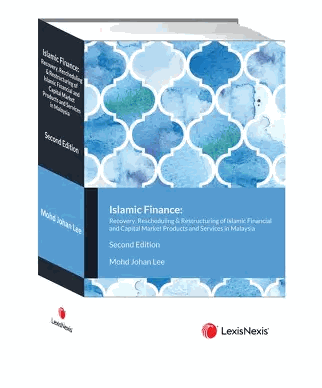


Description
RECOVERY, RESCHEDULING & RESTRUCTURING OF ISLAMIC FINANCIAL AND CAPITAL MARKET PRODUCTS AND SERVICES IN MALAYSIA
Mohd Johan Lee LLB, MCL (HUM), MA (Econs) (KCL), PhD (Monash) Advocate & Solicitor of the High Court of Malaya Peguam Syarie Advocate & Solicitor of the Supreme Court of Brunei Advocate of the High Court of Sabah and Sarawak, Sarawak Messrs J. Lee & Associates Member, Shariah Advisory Committee, Association of Islamic Banking and Financial Institutions Malaysia (AIBIM)
Book Review of Islamic Finance: Recovery, Rescheduling & Restructuring of Islamic Financial and Capital Market Products and Services in Malaysia
Review author: marceljude.ai
I read the book as a law professor would read it: doctrinally, procedurally, institutionally, and practically. The book under review is Mohd Johan Lee’s Islamic Finance: Recovery, Rescheduling & Restructuring of Islamic Financial and Capital Market Products and Services in Malaysia.
.
List of Contents with Page Numbers
Foreword — p. v
Preface to the Second Edition — p. vii
Preface to the First Edition — p. ix
Acknowledgment, Second Edition — p. xi
Acknowledgment, First Edition — p. xiii
Table of Cases — p. xxi
Table of Statutes — p. xxvii
Table of Subsidiary Legislation — p. xxxi
Part I: General Introduction — p. 1
Chapter 1: Brief Discussion on Islamic Banking and Finance Products and Services — p. 3
[1.1] Introduction — p. 3
[1.2] Salient Features of Islamic Banking and Finance — p. 3
[1.2.1] Islamic Finance and Overview of its Framework — p. 3
[1.2.2] Elements to be Avoided in Islamic Banking — p. 5
[1.2.3] Mutual Consent — p. 7
[1.3] Legal Documentation in Islamic Banking — p. 8
[1.4] Differences Between Conventional and Islamic Banking & Finance — p. 10
[1.5] Key Islamic Commercial Contracts — p. 10
[1.5.1] Gratuitous Contracts — p. 12
[1.5.2] Trading Contracts — p. 12
[1.5.2.1] Sale Contracts — p. 12
[1.5.2.1.1] Bai’ Bithaman Ajil, or BBA — p. 12
[1.5.2.1.2] Bai’ al-’Inah — p. 16
[1.5.2.1.3] Bai’ al-Murabahah — p. 18
[1.5.2.1.4] Bai’ al-Tawarruq, or Commodity Murabahah — p. 20
[1.5.2.1.5] Bai’ al-Istisna’ — p. 23
[1.5.2.2] Leasing Contract — p. 25
[1.5.2.2.1] Bai’ al-Ijarah — p. 25
[1.5.2.2.2] Financial Lease / AITAB — p. 29
[1.5.3] Equity Contracts — p. 31
[1.5.3.1] Types of Shirkah — p. 32
[1.5.3.2] Musharakah — p. 32
[1.5.3.2.1] Musharakah in Practice — p. 32
[1.5.3.2.2] Legal Documentation for Musharakah — p. 33
[1.5.3.3] Mudharabah — p. 33
[1.5.3.3.1] Mudharabah in Practice — p. 34
[1.5.3.3.2] Legal Documentation for Mudharabah — p. 35
[1.5.4] Other Contracts — p. 35
[1.5.5] Hybrid Contracts — p. 35
[1.5.5.1] Musharakah Mutanaqisah, or Diminishing / Redeemable Partnership Financing — p. 36
[1.5.5.1.1] Current Practice of Musharakah Mutanaqisah in Malaysia — p. 36
[1.5.5.1.2] Musharakah Mutanaqisah Documentations — p. 37
[1.6] Application of Common Shariah Contracts — p. 37
[1.7] Conclusion — p. 42
Chapter 2: Malaysian Legislation Governing Islamic Banking and Financial Products and Services — p. 43
[2.1] Introduction — p. 43
[2.2] Governing Laws — p. 43
[2.2.1] Islamic Banking & Takaful — p. 45
[2.2.1.1] Central Bank of Malaysia Act 2009 — p. 45
[2.2.1.2] Islamic Financial Services Act 2013 — p. 50
[2.2.1.3] Islamic Banking Business Conducted by Institutions Licensed under FSA — p. 56
[2.2.1.4] Institutions Licensed under the Development Financial Institutions Act 2002 — p. 58
[2.2.1.5] Legislation Governing Other Financial Institutions — p. 60
[2.2.1.6] Legislation Governing Non-financial Institutions — p. 61
[2.3] Transactions Laws — p. 61
[2.4] Islamic Capital Market — p. 62
[2.5] Offshore Transaction — p. 63
[2.6] Conclusion — p. 64
Chapter 3: General Process and Procedures of Banking Recovery — p. 65
[3.1] Introduction — p. 65
[3.2] Recovery in the Eyes of Shariah — p. 65
[3.3] Recovery: General Process and Procedures — p. 67
[3.3.1] Pre-action — p. 67
[3.3.2] Foreclosure — p. 69
[3.3.2.1] Order for Sale by the High Court — p. 71
[3.3.2.2] Land Office Auction — p. 73
[3.3.2.3] Auction for Assignment Cases — p. 75
[3.3.3] Civil Action — p. 76
[3.3.4] Enforcement of Judgment — p. 82
[3.3.4.1] Enforcement Against an Individual — p. 84
[3.3.4.1.1] Writ of Execution — p. 84
[3.3.4.1.2] Garnishee Proceedings — p. 86
[3.3.4.1.3] Committal — p. 86
[3.3.4.1.4] Judgment Debtor Summons — p. 87
[3.3.4.1.5] Orders — p. 88
[3.3.4.1.6] Bankruptcy — p. 88
[3.3.4.2] Enforcement of Judgment Against a Company — p. 92
[3.3.4.2.1] Scheme of Arrangement — p. 92
[3.3.4.2.2] Receivership — p. 93
[3.3.4.2.3] Corporate Voluntary Arrangement — p. 95
[3.3.4.2.4] Judicial Management — p. 95
[3.3.4.2.5] Winding Up — p. 95
[3.4] Conclusion — p. 97
Part II: Special Aspects of Recovery, Rescheduling and Restructuring of Islamic Financial and Capital Market Products and Services in Malaysia — p. 99
Chapter 4: Recovery of Islamic Financing Facilities: Reference to Shariah Advisory Council — p. 101
[4.1] General Discussion — p. 101
[4.2] Reference to Shariah Advisory Council’s Published and Specific Rulings — p. 102
[4.3] Process Flow of Referring a Shariah Issue to SAC — p. 107
[4.4] Federal Court Decision on Sections 56 and 57 — p. 115
[4.5] Conclusion — p. 127
Chapter 5: Recovery of Islamic Financing Facilities: Ibra’, Ta’widh and Gharamah — p. 129
[5.1] General Discussion — p. 129
[5.2] Ibra’ — p. 129
[5.3] Ta’widh and Gharamah — p. 133
[5.4] Ibra’, Ta’widh and Gharamah in Policy Documents — p. 146
[5.5] Application in Recovery Action — p. 148
[5.5.1] Application of Ibra’, Ta’widh and Gharamah in Recovery Matters for Sale-Based Facilities — p. 152
[5.5.2] Application of Ibra’, Ta’widh and Gharamah in Recovery Matters for Non-Sale-Based Facilities — p. 154
[5.6] Ibra’ and Late Payment Charges for Credit Card-i — p. 156
[5.7] Conclusion — p. 157
Chapter 6: Enforceability of Non-Shariah Compliant Legal Documents — p. 159
[6.1] Introduction — p. 159
[6.2] Position under the Case Law — p. 159
[6.3] Position under Islamic Financial Services Act 2013 — p. 172
[6.4] Conclusion — p. 174
Chapter 7: Recovery of Islamic Financing Facilities: Pleading it Correctly — p. 177
[7.1] Introduction — p. 177
[7.2] Cause of Action and Common Pitfalls — p. 177
[7.2.1] Cause of Action, Process and Procedure for Different Shariah Contracts — p. 180
[7.2.1.1] Sale Contracts — p. 180
[7.2.1.2] Lease Contracts — p. 181
[7.2.1.3] Musharakah Mutanaqisah — p. 184
[7.3] Personal Financing and Credit Card — p. 187
[7.3.1] Cause of Action and Common Pitfalls — p. 187
[7.3.2] Checklist of Statement of Claim for Personal Financing and Credit Card — p. 187
[7.4] Recovery: Motor Vehicle Financing — p. 188
[7.4.1] Cause of Action and Common Pitfalls — p. 188
[7.4.2] Checklist of Statement of Claim for Vehicle Financing — p. 190
[7.5] Recovery: Islamic Home Financing Facilities — p. 191
[7.5.1] Cause of Action and Common Pitfalls — p. 191
[7.5.2] Checklist of Statement of Claim for Home Financing Facility — p. 196
[7.6] Recovery: Corporate Financing Facilities — p. 197
[7.6.1] Cause of Action and Common Pitfalls — p. 197
[7.6.2] Checklist of Statement of Claim for Corporate Financing Facility — p. 201
[7.7] Guarantors and Related Issues — p. 201
[7.8] Conclusion — p. 204
Chapter 8: Variation and Restructuring of Islamic Financing Facilities — p. 205
[8.1] Introduction — p. 205
[8.2] Changes of Terms and Conditions to a Concluded Aqad — p. 205
[8.3] Rescheduling — p. 211
[8.4] Discussion on Decided Cases — p. 217
[8.5] Conclusion — p. 224
Chapter 9: Restructuring Islamic Facilities — p. 225
[9.1] Introduction — p. 225
[9.2] Restructuring — p. 225
[9.3] Conversion Exercise — p. 238
[9.4] Restructuring of Ijarah-based Financing Facility — p. 240
[9.5] Discussion on Decided Cases — p. 240
[9.6] Conclusion — p. 247
Chapter 10: Recovery, Rescheduling and Restructuring of Islamic Capital Market Products and Services — p. 249
[10.1] Introduction — p. 249
[10.2] Sukuk Default — p. 249
[10.3] Restructuring and Rescheduling — p. 264
[10.4] Conclusion — p. 267
Part III: Precedents of Forms and Court Documents — p. 269
Index — p. 623
The table of contents confirms the book’s three-part architecture: a general introductory part, a special doctrinal and procedural part, and a precedents/forms part beginning at printed page 269.
Overall Thesis of the Book
The book’s central thesis is that Islamic finance recovery cannot be treated as ordinary debt recovery with Islamic terminology pasted onto conventional banking documents. The author’s recurring insistence is that recovery, rescheduling, and restructuring must be understood through the underlying Shariah contract, the aqad, the regulatory framework, the civil court process, and the practical documents through which rights are enforced.
The book is not merely a “how-to” manual. It is a hybrid text: part doctrinal exposition, part litigation guide, part regulatory commentary, and part precedent bank. Its great contribution is that it moves Islamic finance law from abstraction to operational enforceability. It asks: when a customer defaults, what exactly is the cause of action? Is it a loan default, a sale-price default, a rental default, breach of a wa’d, breach of a guarantee, or failure to perform under a newly restructured aqad? The book’s answer is that the legal remedy depends on the Shariah structure, not merely on the commercial label.
The preface explains that the book is reorganised into three parts: General, Specific Features, and Precedent, with ten chapters. It also states that Chapters 4 to 7 deal with special recovery aspects, Chapters 8 and 9 with rescheduling and restructuring, Chapter 10 with Islamic capital market products, and Part III with court precedents and cause papers.
Chapter-by-Chapter Review
Chapter 1 — Brief Discussion on Islamic Banking and Finance Products and Services, pp. 3–42
Chapter 1 performs the foundational work. It begins with the proposition that lawyers, bankers, advisers, and customers must understand Shariah rules of muamalat before they can properly understand Islamic banking recovery. The chapter is rightly placed at the beginning because the later litigation chapters depend on the taxonomy introduced here.
The introductory discussion at [1.1], p. 3, identifies the central problem: Islamic finance disputes are not resolved merely by knowing civil procedure or banking practice. The practitioner must understand the underlying Islamic commercial contract. This is particularly important where recovery, restructuring, or rescheduling is involved, because those events occur after default, distress, or variation of obligations.
The discussion of salient features at [1.2], pp. 3–7, distinguishes Islamic banking and finance from conventional banking by emphasising the Shariah-compliant framework. The book explains that Islamic finance may share conventional legal, tax, accounting, and regulatory environments, but it is differentiated by the requirement that the transaction avoid prohibited elements and be grounded in permissible muamalat.
The sub-section on Islamic finance and its framework, [1.2.1], p. 3, is doctrinally important because it treats Islamic commercial law as a law of contracts rather than merely a moral code. The author’s use of the maxim that commercial contracts are originally permissible unless prohibited allows modern Islamic finance to be innovative, provided it avoids the recognised prohibitions.
The sub-section on elements to be avoided, [1.2.2], p. 5, introduces riba’, gharar, maysir or qimar, and prohibited commodities. For a law professor, this is the conceptual grammar of the book. The later chapters on enforceability, pleading, rescheduling, and restructuring all return to the question of whether the contractual structure avoids these elements. The treatment of gharar is particularly important because uncertainty in subject matter, price, delivery, or contract sequence can undermine enforceability in recovery litigation.
The sub-section on mutual consent, [1.2.3], p. 7, is one of the most important parts of Chapter 1. It explains that Islamic contracts require consent expressed through offer and acceptance, and that the acceptance must correspond with the offer. This becomes crucial in Chapters 8 and 9, where variation, rescheduling, and restructuring depend on whether the parties have mutually agreed to alter the original arrangement.
The legal-documentation discussion, [1.3], p. 8, is one of the chapter’s most valuable practical contributions. The author argues that Islamic banking documents must comply with Islamic law, comply with existing civil law, and be structured so that they are enforceable in civil courts. This is a subtle but essential point: Shariah compliance alone is not sufficient if the document cannot be enforced; civil enforceability alone is not sufficient if the transaction lacks an underlying Shariah structure.
The discussion of differences between conventional and Islamic banking, [1.4], p. 10, is concise but effective. Conventional finance is described as loan-centred, while Islamic finance is contract-structured. This distinction becomes the spine of Chapter 7, where the author rejects the careless practice of pleading Islamic finance recovery as if it were ordinary loan recovery.
The long section on key Islamic commercial contracts, [1.5], pp. 10–37, is the doctrinal catalogue of the book. Gratuitous contracts, trading contracts, equity contracts, other supporting contracts, and hybrid contracts are all introduced. The discussion is not merely descriptive; it prepares the reader to see why different facilities produce different causes of action.
The sale-contract discussion at [1.5.2.1], p. 12, introduces BBA, Bai’ al-’Inah, Murabahah, Tawarruq, and Istisna’. The chapter’s treatment of BBA is especially important because BBA documentation often includes an asset-purchase stage and an asset-sale stage, and the correct pleading of those documents becomes crucial in later recovery. The book explains that if the bank never acquires the asset, its capacity to sell the asset back to the customer is legally and Shariah problematic.
The leasing-contract section, [1.5.2.2], pp. 25–31, introduces Ijarah and AITAB. This section is significant because lease-based facilities do not produce the same immediate sale-price debt as sale-based facilities. Recovery may depend on unpaid rental, purchase undertakings, or termination mechanics.
The equity-contract section, [1.5.3], pp. 31–35, introduces Musharakah and Mudharabah. These are not creditor-debtor relationships in their pure form, and the book’s later treatment of Musharakah Mutanaqisah shows why pleading them as simple debt claims is dangerous.
The hybrid-contract discussion, [1.5.5], pp. 35–37, is particularly valuable. Musharakah Mutanaqisah combines partnership, leasing, promise, and sometimes trust or agency arrangements. The book explains that the current Malaysian practice may involve multiple documents, including a Musharakah Mutanaqisah facility agreement, wa’d, ijarah agreement, trust deed, and service agency agreement, or a single composite facility agreement containing these components.
The application section, [1.6], p. 37, maps common banking products to Shariah contracts. This is pedagogically useful because it helps readers connect abstract contracts to real products: motor vehicle financing, home financing, personal financing, credit cards, project financing, deposits, investment accounts, and sukuk.
Law-professor assessment: Chapter 1 is dense but necessary. Its virtue is that it gives the reader the contract taxonomy needed for the rest of the book. Its limitation is that some readers may find the number of Arabic contract labels overwhelming. Still, for legal practice, that density is justified. The chapter succeeds because it prevents the reader from making the central mistake in Islamic finance litigation: assuming that all default is merely “debt default.”
Chapter 2 — Malaysian Legislation Governing Islamic Banking and Financial Products and Services, pp. 43–64
Chapter 2 shifts from contract doctrine to institutional and statutory architecture. It explains that Islamic finance in Malaysia is governed by both regulatory/licensing laws and transaction laws. That distinction is essential. A bank may be regulated by Bank Negara Malaysia, but its transaction may still need to comply with land law, company law, contract law, securities law, insolvency law, and civil procedure.
The introduction, [2.1], p. 43, frames legal infrastructure as a pillar of Islamic finance. This is correct. Islamic finance cannot develop merely by contract drafting; it requires regulatory certainty, enforceability, dispute resolution, and consumer confidence.
The governing-laws section, [2.2], p. 43, explains that Islamic finance is not exempt from ordinary Malaysian transaction law. This is a major theme of the book. Islamic finance remains within the civil legal system even while it must comply with Shariah rules.
The Islamic banking and takaful section, [2.2.1], p. 45, identifies the institutions offering Islamic banking facilities and explains that different institutional forms are governed by different statutes. The book stresses that Islamic banking must comply with Shariah requirements, otherwise there is nothing substantively “Islamic” in the transaction.
The Central Bank of Malaysia Act 2009 discussion, [2.2.1.1], p. 45, is one of the most important statutory discussions in the book. It introduces the Shariah Advisory Council of Bank Negara Malaysia, its function of ascertaining Islamic law for Islamic financial business, and the binding effect of its rulings when a court or arbitrator refers a Shariah question. Sections 51, 52, 55, 56, 57, 58, and 59 become the statutory foundation for Chapter 4.
The Islamic Financial Services Act 2013 section, [2.2.1.2], p. 50, is equally important. IFSA is treated as a modern regulatory statute imposing Shariah compliance duties, governance obligations, and consequences for non-compliance. The book’s later Chapter 6 depends heavily on this discussion, especially when it distinguishes regulatory breach from contractual invalidity.
The sections on FSA institutions, DFIA institutions, other financial institutions, and non-financial institutions, [2.2.1.3] to [2.2.1.6], pp. 56–61, show the author’s practitioner orientation. Islamic finance is not conducted only by full-fledged Islamic banks. The legal status of the institution matters.
The transaction-laws section, [2.3], p. 61, reminds readers that Islamic finance documents may need to be registered, stamped, perfected, enforced, assigned, charged, or litigated through ordinary civil legal machinery.
The Islamic capital market section, [2.4], p. 62, introduces the Securities Commission and the Capital Markets and Services Act 2007. This becomes essential for Chapter 10, where sukuk default is treated differently from ordinary bank financing default. The book notes that the CMSA requires, in relevant contexts, trust deeds, sukuk trustees, and compliance with capital-market rules.
The offshore-transaction section, [2.5], p. 63, introduces Labuan’s distinct framework, including Labuan financial services legislation. This is a useful reminder that Islamic finance may be domestic, offshore, or cross-border, and that governing law and regulatory forum matter.
Law-professor assessment: Chapter 2’s strength is its institutional clarity. It avoids the common misconception that Islamic finance disputes belong to Shariah courts simply because they involve Shariah concepts. The chapter shows that Islamic finance is adjudicated through civil legal institutions, while Shariah questions are channelled through the SAC mechanism. Its weakness is that it is necessarily compressed; each statute could justify a book-length treatment. But for this book’s purpose, the chapter provides an effective statutory map.
Chapter 3 — General Process and Procedures of Banking Recovery, pp. 65–97
Chapter 3 supplies the civil-procedure foundation. It is deliberately general because the book must first explain ordinary recovery before explaining what makes Islamic finance recovery distinctive.
The introduction, [3.1], p. 65, explains that the chapter covers general banking recovery and applies to both conventional and Islamic banking. This is methodologically sound: Islamic finance recovery does not occur outside civil procedure.
The section on recovery in the eyes of Shariah, [3.2], p. 65, is particularly valuable. The author does not treat recovery as merely aggressive creditor behaviour. Rather, recovery is justified by the protection of contractual obligations, preservation of bank assets, protection of depositors or investors, and avoidance of harm. The book explains that from the Shariah perspective, a sale price derived from a valid Murabahah sale is a legitimate recoverable amount, subject to the proper limits of sale price and ta’widh.
The pre-action section, [3.3.1], p. 67, explains that a bank generally cannot rush to litigation immediately after default. The customer is usually given time to remedy the default, and the exact demand, recall, or termination procedure depends on the documents. This is an important practical warning: if a bank fails to comply with its own agreed pre-action steps, its recovery case may be weakened.
The foreclosure section, [3.3.2], p. 69, distinguishes between High Court orders for sale, Land Office auctions, and private auctions for assignment cases. The treatment of assignment cases is significant because many Malaysian home financing transactions involve properties where individual title has not yet issued; in those cases, no National Land Code charge exists, and the bank relies on assignment rights.
The civil-action section, [3.3.3], p. 76, explains the summons, statement of claim, appearance, defence, reply, summary judgment, mediation, and trial sequence. The book’s explanation of monetary jurisdiction — Magistrates’ Court, Sessions Court, and High Court — is basic but useful for non-lawyers.
The enforcement-of-judgment section, [3.3.4], p. 82, distinguishes individual enforcement from company enforcement. Individual enforcement includes writ of execution, garnishee proceedings, committal, judgment debtor summons, orders, and bankruptcy. Company enforcement includes scheme of arrangement, receivership, corporate voluntary arrangement, judicial management, and winding up.
The conclusion, [3.4], p. 97, correctly states that where security exists, foreclosure is usually used to recover from the security; where civil action is needed, banking cases are often resolved by summary judgment; and after judgment, enforcement may proceed against individuals or companies.
Law-professor assessment: Chapter 3 is not the book’s most original chapter, but it is indispensable. It gives the procedural platform on which Chapters 4 to 7 build. Its best feature is that it translates court process into a banking-recovery sequence. Its limitation is that it is introductory; experienced litigators will know much of it already. But the book is written for lawyers, bankers, Shariah advisers, and non-lawyers, so the inclusion is justified.
Chapter 4 — Recovery of Islamic Financing Facilities: Reference to Shariah Advisory Council, pp. 101–127
Chapter 4 is the constitutional and institutional heart of the book. It explains how Shariah questions are handled in Islamic finance litigation.
The general discussion, [4.1], p. 101, begins from a key premise: Islamic banking and finance disputes are heard in civil courts, not Shariah courts. However, civil-court adjudication does not mean Shariah compliance is irrelevant. Rather, Shariah compliance and civil enforceability operate together.
The section on SAC rulings, [4.2], p. 102, explains sections 56 and 57 of the Central Bank of Malaysia Act 2009. When a Shariah question arises in proceedings relating to Islamic financial business, the court or arbitrator must take into consideration published SAC rulings or refer the question to the SAC. Once the SAC gives a ruling pursuant to such reference, it is binding on the referring court or arbitrator.
The process-flow section, [4.3], p. 107, is practical. The author explains that the court or arbitrator should first consider whether there is an existing published SAC ruling. If no adequate published ruling exists, a specific reference may be made. Importantly, the book distinguishes Shariah issues from factual or legal issues that remain for the court. For example, whether the parties actually performed the contract sequence is a question of fact; whether that sequence is Shariah-compliant is a Shariah question.
The Federal Court discussion, [4.4], p. 115, analyses the landmark constitutional controversy concerning sections 56 and 57. The majority position in JRI Resources is that the SAC does not exercise judicial power; it ascertains Islamic law for Islamic financial business, while the court determines liability and applies the ruling to facts. The dissenting view objected to the binding nature of the SAC ruling and considered that it intruded upon judicial power.
The conclusion, [4.5], p. 127, appropriately states that courts, including the Federal Court, have upheld the validity of sections 56 and 57 and that the chapter explains the manual and process for SAC reference.
Law-professor assessment: This is one of the book’s strongest chapters. Its value lies in showing that Islamic finance law is not simply private contract law; it also contains a public-law mechanism for authoritative Shariah ascertainment. The chapter’s deeper significance is that it promotes certainty in financial markets. Without the SAC mechanism, Islamic finance litigation could devolve into competing expert opinions on Shariah. The chapter’s limitation is that it necessarily accepts the SAC framework as the operative system; a more theoretical book might have explored deeper comparative constitutional objections. But for a Malaysian practice text, the treatment is robust.
Chapter 5 — Recovery of Islamic Financing Facilities: Ibra’, Ta’widh and Gharamah, pp. 129–157
Chapter 5 is one of the most practically useful chapters in the book. It deals with the calculation and legal treatment of ibra’, ta’widh, and gharamah in recovery actions.
The general discussion, [5.1], p. 129, correctly identifies these concepts as unique features of Islamic finance recovery. Unlike conventional banking, where default interest may be straightforwardly imposed, Islamic finance must manage early settlement, late payment compensation, and penalties in a Shariah-compliant way.
The section on ibra’, [5.2], p. 129, explains ibra’ as a waiver or rebate. In sale-based Islamic financing, the customer has agreed to pay a sale price over a specified tenure. If the customer settles early, the bank may waive part of the unearned profit element. The book explains that ibra’ is not merely a discretionary courtesy; regulatory guidelines require it in relevant sale-based early-settlement and default-settlement situations before maturity.
The section on ta’widh and gharamah, [5.3], p. 133, is doctrinally and practically important. Ta’widh is compensation for actual loss caused by late payment, and it may be recognised as the bank’s income. Gharamah is a penalty or deterrent, and it must not enrich the bank; it must be channelled to charitable purposes. The book emphasises that gharamah must be ring-fenced and not treated as income.
The discussion of policy documents, [5.4], p. 146, shows that ibra’, ta’widh, and gharamah are not free-floating concepts. They appear in BNM policy documents for different Shariah contracts, including Tawarruq, Murabahah, Ijarah, Musharakah, and others. This is an important regulatory move: the book links classical concepts to modern policy-document obligations.
The recovery-application section, [5.5], p. 148, is the chapter’s strongest practical contribution. The author explains foreclosure and civil-recovery scenarios and shows how settlement sums are calculated. The most important lesson is that ibra’, ta’widh, and gharamah should crystallise at settlement, not prematurely at the demand-letter, summons, or judgment stage. This prevents overclaiming and preserves accuracy.
The sale-based-facility section, [5.5.1], p. 152, explains that lawyers should plead the bank’s undertaking to calculate and give ibra’ when settlement occurs before maturity, rather than falsely fixing the final ibra’ amount too early.
The non-sale-based-facility section, [5.5.2], p. 154, explains that calculation depends on the agreement and often on a wa’d. In Ijarah and Musharakah Mutanaqisah facilities, default may trigger a purchase undertaking rather than an ordinary sale-price recovery from the beginning.
The credit-card-i section, [5.6], p. 156, adds a consumer-finance dimension, where profit or ujrah depends on utilisation and product structure.
The conclusion, [5.7], p. 157, states that Malaysian bankers now provide ibra’ for early settlement and charge ta’widh for delay, and that these are reflected in letters of offer and transaction documents for transparency.
Law-professor assessment: Chapter 5 is excellent because it translates Shariah compliance into arithmetic, pleadings, and judgment practice. Its intellectual contribution is to show that Islamic finance recovery is not less rigorous than conventional recovery; it is differently rigorous. Its practical contribution is to prevent two common errors: claiming unearned profit without ibra’ and treating all late-payment charges as bank income.
Chapter 6 — Enforceability of Non-Shariah Compliant Legal Documents, pp. 159–174
Chapter 6 addresses a difficult question: if a document or transaction is alleged to be non-Shariah compliant, does that automatically make it unenforceable?
The introduction, [6.1], p. 159, begins by noting that Shariah compliance is required and that BNM has issued policies, standards, guidelines, and notices based on SAC rulings. It also notes that non-compliance may expose institutions or responsible persons to sanctions.
The case-law section, [6.2], p. 159, reviews cases where defendants raise Shariah non-compliance as a defence to recovery. The book’s treatment is balanced. It does not say every Shariah objection is invalid. Rather, it asks whether the alleged non-compliance destroys the underlying transaction or merely creates regulatory consequences. In some cases, courts reject the defence because the parties freely entered the documents and received the benefit. In other cases, where the underlying subject matter or aqad is missing, the financier may fail.
The IFSA section, [6.3], p. 172, is the chapter’s doctrinal centre. The author’s argument is that under section 281 of the Islamic Financial Services Act 2013, breach or contravention of IFSA does not automatically make the contract void solely by reason of such breach. The transaction may remain enforceable, while regulatory, administrative, civil, or criminal consequences may still follow.
The conclusion, [6.4], p. 174, states the author’s final position: Islamic banking documents must comply with Islamic law, civil law, and civil-court enforceability requirements. Non-compliance may produce sanctions, but the transaction can remain valid and enforceable in Malaysian courts provided it does not contravene ordinary contract-law requirements.
Law-professor assessment: Chapter 6 is intellectually significant because it prevents opportunistic debtor defences from transforming every regulatory breach into a windfall. At the same time, it does not erase Shariah compliance. It distinguishes between validity, enforceability, regulatory breach, and sanction. This is precisely the kind of distinction law students and practitioners must learn. The chapter’s limitation is that the issue remains highly fact-sensitive. A document may survive one kind of non-compliance but fail where the foundational aqad or subject matter is absent.
Chapter 7 — Recovery of Islamic Financing Facilities: Pleading it Correctly, pp. 177–204
Chapter 7 is the litigation centrepiece of the book. It is the chapter that most directly teaches lawyers how not to lose an Islamic finance recovery case through defective pleadings.
The introduction, [7.1], p. 177, identifies the problem: Islamic banking and finance depends on underlying Shariah contracts, so the cause of action must be pleaded according to the relevant Shariah contract. The book rightly says that cause of action in Islamic finance is not simply “loan default.”
The cause-of-action section, [7.2], p. 177, explains that a cause of action is the factual situation entitling the claimant to a remedy. The author stresses that conventional banking recovery is simpler because it is loan-based; Islamic finance is contract-structured, and the court claim must identify the correct aqad and breach.
The sub-section on different Shariah contracts, [7.2.1], p. 180, is critical. Sale contracts, lease contracts, and Musharakah Mutanaqisah produce different rights and different remedies. A careless claim that merely pleads the facility agreement may fail to identify the actual aqad creating the payment obligation. The book explains that in a BBA facility, the asset purchase agreement and asset sale agreement serve different purposes, and the correct one must be pleaded depending on the relief sought.
The sale-contract section, [7.2.1.1], p. 180, explains that recovery is usually of the sale price. The bank must plead the sale, the subject matter, the sale price, the payment mechanism, default, demand, and entitlement to recover.
The lease-contract section, [7.2.1.2], p. 181, explains that Ijarah recovery is not identical to sale-price recovery. The financier may recover unpaid rental or rely on a purchase undertaking triggered by default.
The Musharakah Mutanaqisah section, [7.2.1.3], p. 184, is especially important. MM is a hybrid structure. Recovery usually involves invoking the undertaking, forcing sale or redemption of the bank’s remaining ownership share, disposing of the asset if necessary, and claiming any shortfall. The bank must not plead MM as if it were a simple loan or even a simple lease unless the actual structure supports that pleading.
The personal-financing and credit-card section, [7.3], p. 187, explains that Bai’ al-’Inah and Tawarruq facilities produce sale-price recovery, while ujrah-based credit cards involve recovery of service fees and qard. The checklist at [7.3.2], p. 187, is practical: parties, facility details, Shariah contract, terms, utilisation, default, demand, claim, ta’widh/gharamah, and ibra’ should be addressed.
The motor-vehicle section, [7.4], p. 188, distinguishes AITAB, BBA, Tawarruq, and Murabahah structures. In AITAB, the cause of action may involve rental and promise to purchase upon default. In sale-based vehicle financing, the cause of action is sale-price recovery.
The home-financing section, [7.5], p. 191, is one of the chapter’s richest parts. BBA, Tawarruq, Istisna’, Musharakah Mutanaqisah, and Ijarah home financing each require distinct pleading. The author explains that BBA recovery must plead the asset-sale structure; Tawarruq must plead the commodity sale; Istisna’ must plead the istisna’ right; MM must plead the partnership, ijarah, and wa’d components; Ijarah must plead the lease and any purchase undertaking.
The corporate-financing section, [7.6], p. 197, generalises the lesson. Corporate facilities may combine multiple Shariah contracts. The letter of offer and facility agreement must be scrutinised to identify the actual contract for each component. The cause of action depends on that structure.
The guarantor section, [7.7], p. 201, explains guarantees as security through the Shariah concept of kafalah. A guarantor may be liable when the customer defaults, subject to ordinary contract and guarantee principles. This section is important because Islamic finance recovery often involves both principal obligors and guarantors.
The conclusion, [7.8], p. 204, correctly presents Chapter 7 as a guide to avoiding common mistakes in pleading Islamic finance recovery actions.
Law-professor assessment: Chapter 7 may be the most important chapter for litigators. It is also the chapter I would assign to students after they have learned Chapter 1. Its fundamental insight is that Islamic finance litigation is lost or won at the level of the pleaded cause of action. A claimant that pleads the wrong contract has misunderstood its own case.
Chapter 8 — Variation and Restructuring of Islamic Financing Facilities, pp. 205–224
Although the chapter title uses “Variation and Restructuring,” its substance is largely concerned with variation and rescheduling, while Chapter 9 treats restructuring proper.
The introduction, [8.1], p. 205, returns to the sanctity of aqad. Islamic finance transactions are formed when offer and acceptance meet, and the agreed terms bind the parties. The chapter begins from the Quranic command to fulfil obligations and applies that principle to finance documentation.
The section on changes to a concluded aqad, [8.2], p. 205, is doctrinally central. It explains that once the parties have agreed to terms, changes cannot simply be imposed unilaterally by the bank. They require mutual consent, preferably documented, so that there is no gharar or future uncertainty. This is a crucial difference from certain conventional banking practices where unilateral variation clauses may be more common.
The chapter also distinguishes waiver from variation. Ibra’ is an example of waiver: the bank waives part of its entitlement. That does not alter the underlying contract in the same way a variation does. This distinction is legally important because waiver may not require the same mutual process as a bilateral restructuring of obligations.
The rescheduling section, [8.3], p. 211, defines rescheduling as modification of payment terms without significant change to principal contract terms or facility structure. The remaining sale price must not be increased. The author gives practical examples: temporary reduced instalments, payment holiday followed by catch-up instalments, and extension of tenure with lower instalments while preserving total liability.
The discussion of Murabahah and Tawarruq policy documents is particularly important. The book explains that rescheduling may extend or alter the payment period but should not increase the remaining debt or sale price. It may be documented by supplementary letter or supplementary agreement.
The decided-cases section, [8.4], p. 217, demonstrates that courts will look for actual mutual agreement. A proposed variation that is not accepted does not bind the parties. A document that fails to clearly show whether the transaction is rescheduling, restructuring, or refinancing may create litigation risk.
The conclusion, [8.5], p. 224, states the chapter’s practical message: changes to terms after aqad and rescheduling of payment terms are permissible where total liability remains the same and the correct documentation is used.
Law-professor assessment: Chapter 8 is essential because it draws the boundary between rescheduling and restructuring. The legal significance of that boundary is enormous. If the total sale price does not increase and the structure does not change, rescheduling may proceed without a new aqad. If the structure or total liability changes, the matter moves into Chapter 9 territory. This chapter is an excellent example of how Shariah doctrine affects commercial workout practice.
Chapter 9 — Restructuring Islamic Facilities, pp. 225–247
Chapter 9 is the companion to Chapter 8. It explains restructuring as a major modification requiring stronger legal and Shariah treatment.
The introduction, [9.1], p. 225, states the essential point: minor changes may be variation or rescheduling, but major changes — such as a change in underlying contract or an increase in total sale price due to an extension — require a new aqad.
The restructuring section, [9.2], p. 225, uses Bank Negara Malaysia’s definition of a restructured credit facility as one where terms and conditions are modified principally, including changes to type or structure, to assist viable projects or businesses. The author distinguishes restructuring from rescheduling by focusing on significant modification, change of Shariah product, new profit rate, new tenor, or new facility structure.
A key doctrinal point is that if the parties change from BBA to Tawarruq, or from Murabahah to BBA, the transaction is not merely rescheduled; it is restructured. Because the underlying Shariah contract changes, a new aqad is required. The book also explains that restructuring may be used to ratify irregularities by terminating the defective earlier contract and entering a new properly structured aqad.
The treatment of ibra’ and late-payment charges in restructuring is especially practical. The book explains that restructuring is one of the situations where ibra’ must be considered, and that late-payment charges should generally not be compounded into a new profit-bearing facility unless structured carefully. Some institutions may use qard treatment for outstanding ta’widh to avoid compounding concerns.
The conversion-exercise section, [9.3], p. 238, explains conversion from conventional to Islamic facilities where the same financier offers both. This is rightly treated as a form of restructuring, because the earlier conventional facility is redeemed and replaced by a new Islamic aqad and documentation.
The Ijarah restructuring section, [9.4], p. 240, is doctrinally nuanced. Because Ijarah is a lease, variation of rental or lease period may be possible by mutual agreement without a new sale aqad. This illustrates the book’s contract-specific approach: sale-based and lease-based restructuring do not operate identically.
The decided-cases section, [9.5], p. 240, examines cases involving restructuring, refinancing, abrogation of prior facilities, and whether parties are bound by the later restructured documents. The case discussions show that courts will often treat a properly restructured facility as replacing the earlier facility.
The conclusion, [9.6], p. 247, summarises the chapter’s coverage: restructuring due to increased liability, change in Shariah contract, conversion from conventional to Islamic finance, restructuring of Ijarah-based facilities, and judicial treatment of those issues.
Law-professor assessment: Chapter 9 is highly useful for banking lawyers and workout officers. It shows that restructuring is not simply a commercial accommodation; it can be a new legal and Shariah transaction. The chapter’s strongest contribution is its insistence that new economics may require new aqad. Its limitation is that some of the calculations and examples require careful reading, but that is the nature of the subject.
Chapter 10 — Recovery, Rescheduling and Restructuring of Islamic Capital Market Products and Services, pp. 249–267
Chapter 10 broadens the book from Islamic banking facilities to Islamic capital market products, particularly sukuk.
The introduction, [10.1], p. 249, distinguishes Islamic capital market products from ordinary bank-customer financing. Islamic capital market products involve public investors or a pool of investors and are regulated by the Securities Commission, whereas ordinary Islamic banking facilities are generally regulated by Bank Negara Malaysia.
The sukuk-default section, [10.2], p. 249, explains that sukuk default is structurally different from ordinary facility default. The relevant documents may include the information memorandum, trust deed, security documents, transaction documents, trustee arrangements, and sukukholder voting mechanisms. Enforcement often depends on the trustee and collective investor decision-making rather than a single bank enforcing directly.
The restructuring-and-rescheduling section, [10.3], p. 264, explains that sukuk restructuring may require sukukholder resolutions, trustee action, amendments to payment terms, replacement sukuk, or renegotiation. The book uses the Dana Gas sukuk dispute as a case study. In that dispute, the issuer challenged the Shariah compliance of the maturing sukuk, litigation occurred in multiple jurisdictions, and a restructuring/refinancing arrangement was later announced.
The chapter notes that different sukuk types entail different restructuring methods. Sale-based sukuk may involve extension without increase in existing obligations or exchange into new certificates. Investment sukuk, such as Musharakah, Mudharabah, and Wakalah, may be restructured through amended documents or exchange into new certificates based on the same or different assets. Ijarah sukuk may also be comparatively easier to restructure than some sale-based structures.
The conclusion, [10.4], p. 267, is candid: Islamic capital market default and restructuring involve investors at large and differ from ordinary Islamic banking recovery. The book also acknowledges that restructuring is often done discreetly, limiting the extent of publicly available analysis.
Law-professor assessment: Chapter 10 is conceptually important but comparatively brief. Its strength is that it brings the book beyond banking recovery and reminds readers that sukuk default is a collective-action problem. Its limitation is that it cannot provide the same depth of Malaysian procedural detail as the banking chapters. Still, it is valuable because it identifies the key difference: sukuk recovery is mediated by trust structures, investors, trustees, resolutions, and capital-market regulation.
Review of the Entire Book
The book’s greatest strength is its insistence on the underlying Shariah contract as the source of rights and remedies. This is the thread connecting every chapter. A sale-based facility produces a sale-price claim. A lease-based facility may produce rental and purchase-undertaking claims. Musharakah Mutanaqisah requires careful treatment of partnership, lease, and wa’d. Sukuk default requires collective enforcement mechanisms. A lawyer who understands only the facility amount but not the contract structure is not ready to plead the case.
The second major strength is the integration of civil procedure with Shariah compliance. The book does not romanticise Islamic finance as existing outside the civil courts. It repeatedly states that Islamic finance disputes are adjudicated in civil courts, governed by ordinary procedural rules, but supported by the SAC mechanism for Shariah questions. This is exactly the correct institutional understanding for Malaysia.
The third strength is the book’s practicality. It does not stop at stating rules. It gives checklists, calculations, process flows, and court-document precedents. Chapters 5, 7, 8, and 9 are especially valuable for working lawyers and bankers because they show how doctrine becomes drafting, pleading, judgment, and settlement.
The fourth strength is its treatment of regulatory consequences. Chapter 6 is particularly important because it distinguishes Shariah non-compliance, regulatory sanction, contractual invalidity, and enforceability. That distinction is essential for commercial certainty. A financial system cannot survive if every alleged regulatory defect automatically destroys every contract; yet Islamic finance would be hollow if Shariah compliance carried no consequence. The book navigates that tension carefully.
The book’s main limitation is density. It is not light reading. The heavy use of contract names, statutory provisions, case law, guidelines, and calculations means that readers need patience. A law student would need to read Chapter 1 slowly before attempting Chapters 7 to 9. A banker may find the litigation chapters technical, while a litigator may find the Shariah taxonomy technical. But that is also the book’s value: it forces each professional audience to learn the other’s language.
A second limitation is that the capital-market chapter is shorter than the banking chapters. Given the complexity of sukuk default, a fuller treatment could have included more Malaysian examples, more trustee mechanics, and more investor-resolution analysis. But the author acknowledges that sukuk restructuring is often discreet, which limits accessible material.
The book is best understood as a specialist Malaysian legal-practice text. It is not a general introduction to Islamic finance philosophy. It is a recovery, rescheduling, restructuring, and litigation book. It speaks to advocates, solicitors, judges, bankers, Shariah advisers, risk officers, recovery officers, and law students who need to understand how Islamic finance obligations are enforced after default.
Forms and Court Documents in Part III, with Review Form Numbers
The book’s Part III begins at printed page 269 and provides precedents of forms and court documents. The book’s forms are grouped by facility type. For review clarity, I number them below as F-001 onward. These are review reference numbers, not necessarily numbers printed in the book itself.
Credit Card-i under Bai’ al-Inah
F-001 — Notice of Demand against Customer
F-002 — Notice of Termination against Customer
F-003 — Writ of Summons with Endorsement of Claim
F-004 — Statement of Claim
F-005 — Defence
F-006 — Judgment in Default of Appearance
F-007 — Notice of Application under Order 14, Rule 1(1), Rules of Court 2012
F-008 — Affidavit in Support
F-009 — Affidavit in Reply
F-010 — Summary Judgment / Order 14 Judgment
Credit Card-i under Tawarruq
F-011 — Notice of Demand against Customer
F-012 — Notice of Termination against Customer
F-013 — Writ of Summons with Endorsement of Claim
F-014 — Statement of Claim
F-015 — Defence
F-016 — Judgment in Default of Appearance
F-017 — Notice of Application under Order 14, Rule 1(1), Rules of Court 2012
F-018 — Affidavit in Support
F-019 — Affidavit in Reply
F-020 — Summary Judgment / Order 14 Judgment
Credit Card-i under Ujrah
F-021 — Notice of Demand against Customer
F-022 — Notice of Termination against Customer
F-023 — Writ of Summons with Endorsement of Claim
F-024 — Statement of Claim
F-025 — Defence
F-026 — Judgment in Default of Appearance
F-027 — Notice of Application under Order 14, Rule 1(1), Rules of Court 2012
F-028 — Affidavit in Support
F-029 — Affidavit in Reply
F-030 — Summary Judgment / Order 14 Judgment
Peribadi-i / Personal Financing under Bai’ al-Inah
F-031 — Notice of Demand against Customer
F-032 — Notice of Demand against Guarantors
F-033 — Notice of Termination and Demand against Customer
F-034 — Notice of Termination and Demand against Guarantor
F-035 — Writ of Summons with Endorsement of Claim
F-036 — Statement of Claim
F-037 — Defence
F-038 — Judgment in Default of Appearance
F-039 — Notice of Application under Order 14, Rule 1(1), Rules of Court 2012
F-040 — Affidavit in Support
F-041 — Affidavit in Reply
F-042 — Summary Judgment / Order 14 Judgment
Peribadi-i / Personal Financing under Tawarruq
F-043 — Notice of Demand against Customer
F-044 — Notice of Demand against Guarantors
F-045 — Notice of Termination and Demand against Customer
F-046 — Notice of Termination and Demand against Guarantor
F-047 — Writ of Summons with Endorsement of Claim
F-048 — Statement of Claim
F-049 — Defence
F-050 — Judgment in Default of Appearance
F-051 — Notice of Application under Order 14, Rule 1(1), Rules of Court 2012
F-052 — Affidavit in Support
F-053 — Affidavit in Reply
F-054 — Summary Judgment / Order 14 Judgment
Vehicle Purchase Financing Facility
F-055 — Notice of Demand against Customer
F-056 — Notice of Demand against Guarantors
F-057 — Writ of Summons with Endorsement of Claim
F-058 — Statement of Claim
F-059 — Defence
F-060 — Judgment in Default of Appearance
F-061 — Notice of Application under Order 14, Rule 1(1), Rules of Court 2012
F-062 — Affidavit in Support
F-063 — Affidavit in Reply
F-064 — Summary Judgment / Order 14 Judgment
BBA Motor Vehicle Financing Facility
F-065 — Notice of Demand against Customer
F-066 — Notice of Demand against Guarantors
F-067 — Notice of Termination and Demand against Customer
F-068 — Notice of Termination and Demand against Guarantor
F-069 — Writ of Summons with Endorsement of Claim
F-070 — Statement of Claim
F-071 — Defence
F-072 — Judgment in Default of Appearance
F-073 — Notice of Application under Order 14, Rule 1(1), Rules of Court 2012
F-074 — Affidavit in Support
F-075 — Affidavit in Reply
F-076 — Summary Judgment / Order 14 Judgment
Tawarruq Motor Vehicle Financing Facility
F-077 — Notice of Demand against Customer
F-078 — Notice of Demand against Guarantors
F-079 — Notice of Termination and Demand against Customer
F-080 — Notice of Termination and Demand against Guarantor
F-081 — Writ of Summons with Endorsement of Claim
F-082 — Statement of Claim
F-083 — Defence
F-084 — Judgment in Default of Appearance
F-085 — Notice of Application under Order 14, Rule 1(1), Rules of Court 2012
F-086 — Affidavit in Support
F-087 — Affidavit in Reply
F-088 — Summary Judgment / Order 14 Judgment
Murabahah Motor Vehicle Financing Facility
F-089 — Notice of Demand against Customer
F-090 — Notice of Demand against Guarantors
F-091 — Notice of Termination and Demand against Customer
F-092 — Notice of Termination and Demand against Guarantor
F-093 — Writ of Summons with Endorsement of Claim
F-094 — Statement of Claim
F-095 — Defence
F-096 — Judgment in Default of Appearance
F-097 — Notice of Application under Order 14, Rule 1(1), Rules of Court 2012
F-098 — Affidavit in Support
F-099 — Affidavit in Reply
F-100 — Summary Judgment / Order 14 Judgment
BBA Home Financing Facility
F-101 — Notice of Demand against Customer
F-102 — Notice of Demand against Guarantors
F-103 — Notice of Termination and Demand against Customer
F-104 — Notice of Termination and Demand against Guarantor
F-105 — Writ of Summons with Endorsement of Claim
F-106 — Statement of Claim
F-107 — Defence
F-108 — Judgment in Default of Appearance
F-109 — Notice of Application under Order 14, Rule 1(1), Rules of Court 2012
F-110 — Affidavit in Support
F-111 — Affidavit in Reply
F-112 — Summary Judgment / Order 14 Judgment
Tawarruq Home Financing Facility
F-113 — Notice of Demand against Customer
F-114 — Notice of Demand against Guarantors
F-115 — Notice of Termination and Demand against Customer
F-116 — Notice of Termination and Demand against Guarantor
F-117 — Writ of Summons with Endorsement of Claim
F-118 — Statement of Claim
F-119 — Defence
F-120 — Judgment in Default of Appearance
F-121 — Notice of Application under Order 14, Rule 1(1), Rules of Court 2012
F-122 — Affidavit in Support
F-123 — Affidavit in Reply
F-124 — Summary Judgment / Order 14 Judgment
Musharakah Mutanaqisah Home Financing Facility
F-125 — Notice of Demand against Customer
F-126 — Notice of Demand against Guarantors
F-127 — Writ of Summons with Endorsement of Claim
F-128 — Statement of Claim
F-129 — Defence
F-130 — Judgment in Default of Appearance
F-131 — Notice of Application under Order 14, Rule 1(1), Rules of Court 2012
F-132 — Affidavit in Support
F-133 — Affidavit in Reply
F-134 — Summary Judgment / Order 14 Judgment
Ijarah Home Financing Facility
F-135 — Notice of Demand against Customer
F-136 — Notice of Demand against Guarantors
F-137 — Writ of Summons with Endorsement of Claim
F-138 — Statement of Claim
F-139 — Defence
F-140 — Judgment in Default of Appearance
F-141 — Notice of Application under Order 14, Rule 1(1), Rules of Court 2012
F-142 — Affidavit in Support
F-143 — Affidavit in Reply
F-144 — Summary Judgment / Order 14 Judgment
These forms show the practical design of the book. The precedents repeatedly force the drafter to identify the facility type, Shariah concept, transaction documents, default, demand, termination, ta’widh, ibra’, guarantee, and relief. That is consistent with the book’s central argument: Islamic finance recovery is procedurally civil, but substantively contract-specific and Shariah-structured.
Final Verdict
As a law professor’s review, my conclusion is that this book is a serious, practice-oriented, doctrinally grounded contribution to Malaysian Islamic finance law. It is strongest where many books are weakest: default, recovery, restructuring, rescheduling, pleading, calculation, and court documentation. It does not merely ask whether Islamic finance is valid in theory; it asks how Islamic finance is enforced when the relationship breaks down.
Its best chapters are Chapter 5 on ibra’, ta’widh, and gharamah; Chapter 7 on pleading; Chapter 8 on variation and rescheduling; and Chapter 9 on restructuring. Chapter 4 is also highly important because it explains the SAC reference mechanism and its constitutional significance.
The book’s central lesson is simple but profound: in Islamic finance litigation, the lawyer must plead the aqad, not merely the facility. The banker must understand the Shariah structure, not merely the account balance. The court must decide civil liability, but Shariah ascertainment may require SAC guidance. The customer may raise Shariah objections, but not every objection defeats enforceability. The restructuring officer may alter payment mechanics, but a true change of structure or price may require a new aqad.
For Malaysian Islamic finance lawyers, bankers, judges, Shariah advisers, and advanced law students, this is a highly useful book. It is not casual reading. It is a working legal text. Its value lies precisely in that seriousness.
- MALAYSIA'S 1ST AI LAWYER - CLICK HERE
- ISMAIL – INTEGRATED SINGAPORE/MALAYSIA AI & LAW (Library)
- OPENING OF SINGAPORE MALAYSIA AI CENTRE AND LAW LIBRARY
- LIFT - LAW INSTRUMENTS FORMS & TEMPLATES
- LAWS OF MALAYSIA FOR SINGAPOREAN DUMMIES
- HANNAH YEOH'S ARTIFICIAL INTELLIGENCE LAW ENCYCLOPEDIA
- LEAD CR - Law Ecosystem Archive Databases on CD-ROM
- BREAKING NEWS FROM MJN
- CLICK HERE CO. PROFILE
- EXCITING NEW SERIES - THE ADVENTURES OF BOBBY TAN -ADVOCATE & SOLICITOR IN THE HIGH COURT OF NORTH BORNEO by marceljude.ai
- MEDICO LEGAL - BY PRISKILA AKWILA & GLORIOUS PETAL SDN BHD - powered by marceljude.ai
- MISCELLANOUS
- ANNOTATED STATUTES OF SABAH - A NEW SERIES
- e-library - marceljude.ai
- DRAFT - DOCUMENT RESEARCH & AUTOMATED FILING TECHNOLOGY
- CLARA – Case Law Analysis & Retrieval AI
- FOR RESEARCH REQUEST CLICK HERE
- CLICK HERE TO ASK ANYTHING
- RAMBO'S LAW - THE LAW OF THE LAW JUNGLE - EXCITING NEW SERIES - CASE ANALYSIS BY JOHN RAMBO @ +60138646786
- PRISKILA AKWILA ADVOCATES - High Court of Sabah & Sarawak @ Kota Kinabalu
- COLA - COMMONWEALTH ONLINE LAWCASES AI -marceljude.ai
- THE LAW LIBRARY THAT COMES TO YOU ANYWHERE AND ANYTIME
- marceljude.ai training academy
