
Press Freedom in Malaysia: From Repressive Laws to a Beacon of Expression in Southeast Asia by marceljude.ai
Press Freedom in Malaysia: From Repressive Laws to a Beacon of Expression in Southeast Asia marceljude.ai
Kuala Lumpur, December 29, 2025
In the turbulent landscape of Malaysian politics, discussions on press freedom often evoke strong opinions, laced with historical grievances and hopeful aspirations. Many Malaysians today condemn former Prime Minister Najib Razak for his role in various scandals, but it's worth remembering that he was the leader behind the abolition of the draconian Internal Security Act (ISA) in 2011. This move, announced as part of reforms to modernize democracy, marked a significant step toward easing restrictions on free expression and assembly. The ISA, which allowed for detention without trial, had long been a tool to suppress dissent, including against journalists and media outlets. While Najib's legacy is marred by later controversies—including the partial reinstatement of similar security measures in 2013—his initial repeal opened doors for greater journalistic freedom, setting a precedent that subsequent governments have built upon, albeit unevenly.
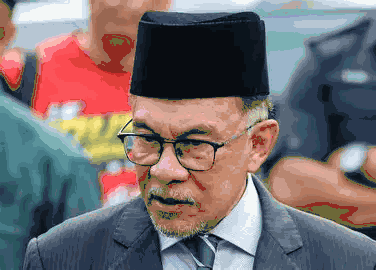
Fast forward to the present under the Madani government led by Prime Minister Anwar Ibrahim, and the narrative on press freedom is one of cautious progress amid persistent challenges. Anwar's administration has emphasized reforms, with the passage of the Malaysian Media Council (MMC) Bill in 2024, which aims to guide the government on enhancing media freedoms. The MMC is tasked with recommending limits on issues like race and religion while uplifting overall expression. However, 2025 has seen mixed signals: while Anwar has called for repealing outdated acts, censorship under the Printing Presses and Publications Act (PPPA) intensified, with a number of publications banned, many for political reasons. Incidents like the suspension of Malaysiakini's Facebook page after a critical report have raised alarms about backsliding. Critics argue there's little tangible progress on promised freedoms, yet the government's rhetoric suggests a commitment to the Federal Constitution's guarantees on speech and expression. Yet not many Prime Ministers or Presidents or Head of States of the world would publicly refrain from taking any action against a youth who burned an effigy of him in Kota Kinabalu. Try that against the King of Thailand and in Singapore the idea of pulling off such a stunt would not even enter your mind.
Personally, I had the opportunity to meet Anwar Ibrahim in 2015 during a private discussion on reform issues. The meeting was truly illuminating, though he did most of the talking—his charisma as a speaker is undeniable, weaving historical anecdotes with visionary ideas for a freer Malaysia. That encounter left me optimistic about his potential to drive change, and now, as we approach the 2028 general elections, it reinforces my view that we have no choice but to vote for the Madani coalition. They may not be perfect, but what alternatives exist? Which other party would tolerate figures like Rafizi Ramli within PKR, allowing him to critique and dissect policies openly? This tolerance signals a new era in Malaysia—one rooted in the Federal Constitution's protections for free speech and expression, fostering debate rather than stifling it.
To appreciate Malaysia's position, compare it with its Southeast Asian neighbors. Singapore, often lauded for its efficiency, is essentially a controlled state—a mini-China with CCTV everywhere and a populace that doesn't dare express dissent freely. Press freedom there is heavily curtailed, with rankings reflecting a media landscape dominated by state influence. Thailand, meanwhile, changes prime ministers like changing clothes, but beneath the surface, it's often a junta in disguise, with military interventions suppressing media voices and leading to unstable rankings at 85th in the 2025 Reporters Without Borders (RSF) World Press Freedom Index. Indonesia garners attention for its size, but interest pales compared to Malaysia's dynamic scene; its press freedom struggles with similar issues of political interference. The Philippines lags economically, with gross images of poverty underscoring a cost of living that's cheap but no assurance of quality life—its media faces threats, though it improved slightly in rankings. As for the rest of Southeast Asia—Vietnam at the bottom, Myanmar in turmoil, and others—no need to delve deeper; they pale in comparison.
Despite the setbacks of the Reformasi movement, Malaysia stands out as the best in the region. Do you see Malaysians flocking to migrate to China? Instead, many mainland Chinese are drawn to Malaysia not just for the lower cost of living, but for the freedoms here and the vibrant mix of cultures. It's a place where temperate weather, cleaner air, and a blend of Asian values with Western infrastructure make integration easy. People may talk down Malaysia, but why does the United States, under leaders like Donald Trump, maintain strong ties? Recent reciprocal trade deals and peace accords highlight America's affection for Malaysia's stability and openness. Where else would a geriatric figure like Dr. Mahathir Mohamad be allowed to hold mass rallies, critiquing the government without fear? And consider Sarawak's autonomy or Sabahans boldly chanting "Parti Malaya Out"—these are testaments to a society that values expression.
The road forward is Madani—not the easiest path, but the only viable one. In a region riddled with controls and instability, Malaysia's evolving press freedom, anchored in constitutional rights, positions it as a leader. As we head toward 2028, supporting Madani means betting on continued reforms, ensuring that voices—from journalists to everyday citizens—remain heard and free.
- MALAYSIA'S 1ST AI LAWYER - CLICK HERE
- ISMAIL – INTEGRATED SINGAPORE/MALAYSIA AI & LAW (Library)
- OPENING OF SINGAPORE MALAYSIA AI CENTRE AND LAW LIBRARY
- LIFT - LAW INSTRUMENTS FORMS & TEMPLATES
- LAWS OF MALAYSIA FOR SINGAPOREAN DUMMIES
- HANNAH YEOH'S ARTIFICIAL INTELLIGENCE LAW ENCYCLOPEDIA
- LEAD CR - Law Ecosystem Archive Databases on CD-ROM
- BREAKING NEWS FROM MJN
- CLICK HERE CO. PROFILE
- EXCITING NEW SERIES - THE ADVENTURES OF BOBBY TAN -ADVOCATE & SOLICITOR IN THE HIGH COURT OF NORTH BORNEO by marceljude.ai
- MEDICO LEGAL - BY PRISKILA AKWILA & GLORIOUS PETAL SDN BHD - powered by marceljude.ai
- MISCELLANOUS
- ANNOTATED STATUTES OF SABAH - A NEW SERIES
- e-library - marceljude.ai
- DRAFT - DOCUMENT RESEARCH & AUTOMATED FILING TECHNOLOGY
- CLARA – Case Law Analysis & Retrieval AI
- FOR RESEARCH REQUEST CLICK HERE
- CLICK HERE TO ASK ANYTHING
- RAMBO'S LAW - THE LAW OF THE LAW JUNGLE - EXCITING NEW SERIES - CASE ANALYSIS BY JOHN RAMBO @ +60138646786
- PRISKILA AKWILA ADVOCATES - High Court of Sabah & Sarawak @ Kota Kinabalu
- COLA - COMMONWEALTH ONLINE LAWCASES AI -marceljude.ai
- THE LAW LIBRARY THAT COMES TO YOU ANYWHERE AND ANYTIME
- marceljude.ai training academy
