
Pandikar Amin Challenges Pintasan Seat Result in Sabah in 11-Cornered Election by marceljude.ai
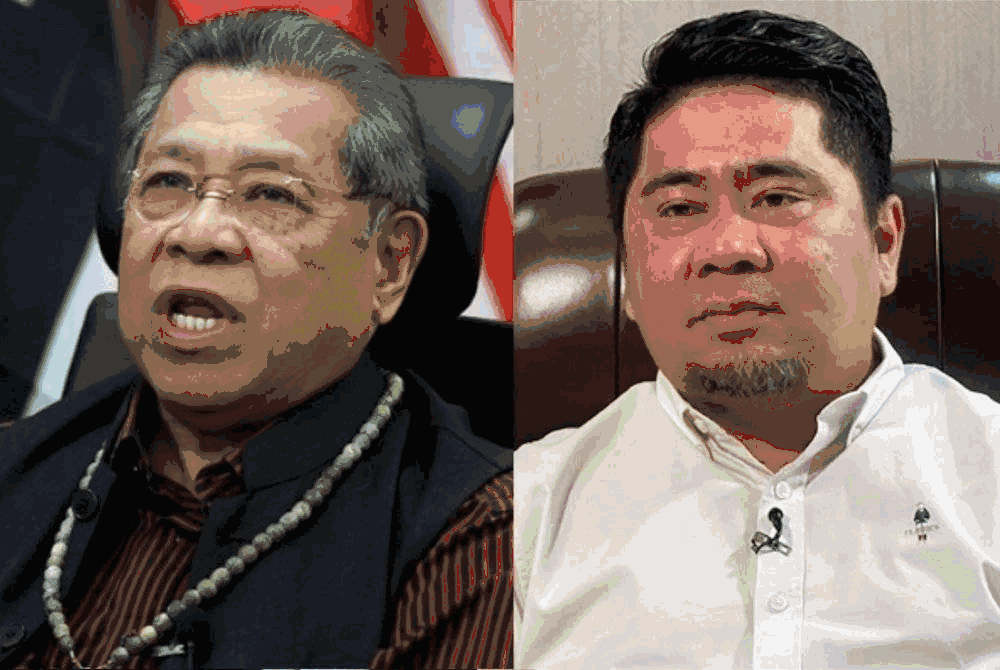
Pandikar Amin Challenges Pintasan Seat Result in Sabah, Alleging Bribery in 11-Cornered Election
Background: Pintasan’s 11-Cornered Contest and a Surprise Independent Victory
The Pintasan state seat in Sabah was the scene of a heated 11-cornered fight during the 17th Sabah State Election held on November 29, 2025. The contest featured candidates from multiple parties – including Gabungan Rakyat Sabah (GRS), Perikatan Nasional (PN), Barisan Nasional (BN), Warisan, Parti Solidariti Tanah Airku (STAR), Parti KDM, Parti Impian Sabah (PIS) – as well as several independents
. Among them were two prominent figures: Tan Sri Pandikar Amin Mulia, a veteran politician running under the GRS banner, and Datuk Fairuz Renddan, the incumbent assemblyman who defended his seat as an independent after a dramatic turn of events in the run-up to the polls.
In a surprising outcome, Datuk Fairuz Renddan clinched victory as an Independent candidate, defeating Pandikar Amin in what observers called one of the biggest upsets of the election
. Fairuz secured 4,675 votes, winning by a majority of 1,070 votes, while Pandikar (contesting on the GRS ticket) obtained 3,605 votes
. The result in Pintasan was noteworthy not only for the size of the field but also for the political story behind it: Fairuz was the incumbent who had been dropped as GRS’s candidate in favor of Pandikar prior to the election
. Fairuz, formerly the Youth Chief of the GRS component party Parti Gagasan Rakyat Sabah (PGRS), resigned from his party positions to stand as an independent, bringing along a groundswell of supporters
. (In fact, Fairuz had narrowly won the same seat in the 2020 Sabah polls by a margin of just 84 votes against Pandikar
, making the 2025 rematch a highly personal contest for both men.)
On polling day, Fairuz’s independent bid succeeded against the odds. “Today we proved that the voice of the people, especially the youth of Sabah, is real,” Fairuz proclaimed after the win, calling it “a truly meaningful victory” driven by young voters’ support
. He emphasized that he left his party to “champion youth issues without partisan limits,” arguing that “a party is only a platform. What truly matters is the constituency and the people we serve”
. Despite running as an opposition-friendly independent, Fairuz indicated he would align with the new governing coalition for the sake of continuity in development for Pintasan. His triumph, along with four other independents who won in Sabah, signaled voter willingness to back individuals over party lines, especially when local issues and candidate reputation are at stake.
Pandikar’s Election Petition and Allegations of Bribery
Now, the defeated Pandikar Amin Mulia – a former Speaker of Parliament and current president of the United Sabah National Organisation (USNO) – is challenging the Pintasan result in court. On December 22, 2025, Pandikar filed an election petition seeking to overturn Fairuz’s victory
. The petition names Fairuz Renddan as the first respondent, along with Pintasan’s returning officer, Peter Jiton, and the Election Commission (EC) as the second and third respondents respectively
. Pandikar, 70, alleges that corrupt and illegal practices took place in the campaign, in violation of the Election Offences Act 1954, that materially affected the outcome
. Specifically, he claims there were breaches of the law amounting to bribery of voters, and he is asking the Election Court to declare that the November 29 election for Pintasan is void, that Fairuz was “not duly elected,” and that he (Pandikar) be declared the rightful winner of the seat dailyexpress.com.my . The petition also seeks costs to be borne by the respondents in the event of a favorable judgment dailyexpress.com.my .
At the core of Pandikar’s case is an incident allegedly recorded during the campaign. In his petition, Pandikar cites the testimony of a 23-year-old registered voter who says she witnessed Datuk Fairuz engaging in vote-buying. According to this witness, on November 23, 2025 – just days before polling – Fairuz approached another woman at a political gathering in Pintasan and handed her an envelope containing RM100
. The young voter even managed to film the exchange on her mobile phone, providing video evidence, and both she and the recipient of the money lodged police reports in early December
. Pandikar argues that this cash handout constitutes an act of bribery under the Election Offences Act, intended to influence the recipient’s vote
. The video of the alleged incident circulated on social media, drawing public attention to the claim
. Pandikar contends that such vote-buying activity undermined the integrity of the election, tainting the result given the close fight and thus justifying judicial intervention .
Pandikar’s petition essentially accuses Fairuz of corrupt practice as defined by election laws. Under Section 32 of the Election Offences Act 1954, one of the explicit grounds for voiding an election result is if “a corrupt practice or illegal practice was committed in connection with the election by the candidate or with his knowledge or consent, or by any agent of the candidate.”
Bribery – offering money or valuable consideration to induce a voter to vote in a certain way – falls squarely under corrupt practices. If Pandikar can prove in court that Fairuz (or his agents) indeed gave cash to voters as an inducement, it would fulfill this criterion for nullifying the election. His petition will be heard by an Election Court (a High Court judge sitting as an election judge), where evidence like the aforementioned video and witness testimonies will be scrutinized.
It’s worth noting that this is not Pandikar’s first challenge to a Pintasan result. After the 2020 Sabah state election, where Fairuz likewise narrowly defeated him, Pandikar filed an election petition alleging irregularities. However, that earlier petition was unsuccessful, and Fairuz was able to continue serving his term as Pintasan assemblyman
. Observers say that experience likely spurred Pandikar to gather more concrete evidence for this second attempt. This time, armed with a direct witness account and video footage, Pandikar appears determined to test the robustness of Malaysia’s electoral justice system.
Legal Framework: How Malaysian Election Petitions Work
In Malaysia, an election petition is the only legal avenue for a candidate or voter to challenge the result of a state or parliamentary election. The law imposes strict procedures and timelines for such petitions – for example, they must typically be filed within 21 days of the gazette of the election results, and they require stringent compliance with the Election Petition Rules to avoid summary dismissal
. Once a petition is filed, the case is heard by a designated Election Judge in the High Court, and any appeal goes directly to the Federal Court. Given the public interest in elections, the courts aim to expedite these trials so that the constituency in question is not left in prolonged uncertainty .
Under Section 32 of the Election Offences Act 1954 (EOA), there are several grounds that can render an election void if proven to the court’s satisfaction
. These include: (1) general bribery, treating or intimidation so widespread that it likely affected the result; (2) serious non-compliance with election laws or regulations that affected the outcome; (3) corrupt or illegal practices committed by the winning candidate or his agents (with the candidate’s knowledge or consent); (4) knowingly engaging a corrupt agent in the campaign; or (5) the candidate was not qualified to be elected
. Pandikar’s petition hinges primarily on grounds (1) and (3) – essentially alleging that bribery (a form of corrupt practice) occurred and influenced the result in Pintasan. Notably, Section 32(a) of the Act addresses “general bribery” (widespread vote-buying) that affects the overall result
, whereas Section 32(c) (the third ground) covers specific acts of bribery or other corrupt acts by the candidate or his agents
. Even an isolated act of bribery by a candidate, if proven, is sufficient to void the election under the latter provision, without needing to show it was widespread, as honesty of the poll is paramount.
To succeed, Pandikar as the petitioner must meet a high standard of proof – the court will require credible evidence (such as eyewitness testimony, documents, or video) that the alleged bribery took place and was connected to the candidate’s campaign. Election judges often insist on detailed pleadings of the facts; petitions have been struck out in the past for failing to particularize the corrupt acts or identify the specific law violated
. In Pandikar’s case, his petition apparently specifies the date, place, amount of money, and even has video evidence, which suggests a meticulously prepared filing. The legal battle will involve examining whether Fairuz or someone on his behalf indeed offered money “with intent to induce” a voter, as defined under the EOA’s anti-bribery provisions. If the court finds the evidence lacking or procedural rules unmet, the petition will be dismissed and the election result upheld. But if the court is satisfied that an election offence occurred that likely affected the result, it has the power to declare the election null and void.
The Key Players: Veteran Politician vs Youthful Incumbent
Tan Sri Pandikar Amin Mulia, the petitioner, is a well-known figure in Malaysian politics, especially in Sabah. Now 70 years old, Pandikar has had a long and varied career. He served as the 8th Speaker of the Dewan Rakyat (Malaysia’s Parliament) from 2008 to 2018, one of the highest posts in the legislative branch
. Prior to that, he held ministerial roles – including a stint as a Minister in the Prime Minister’s Department in the early 2000s – and was a state minister in Sabah during the 1990s
. Pandikar’s political journey saw him moving through different parties: he was involved with Sabah’s local parties like USNO and AKAR in his early years
, later joining UMNO (the United Malays National Organisation) during the era when UMNO expanded to Sabah, and eventually rising to national prominence as a BN (Barisan Nasional) leader.
After 2018, as Malaysia’s political landscape shifted, Pandikar returned to focus on Sabah politics. In 2021, he became the president of the resurrected United Sabah National Organisation (USNO)
. The original USNO (often remembered as Tun Mustapha Harun’s party) was a dominant force in Sabah in the 1960s and early 1970s, instrumental in Sabah’s early years within Malaysia, but it was later dissolved in the 1990s with many members joining UMNO. The new USNO (USNO Baru) was re-registered in 2013 to revive that legacy
, and Pandikar’s leadership of the party since 2021 was seen as an effort to re-establish a Sabah-based political platform for Muslim bumiputera interests. By joining the GRS coalition (led by Chief Minister Datuk Seri Hajiji Noor), USNO under Pandikar aligned itself with the state’s ruling alliance. Pandikar even became a Deputy Chairman of GRS by 2025
, reflecting his integration into the coalition’s top ranks.
The decision to field Pandikar in Pintasan in 2025 under the GRS ticket was part of GRS’s seat-sharing strategy – but it was controversial. Pintasan’s incumbent, Datuk Fairuz Renddan, was from Hajiji’s own party (PGRS) and had been a loyal youth leader. Replacing him with Pandikar was a calculated risk, likely intended to give USNO a chance at a winnable seat and leverage Pandikar’s stature. The move, however, backfired when Fairuz, feeling sidelined, rebelled. In a show of principle and popularity, Fairuz quit the party and ran as an independent, urging supporters with the rallying cry “Kita Lawan” (“We fight”)
. Thousands of his supporters in black T-shirts accompanied him on nomination day, underscoring a grassroots resonance that GRS perhaps underestimated
Datuk Fairuz Renddan, at 40 years old (approximately, as he’s referred to as a younger leader), represents a younger generation of Sabah politicians. Prior to his independent run, he was the Youth Chief of PGRS (Parti Gagasan Rakyat Sabah), which is the party led by Hajiji within GRS
. Fairuz first won Pintasan in the 2020 snap state election as a candidate aligned with the then Perikatan/GRS coalition, narrowly beating Pandikar. During that term, Fairuz would have sat as a government backbencher in the State Assembly, possibly championing local issues in Kota Belud (the district of Pintasan). He earned enough clout to be conferred the title “Datuk,” indicating recognition of his service. His decision to defy his party in 2025 to defend his seat as an independent suggests a strong conviction and personal following. In interviews after his win, Fairuz positioned himself as a voice for Sabah’s youth and grassroots. He highlighted that development for his constituency and empowerment of young people were his top priorities, above party politics
. Indeed, Fairuz framed his victory as part of a broader shift in Sabah’s politics, saying it “signals a growing shift… driven strongly by young voters.”
Fairuz’s willingness to later “align with the new government coalition” as an independent indicates that he is not anti-establishment per se, but rather opposed to what he saw as unjust treatment in the candidate selection. This nuanced stance – independent yet cooperative – means that politically, he might support GRS-led initiatives in the assembly despite having defeated GRS’s official candidate. It’s an interesting dynamic: Pandikar’s petition, if successful, could unseat someone who was, in effect, a friendly independent supporting the government anyway.
USNO’s Role in Sabah and Political Implications of the Petition
The United Sabah National Organisation (USNO) carries historic weight in Sabah. USNO was the state’s ruling party in the years immediately after the formation of Malaysia (Sabah joined the federation in 1963). Under Tun Datu Mustapha, USNO championed Sabah’s rights and the Muslim-native agenda until it lost power in 1976. The party was later deregistered, and for decades no solely Sabah-based party held sway over the state’s Muslim bumiputera population as UMNO filled that space from the 1990s onward. The revival of USNO in a “New” form is part of a broader trend in Sabah: the re-emergence of local parties asserting Sabah’s autonomy and identity in politics, especially after the 2018 general election and 2020 state election rearranged political affiliations.
Pandikar Amin’s USNO, as of the 2025 state election, was a component of the GRS coalition (which itself is an alliance of local Sabah parties). However, USNO’s footprint in terms of elected representatives was non-existent going into the election – it held 0 seats in the Sabah State Legislative Assembly
. The Pintasan seat was likely USNO’s best chance to gain representation. By winning Pintasan, USNO would have secured a voice in the Assembly, boosting its credibility and bargaining power within GRS. Conversely, losing the seat meant USNO remained without any assemblyman (Pandikar’s wife, Puan Sri Diana, also lost her contest in Sekong under the GRS ticket, compounding the disappointment)
. This has implications for GRS’s internal dynamics. Pandikar had hailed GRS’s formation as a sign of Sabah’s political maturity – a coalition uniting various local parties
– but the Pintasan episode exposed some tension in candidate selection. Grassroots backlash to parachuting a veteran into a seat at the expense of a locally popular incumbent suggests that coalition leaders will need to handle seat allocations more delicately to avoid rebel candidacies. USNO, in particular, may feel aggrieved; without any seats, its influence in GRS could wane, and questions may arise about its future unless it can prove its worth in another way.
This election petition, therefore, carries significant stakes for USNO and Pandikar. If Pandikar wins the petition, it could vindicate USNO’s strategy and give the party the Pintasan seat (either through a court declaration or, more likely, via a by-election). A successful challenge would not only hand Pandikar a personal political comeback but also insert USNO into the state assembly, potentially allowing Pandikar to champion issues of Sabah autonomy and rural development from within. It might also serve as a warning to other candidates about the consequences of any election misconduct, potentially discouraging vote-buying in future Sabah contests. On the other hand, if the petition fails, it may mark the end of the road for Pandikar’s long career, as he himself had hinted that Pintasan was his last electoral foray
. USNO would remain seatless and face an uphill battle to stay relevant; its supporters might question the wisdom of aligning with GRS when an ex-GRS independent can win without the coalition’s backing.
For Sabah’s broader political landscape, the situation is reflective of a couple of trends: the rise of independent or local actors who can challenge the might of established parties, and the growing importance of clean politics to the electorate. Five independents won in this state election
– an unusually high number – indicating a voter desire for credible local champions over party loyalty. Fairuz’s win, in particular, suggests young voters in Sabah are energized and will reward those who engage them. A court battle that scrutinizes alleged vote-buying will be watched closely by political analysts; if the court upholds Fairuz’s win (by dismissing the petition), it could reinforce his legitimacy and that of other independents. If the court annuls the result, Sabah could see a Pintasan by-election sometime in 2026, which would effectively be a rematch between Pandikar (or another GRS/USNO pick) and Fairuz (who could either re-contest or possibly be barred if found guilty of an offence, depending on the judgment). Such a by-election would be a high-profile affair, essentially testing whether Fairuz’s personal appeal endures or if voters swing back to the GRS candidate in a one-on-one scenario. It could also affect the balance of the State Assembly, although at 29 GRS seats vs 25 Warisan plus others
, one seat changing hands might not shift the majority greatly (especially since Fairuz was inclined to support the government anyway). Symbolically, however, it matters a great deal to both sides.
Possible Outcomes and Past Precedents
What can happen as a result of Pandikar’s election petition? Broadly, there are a few possible outcomes once the Election Court hears the case:
The petition is dismissed and the election result is upheld. This would happen if the court finds that Pandikar failed to prove the allegations or if there were technical flaws in the petition. In that scenario, Fairuz remains the duly elected assemblyman and Pandikar must accept defeat (barring any appeal he might lodge). This is essentially status quo – the burden of proof lies with the petitioner, and many election petitions do fail on technical or evidentiary grounds, as history has shown
.
The election is declared void (nullified). If the court is convinced that bribery or other illegal conduct occurred sufficient to affect the result or integrity of the election, it can void the Pintasan result
. The seat would then become vacant and a by-election must be called (typically within 60 days of the court’s decision, as required by election laws). A fresh poll would give voters a chance to vote again. Notably, if a candidate is found personally guilty of a corrupt practice (like bribery), they may also face disqualification from running for a period (usually five years) under the law, which could prevent Fairuz from contesting the by-election. The court’s judgment could include such a finding, or the authorities (e.g. Attorney General’s Chambers) could pursue a separate criminal prosecution under the Election Offences Act. However, the petition itself is a civil proceeding focused on the validity of the election result.
A rare possibility – declare the runner-up as winner. In theory, an election court could declare another candidate as the winner (without a new election) if it concludes the petitioner actually got the most lawful votes. This outcome, known in some jurisdictions as the election being held “undue”
, is uncommon in Malaysia. It might be considered only if the court finds, for instance, that certain votes were invalid due to bribery and after subtracting them the petitioner would have a majority. Pandikar’s petition explicitly asks for him to be “declared the rightful winner”
, but Malaysian courts have historically preferred to void the whole election and let voters decide again, rather than install a second-place candidate. Unless the evidence clearly quantifies the impact (which in this case, one RM100 bribe may not definitively account for a 1,070 vote margin), a by-election is the more likely remedy if the petition succeeds
.
Petition withdrawal or settlement. It’s possible (though unlikely here) that the petition doesn’t go to full trial – for example, if Pandikar withdraws it or if some agreement is reached. However, election petitions are seldom withdrawn because they involve public interest and even if Pandikar were to reconsider, the law may still require some inquiry (to prevent abuse of the process).
Malaysia has seen precedents where election petitions led to results being overturned. For instance, following the 2018 General Election (GE14), a notable case was the Cameron Highlands parliamentary seat: the BN candidate’s victory was nullified after evidence emerged of vote-buying (bribes given to voters in the form of money and gifts) – this forced a 2019 by-election which was the first by-election triggered by proven electoral corruption in GE14. More recently, after the 2022 General Election (GE15), courts have voided at least two parliamentary results due to corrupt practices. In September 2023, the Kuala Terengganu parliamentary seat (won in GE15 by a PAS candidate) was nullified by the Election Court when a voter’s petition successfully proved that bribery had taken place to influence voters
. The judge in that case found conclusive evidence of cash handouts (linked to an “i-Sjara” program) aimed at inducing votes, and overturned the result, underscoring that even one proven act of vote-buying is enough to invalidate an election if it’s shown to have been done by or with the candidate’s consent
. A similar petition outcome occurred for the Kemaman seat in Terengganu, also won by PAS, which was nullified on grounds of bribery in late 2023
. These cases illustrate that Malaysian courts are willing to enforce election laws strictly – a trend that Minister Fahmi Fadzil noted as both necessary and worrying, given the implication that vote-buying might be more common than thought
.
However, for every successful election petition, many are dismissed due to insufficient evidence or technical non-compliance. The courts have set a high bar; petitioners must not only allege wrongdoing but detail it with precision and back it with proof. In the Pintasan case, the fact that a police report was lodged and video evidence exists could bolster Pandikar’s case significantly. Legal experts will be watching how the court evaluates the authenticity and impact of the video. If the woman in the video is confirmed to be a voter and testifies that the money was an inducement, it could strongly support the claim of bribery. Conversely, Fairuz’s defense (should the case go to trial) may involve disproving the allegations – perhaps by arguing the incident was misinterpreted or that he had no knowledge of any such act – or by challenging the petition on procedural grounds (for example, whether it was filed correctly and within time, or whether the pleadings meet all legal requirements).
Regardless of outcome, this election petition is set to offer a valuable case study on the enforcement of election integrity in Malaysia. For the general public, it shines a light on what constitutes election corruption and how the law safeguards voters’ choices. For legal experts, it will test the application of the Election Offences Act in a real-world scenario with video evidence – still somewhat novel in election disputes. And for political analysts, the saga encapsulates the intricacies of Sabah’s politics: the old guard versus the young turks, party apparatus versus individual popularity, and the perennial battle against money politics. As the case proceeds, Sabahans await to see if the courts will uphold Fairuz Renddan’s upset victory or pave the way for a new battle in Pintasan. Either way, the ruling will reverberate through Sabah’s political circles and could set a precedent for future elections across Malaysia that clean campaigns are paramount for a valid win.
- MALAYSIA'S 1ST AI LAWYER - CLICK HERE
- ISMAIL – INTEGRATED SINGAPORE/MALAYSIA AI & LAW (Library)
- OPENING OF SINGAPORE MALAYSIA AI CENTRE AND LAW LIBRARY
- LIFT - LAW INSTRUMENTS FORMS & TEMPLATES
- LAWS OF MALAYSIA FOR SINGAPOREAN DUMMIES
- HANNAH YEOH'S ARTIFICIAL INTELLIGENCE LAW ENCYCLOPEDIA
- LEAD CR - Law Ecosystem Archive Databases on CD-ROM
- BREAKING NEWS FROM MJN
- CLICK HERE CO. PROFILE
- EXCITING NEW SERIES - THE ADVENTURES OF BOBBY TAN -ADVOCATE & SOLICITOR IN THE HIGH COURT OF NORTH BORNEO by marceljude.ai
- MEDICO LEGAL - BY PRISKILA AKWILA & GLORIOUS PETAL SDN BHD - powered by marceljude.ai
- MISCELLANOUS
- ANNOTATED STATUTES OF SABAH - A NEW SERIES
- e-library - marceljude.ai
- DRAFT - DOCUMENT RESEARCH & AUTOMATED FILING TECHNOLOGY
- CLARA – Case Law Analysis & Retrieval AI
- FOR RESEARCH REQUEST CLICK HERE
- CLICK HERE TO ASK ANYTHING
- RAMBO'S LAW - THE LAW OF THE LAW JUNGLE - EXCITING NEW SERIES - CASE ANALYSIS BY JOHN RAMBO @ +60138646786
- PRISKILA AKWILA ADVOCATES - High Court of Sabah & Sarawak @ Kota Kinabalu
- COLA - COMMONWEALTH ONLINE LAWCASES AI -marceljude.ai
- THE LAW LIBRARY THAT COMES TO YOU ANYWHERE AND ANYTIME
- marceljude.ai training academy
