
ENGLISH by marceljude.ai


Description
Appeal Filed in Court of Appeal Over Dismissal of Judicial Review on N.37 Karanaan State Election
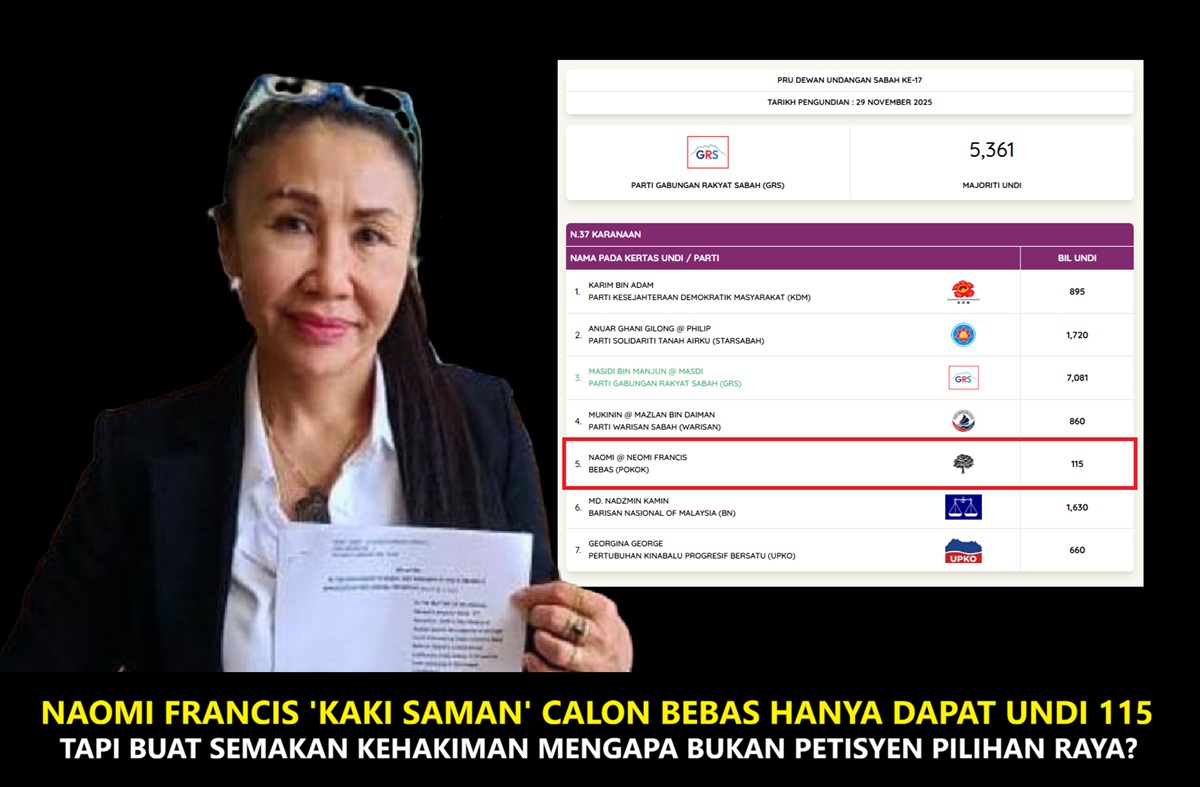
Kota Kinabalu, 9 June 2026 – Appellant Naomi @ Neomi Francis has today filed a Memorandum of Appeal in the Court of Appeal of Malaysia against the decision of the High Court in Sabah and Sarawak at Kota Kinabalu dated 11 March 2026, which dismissed her application for leave to commence judicial review proceedings concerning the conduct of the state election for N.37 Karanaan.
In the appeal (Civil Appeal No. to be assigned), the Appellant, who was a candidate in the N.37 Karanaan constituency, is challenging the entire decision of the Honourable Justice Tuan Alexander Siew How Wai that refused leave under Order 53 rule 3(2) of the Rules of Court 2012.
Key Grounds of Appeal
The Memorandum of Appeal raises multiple serious issues, including:
General Errors at the Leave Stage
The Appellant contends that the learned High Court Judge applied an erroneously high threshold at the leave stage, misdirected himself on the low threshold test (whether the application is not frivolous or vexatious and discloses an arguable case), and prematurely determined complex questions of constitutional and electoral law that should properly be ventilated at a substantive hearing.
Constitutional and Jurisdictional Issues
A central ground is that the High Court erred in treating Article 118 of the Federal Constitution as an absolute bar to judicial review of the Election Commission’s conduct. The Appellant argues that her application raised legitimate public law challenges regarding alleged administrative illegality, procedural impropriety, breach of statutory duty, and breach of legitimate expectation by the Election Commission — distinct from a pure election petition challenging the result itself.
Mischaracterisation of the Application
The Judge is said to have erroneously characterised the entire application as a disguised election petition or abuse of process, without adequately considering the separate public law complaints against the Election Commission, such as alleged failure to permit polling agents access, failure to provide Form 14 statements of poll, and failure to address corrupt practices.
Evidence of Irregularities
The Appellant highlights that the application was supported by police reports, statutory declarations, and documentary evidence alleging cash payments to voters, treating, undue influence, and procedural irregularities shortly before and during polling. She argues these materials raised at least an arguable case that warranted a full substantive hearing in the public interest.
Public Interest and Locus Standi
The appeal emphasises the Appellant’s sufficient interest as a candidate and voter, and the broader public interest in maintaining electoral integrity, transparency, and accountability in the conduct of elections.
Costs and Discretion
The Appellant also challenges the exercise of the Judge’s discretion and any award of costs against her, given the constitutional and public interest dimensions of the case.
Relief Sought
The Appellant prays that the Court of Appeal:
Allows the appeal and sets aside the High Court’s decision of 11 March 2026;
Grants leave to commence judicial review (either in full or in limited/modified terms);
Remits the matter to the High Court for an expedited substantive hearing; and
Awards costs in her favour or costs in the cause.
The Memorandum of Appeal expressly reserves the right to add to or amend the grounds upon receipt of the High Court’s written judgment and notes of proceedings.
Solicitor for the Appellant, Priskila Akwila , confirmed the filing and stated that the appeal underscores the importance of judicial oversight over the administration of elections to uphold constitutional principles and public confidence in the democratic process.
- MALAYSIA'S 1ST AI LAWYER - CLICK HERE
- ISMAIL – INTEGRATED SINGAPORE/MALAYSIA AI & LAW (Library)
- OPENING OF SINGAPORE MALAYSIA AI CENTRE AND LAW LIBRARY
- LIFT - LAW INSTRUMENTS FORMS & TEMPLATES
- LAWS OF MALAYSIA FOR SINGAPOREAN DUMMIES
- HANNAH YEOH'S ARTIFICIAL INTELLIGENCE LAW ENCYCLOPEDIA
- LEAD CR - Law Ecosystem Archive Databases on CD-ROM
- BREAKING NEWS FROM MJN
- CLICK HERE CO. PROFILE
- EXCITING NEW SERIES - THE ADVENTURES OF BOBBY TAN -ADVOCATE & SOLICITOR IN THE HIGH COURT OF NORTH BORNEO by marceljude.ai
- MEDICO LEGAL - BY PRISKILA AKWILA & GLORIOUS PETAL SDN BHD - powered by marceljude.ai
- MISCELLANOUS
- ANNOTATED STATUTES OF SABAH - A NEW SERIES
- e-library - marceljude.ai
- DRAFT - DOCUMENT RESEARCH & AUTOMATED FILING TECHNOLOGY
- CLARA – Case Law Analysis & Retrieval AI
- FOR RESEARCH REQUEST CLICK HERE
- CLICK HERE TO ASK ANYTHING
- RAMBO'S LAW - THE LAW OF THE LAW JUNGLE - EXCITING NEW SERIES - CASE ANALYSIS BY JOHN RAMBO @ +60138646786
- PRISKILA AKWILA ADVOCATES - High Court of Sabah & Sarawak @ Kota Kinabalu
- COLA - COMMONWEALTH ONLINE LAWCASES AI -marceljude.ai
- THE LAW LIBRARY THAT COMES TO YOU ANYWHERE AND ANYTIME
- marceljude.ai training academy
