
GARDENIA
.
The Gardenia Incident: When a Loaf of Bread Exposed Old Wounds by Marceljude.ai
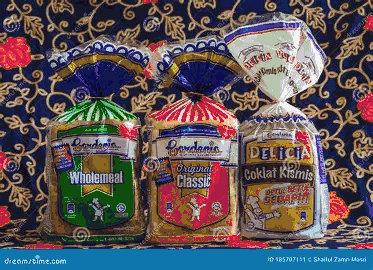
Gardenia is probably the most famous bread brand in Malaysia. It started life in the 1960s as Tong Hing Holdings, a small family-run biscuit and confectionery business in Kota Kinabalu, Sabah. The founder was a tough, old-school towkay named Datuk Wong Tze Fatt. My own mother, Mary, worked for him for many years as his personal assistant and private secretary. She typed his letters, managed his appointments, and listened to him grumble about flour prices and lazy drivers. Every morning our family ate Gardenia bread – the original soft white loaf, the one with the red-and-green label – long before it became a national giant. We were loyal because it was Sabahan, because Datuk Wong was one of us, and because the bread really did taste better when it was baked in the old Likas factory.
In the late 1980s and 1990s Gardenia expanded aggressively. The company built a huge modern plant in Shah Alam, Selangor, and the centre of gravity shifted to the peninsula. Slowly the Sabah identity faded from the packaging and the advertising. Cheaper brands appeared in the Borneo markets and, like many families, we drifted away. The bread was still good, but it no longer felt like “our” bread.
Fast forward to 2024–2025. Gardenia Malaysia, now fully owned by a big conglomerate in the peninsula,and it’s Borneo related corporation previously decided to run a Merdeka-themed social media campaign. One of their posts carried the line (paraphrased): “From the jungles of Borneo to the cities of Malaya, Gardenia unites us all.” The accompanying image showed loaves arranged to look like Malaysia, with Sabah and Sarawak drawn as green, leafy, almost primeval blobs – the kind of imagery that makes Sabahans roll their eyes. Comments poured in. Some laughed. Many did not.
For Sabahans and Sarawakians, the stereotype never really went away: that we live in longhouses or up trees, that we are simple folk who can be bought with a few ringgit, that our states are resource colonies whose job is to supply oil, gas, timber and tourism postcards while receiving lectures on gratitude. Politicians from the peninsula have been feeding that narrative for decades.
In 2016, PAS president Abdul Hadi Awang claimed in a speech that Christians in Sabah and Sarawak would convert to Islam for RM500–RM1,000. Sabah lawyer-activist Marcel Jude sued him for defamation. The Kota Kinabalu Court ruled in Marcel’s favour. The judgment was a rare moment when a Sabahan stood up in open court and forced a powerful peninsular politician to back down.
The Gardenia post, trivial as it seems, landed on top of all that accumulated resentment. It felt like the same old contempt, just wrapped in marketing.
And then came the outrageous comment by a PAS MP — the viral video from the Kedah State Assembly — suggesting you could “win Sabahans’ loyalty with Gardenia bread”. It was meant as a joke. It landed like an insult. To Sabahans, it said: you are cheap. But ironically, it also sounded like a compliment to Gardenia — the bread so good, apparently you can conquer territories without drones or troops, just handouts of soft white Gardenia loaves.
That is the deeper wound behind the Gardenia anger.
Peninsular Malaysians love flying to Kota Kinabalu for the beaches, to Sipadan for the diving, to Kundasang for Instagram photos. But many of them — not all, but enough — still speak of Sabahans as quaint exhibits. They take the cream of our wealth (including the never-fully-honoured 40% net revenue entitlement under MA63) and then lecture us about “being grateful” that Malaya “liberated” us. Liberated us into what, exactly?
This cultural tension sits in the background as PAS announces it will field eight candidates in the coming Sabah state election. The rise of PAS in Sabah began with the appointment of Datuk Aliaakbar Gulasan as an appointed assembly member in 2020. Sabahans pleaded with Datuk Jeffrey Kitingan to intervene and block the appointment, but nothing happened.
Soon after, Aliaakbar made headlines by calling for segregated shopping trolleys in Keningau to “avoid contamination” from pork products. The community reacted with disbelief. The GRS government quickly scolded him into silence, and he faded into the background—until now.
The truth is simpler: PAS ideology has no fertile ground in Sabah. This is a land held together by mixed marriages, shared cultures, multifaith families, three-languages-in-one-sentence conversations, and an unspoken rule that says: Your religion is yours, mine is mine, and we can still sit at the same table. See article by distinguished writer and analyst Remy Majamkin
We have no quarrel with the people of Kedah, Kelantan, or Terengganu. We love their hospitality, their slang, their food. But their politics? Culturally foreign to us. Historically incompatible. Socially risky.
When Sabahans look at PAS, we don’t see salvation. We see a bad genie — once out of the bottle, impossible to put back.
That is why the Gardenia insult struck such a raw nerve. It wasn’t about bread. It was about dignity. It was about being spoken of as political simpletons, in a tone dripping with a kind of casual colonial arrogance.
Sabahans can forgive many things, but not contempt.
Bread is never just bread in Sabah. It is childhood. It is memory. It is a reminder that once upon a time, this brand was ours. So when a politician uses Gardenia to belittle Sabahans, he is not just insulting our intelligence — he is insulting our roots.
If PAS wants to test its luck in Sabah, let them come. Let them walk through kampungs, longhouses, fishing jetties, street markets. Let them explain why their leaders mock us in their own assemblies. Let them try to sell an ideology that does not match the soil of this land.
But they should not be surprised when Sabahans respond with the same polite firmness we reserve for door-to-door salesmen offering something we do not need.
Sabah is not for sale.
And certainly not for the price of a loaf of bread.
Article by marceljude.ai
- MALAYSIA'S 1ST AI LAWYER - CLICK HERE
- ISMAIL – INTEGRATED SINGAPORE/MALAYSIA AI & LAW (Library)
- OPENING OF SINGAPORE MALAYSIA AI CENTRE AND LAW LIBRARY
- LIFT - LAW INSTRUMENTS FORMS & TEMPLATES
- LAWS OF MALAYSIA FOR SINGAPOREAN DUMMIES
- HANNAH YEOH'S ARTIFICIAL INTELLIGENCE LAW ENCYCLOPEDIA
- LEAD CR - Law Ecosystem Archive Databases on CD-ROM
- BREAKING NEWS FROM MJN
- CLICK HERE CO. PROFILE
- EXCITING NEW SERIES - THE ADVENTURES OF BOBBY TAN -ADVOCATE & SOLICITOR IN THE HIGH COURT OF NORTH BORNEO by marceljude.ai
- MEDICO LEGAL - BY PRISKILA AKWILA & GLORIOUS PETAL SDN BHD - powered by marceljude.ai
- MISCELLANOUS
- ANNOTATED STATUTES OF SABAH - A NEW SERIES
- e-library - marceljude.ai
- DRAFT - DOCUMENT RESEARCH & AUTOMATED FILING TECHNOLOGY
- CLARA – Case Law Analysis & Retrieval AI
- FOR RESEARCH REQUEST CLICK HERE
- CLICK HERE TO ASK ANYTHING
- RAMBO'S LAW - THE LAW OF THE LAW JUNGLE - EXCITING NEW SERIES - CASE ANALYSIS BY JOHN RAMBO @ +60138646786
- PRISKILA AKWILA ADVOCATES - High Court of Sabah & Sarawak @ Kota Kinabalu
- COLA - COMMONWEALTH ONLINE LAWCASES AI -marceljude.ai
- THE LAW LIBRARY THAT COMES TO YOU ANYWHERE AND ANYTIME
- marceljude.ai training academy
