
The Defamation Bible - Gatley on Libel and Slander - review by marceljude.ai
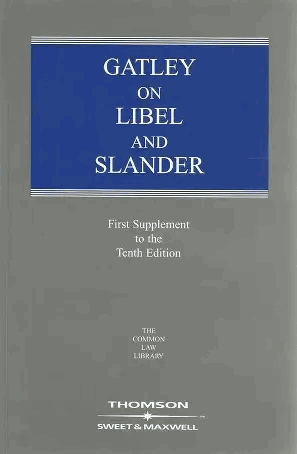


Description
Gatley on Libel and Slander — Book Review
Review author: marceljude.ai Review perspective: law professor
I read the book
Contents of the Book
Part One — The Defamatory Statement
Chapter 1 — Introduction
Subsections: Introductory; Defamation and the Law of Torts.
Chapter 2 — Defamation
Subsections: What is Defamatory; Standard of Opinion; Instances of Defamatory Imputations.
Chapter 3 — The Form and Meaning of the Defamatory Statement
Subsections: Form; The Distinctions between Libel and Slander; Interpretation.
Chapter 4 — Slander Actionable Per Se
Subsections: General; Criminal Offences; Words Imputing Contagious Disease; Words Calculated to Disparage in any Office, Profession, Calling, Trade or Business; Words Imputing Unchastity to Female.
Chapter 5 — Slander Actionable Only on Proof of Special Damage
Chapter 6 — Publication
Subsections: General Principles; Publication; Particular Publishers and Distributors; Republication and Repetition.
Chapter 7 — Identity of the Person Defamed
Subsections: Reference to the Claimant; Intention to Refer to Claimant; Claimant Member of a Class.
Chapter 8 — Parties: Who May Sue or Be Sued
Subsections: General; Diplomatic Agents and Foreign Sovereigns; Foreign Subjects and Companies; Bankrupts and Insolvent Companies; Minors; Married Persons; Deceased Persons and Representatives; Mentally Disordered and Drunken Persons; Corporations and Governmental Bodies; Trade Unions; Firms; Unincorporated Associations; Vicarious Liability.
Chapter 9 — Remedies
Subsections: Compensatory General Damages; Aggravated Damages; Exemplary Damages; Multiple Parties; Injunctions.
Part Two — Defences
Chapter 10 — Defences: General
Chapter 11 — Justification, Truth
Chapter 12 — Fair Comment
Subsections: Introduction; Comment; A Matter of Public Interest; Comment or Fact.
Chapter 13 — Absolute Privilege
Subsections: Introduction; Statements Made in or in Connection with Judicial Proceedings; Statements Made Before Other Tribunals Having Functions of a Judicial Nature; Statements Made by One Officer of State to Another in the Course of Official Duty; Proceedings in Parliament; Reports Published by Order of Parliament; Reports of Judicial Proceedings; Miscellaneous Statutory Heads of Absolute Privilege; Communications Between Solicitor and Client.
Chapter 14 — Qualified Privilege at Common Law
Subsections: Introduction; Existing Relationships: Duty and Interest, General Principles; Duty and Interest: Particular Situations; Publication in the Media: Reynolds v Times Newspapers Ltd; Privileged Reports at Common Law.
Chapter 15 — Qualified Privilege: Statute
Subsections: Introduction; Privilege Conferred by Schedule 1 to the Defamation Act 1996; Miscellaneous Statutes Conferring Qualified Privilege.
Chapter 16 — Malice and Qualified Privilege
Subsections: General; Reynolds Privilege; Common Interests.
Chapter 17 — Rehabilitation of Offenders Act 1974
Subsections: Introduction; Spent Convictions; Effects of Rehabilitation; Defamation Proceedings.
Chapter 18 — Other Defences
Subsections: The Offer of Amends Procedure; Lord Campbell’s Act; Consent; Limitation; Judgment Recovered and res judicata; Release, Accord and Satisfaction.
Part Three — Other Causes of Action and Related Matters
Chapter 19 — Scope of This Part
Chapter 20 — Malicious Falsehood
Subsections: Introduction; Malicious Falsehood; Disparagement of Title; Disparagement of Goods.
Chapter 21 — Other Causes of Action Arising from Statements
Subsections: Negligence; Privacy, Confidence, Data Protection and Harassment; False Statements Injuring Property; Passing Off; Matters Concerned with Copyright.
Chapter 22 — Criminal Libel
Subsections: Elements of the Offence; Defences; Proceedings for Criminal Libel; Reform of the Law.
Chapter 23 — Defamation, Convention on Human Rights and Libel
Subsections: Background; The Right to a Reputation as a Convention Right; Infringements of Convention Rights by the Protection of Reputation.
Part Four — The Action
Chapter 24 — The Initial Stages
Subsections: Introduction; Choice of Defendants; Jurisdiction; Other Complaints Procedures; Issue of Claim Form.
Chapter 25 — Interim Injunctions
Subsections: General Principles; Practice and Procedure; Injunctions to Restrain False Statements About Parliamentary, Municipal or European Parliamentary Candidates; Injunctions to Restrain Statements Prejudicial to the Fair Trial of an Action.
Chapter 26 — Particulars of Claim
Subsections: Introduction; Prefatory Averments; Publication; The Words Published; Foreign Publication; The Meaning of the Words; Identification of the Claimant; Actions for Slander; Damages; Other Relief; The Prayer and Statement of Truth; Malicious Falsehood; Amendment of Particulars of Claim; Default in Service of Particulars of Claim; Application for Further Information.
Chapter 27 — Defence
Subsections: General Principles; Plea of Justification; Plea of Fair Comment; Plea of Privilege; Other Pleas; Mitigation of Damages; Statement of Truth; Counterclaim; Contribution; Amendment of Defence and Counterclaim; Default in Service of Defence; Applications for Further Information About Defence.
Chapter 28 — Reply and Defence to Counterclaim
Subsections: Introduction; Pleading to a Defence of Fair Comment or Justification; Pleading as a Claimant’s Case in Reply Generally; Malice; Defence to Counterclaim.
Chapter 29 — Apology, Offer of Amends and Compromise
Subsections: Apology; Settlement; Part 36 Payments and Offers; Offer of Amends; Mediation.
Chapter 30 — Pre-Trial Applications
Subsections: Introduction; Rulings on Meaning; Summary Dismissal and Summary Judgment; Striking Out Pleadings; The Trial of Issues.
Chapter 31 — Interlocutory Matters
Subsections: Disclosure; Further Information and Interrogatories; Security for Costs and Maintenance; Consolidation, Joinder and Severance; Mode of Trial.
Chapter 32 — The Trial: The Claimant’s Case
Subsections: Commencement of Trial; Evidence for the Claimant: Introduction; Proof of Publication; Identification of Claimant; Defamatory Meanings; Evidence of Malice; Evidence to Support Claim for Damages; Evidence of Claimant’s Good Character or Reputation; Evidence in Rebuttal of Justification or Composite Plea of Fair Comment.
Chapter 33 — The Trial: The Defendant’s Case
Subsections: Submission of No Case; Opening Statement on Behalf of Defendant; Evidence for the Defendant: General; Proof of Justification; Proof of Fair Comment; Proof of Privilege; Rebuttal of Malice; Evidence in Mitigation of Damages.
Chapter 34 — The Trial: Functions of Judge and Jury
Chapter 35 — The Trial: The Final Stages
Subsections: Speeches; Summing-Up; Verdict; Judgment; Costs.
Chapter 36 — Appeal
Subsections: General Principle; Improper Admission or Rejection of Evidence; Wrong Conclusion of Law; Misdirection; Unreasonable Verdict; Excessive or Inadequate Damages; Misconduct; Surprise; Discovery of Fresh Evidence; Costs.
Appendices
Forms and Precedents; Statutes; Approved Libel Awards; Index beginning at printed page 1227.
Review of the Entire Book
This book is a major doctrinal and procedural treatise on the law of libel and slander. Its intellectual architecture is classical: it begins with the actionable wrong, then moves to the form and meaning of the statement, then to publication, identity, parties, remedies, defences, related causes of action, and finally litigation procedure. From a law professor’s standpoint, the organization is pedagogically sound because it mirrors the life of a defamation dispute: first, one asks whether the words are defamatory; next, whether they were published of and concerning the claimant; next, who can sue and who can be sued; next, what remedies are available; next, what defences arise; and finally, how the action is pleaded, managed, tried, and appealed.
Its central strength is that it treats defamation not merely as a tort of wounded feelings, but as a complex institutional mechanism for allocating social risk among reputation, speech, public scrutiny, journalism, litigation privilege, parliamentary privilege, private communication, and procedural fairness. The book is not casual commentary. It is deeply lawyerly. It constantly forces the reader to think in elements, burdens, occasions, meanings, admissibility, pleading consequences, and remedial choices.
The book is also strikingly practical. Many defamation works discuss reputation and free speech in theory; this book goes further by showing how those concepts are translated into pleadings, requests for further information, summary judgment, preliminary rulings on meaning, evidence at trial, jury functions, damages, costs, and appeals. That is why Part Four is not merely procedural afterthought. It is one of the book’s strongest parts. Defamation law is unusually procedural because the meaning of words, the identity of the claimant, malice, privilege, publication, and damages often turn on how the case is framed before trial.
The book’s deepest jurisprudential tension is the conflict between reputation and freedom of expression. That tension appears throughout: in the definition of defamatory meaning, the treatment of fair comment, the analysis of qualified privilege, the discussion of media privilege, the treatment of human rights, the procedural use of summary disposal, and the law of damages. As a law professor, I would describe the book as a legal map of that tension. It does not treat free speech as absolute, nor does it treat reputation as inviolable. Instead, it builds a system of rules that decide when speech must be protected, when it must be justified, when it is excused by occasion, and when it must answer in damages.
The book’s limitation is also the cost of its strength: it is dense. It assumes a reader willing to follow paragraph references, case distinctions, statutory modifications, and procedural cross-references. It is therefore more suitable for practitioners, judges, advanced students, and scholars than for a beginner seeking a short introduction. But for serious legal work, that density is a virtue. Defamation is a field where over-simple statements are dangerous. The book refuses simplification when simplification would distort the law.
The book’s overall thesis, as I read it, is this: defamation law is not a single rule about reputation; it is a system of carefully calibrated legal gateways. A claimant must pass through the gateways of defamatory meaning, reference, publication, damage or actionability, and proof. A defendant may then invoke gateways of truth, comment, privilege, limitation, consent, procedural compromise, or mitigation. The court, meanwhile, polices the system through pleading control, rulings on meaning, disclosure, summary judgment, trial management, and appellate review. That layered structure is the book’s most important contribution.
Chapter-by-Chapter Review
Chapter 1 — Introduction
Subsections: Introductory; Defamation and the Law of Torts.
Chapter 1 frames defamation as part of the English law of torts concerned with protection of reputation. The opening is important because it does not treat defamation as an isolated wrong. It expressly places libel and slander among adjacent legal wrongs involving communications and harm: malicious falsehood, confidence, privacy, copyright, passing off, and negligent misstatement. This is a sophisticated beginning. It warns the reader that defamation often overlaps with other causes of action and that a lawyer must identify the correct juridical category before suing.
The subsection on the relationship between defamation and tort law explains that defamation is not merely about insult. It is about reputational injury caused by publication. A statement must do more than offend; it must bear a defamatory tendency in the eyes of others. That distinction is central to the whole book.
The second subsection, dealing with foreign and international law, introduces the comparative and human-rights context. It shows that defamation law is affected by constitutional and international free-expression principles, especially where reputation and speech collide. On printed pages 4–6, the chapter moves into the tension between domestic defamation doctrine and wider principles of free expression and privacy. This is not decorative comparative law; it prepares the reader for later chapters on qualified privilege, public-interest publication, privacy, and human-rights reasoning.
As a law professor, I would say this chapter performs three tasks: it defines the field, locates it within tort, and warns that defamation is no longer purely domestic private law. The chapter’s weakness is that it opens many doors quickly. A student may feel that privacy, confidence, copyright, passing off, and human rights are being introduced before the core elements of defamation are fully developed. But that is also its virtue: the reader learns immediately that defamation law sits in a crowded legal landscape.
Chapter 2 — Defamation
Subsections: What is Defamatory; Standard of Opinion; Instances of Defamatory Imputations.
Chapter 2 is the doctrinal gateway. It asks what makes a statement defamatory. The first subsection, “What is Defamatory,” concerns the legal threshold: whether words tend to lower the claimant in the estimation of right-thinking members of society, expose the claimant to hatred, ridicule, contempt, or cause others to shun or avoid the claimant. The precise language of the tests varies across authorities, but the underlying function is stable: the law separates mere insult or annoyance from reputational injury.
The subsection on “Standard of Opinion” is especially important. Defamation law is not concerned with the hypersensitive claimant, nor with the most malicious reader, nor with a morally eccentric audience. It uses a constructed social standard. The “ordinary reasonable reader” is not naïve, but not avid for scandal; not legally trained, but capable of drawing implications. This standard is crucial because defamatory meaning is often implied rather than express.
The subsection on “Instances of Defamatory Imputations” turns the abstract test into categories: imputations of crime, dishonesty, professional incompetence, immorality, disease, corruption, unfitness, hypocrisy, or conduct inconsistent with social standing. This is where the law becomes practical. The book likely uses examples to show how courts classify reputational harm.
My assessment is that Chapter 2 is foundational. Every later chapter presupposes it. A weak understanding of defamatory meaning produces weak pleadings, weak defences, and weak trial strategy. The chapter’s academic value lies in showing that reputation is socially mediated: the question is not what the claimant felt, but what the publication conveyed to others.
Chapter 3 — The Form and Meaning of the Defamatory Statement
Subsections: Form; Distinctions between Libel and Slander; Interpretation.
Chapter 3 moves from whether a statement is defamatory to how the statement exists legally. The subsection on “Form” addresses whether words, images, gestures, broadcasts, writings, or other communicative acts can constitute defamatory matter. Defamation law is concerned with meaning, and meaning may be conveyed by more than literal text.
The subsection distinguishing libel and slander is doctrinally traditional but still important. Libel is typically written or otherwise permanent; slander is spoken or transient. The distinction matters because libel has historically been actionable without proof of special damage, while slander often requires proof unless it falls into recognized categories. This chapter therefore links directly to Chapters 4 and 5.
The subsection on “Interpretation” is one of the most important in the book. Defamation actions often turn not on what the defendant says the words meant, nor what the claimant says they meant, but on what the law accepts as a permissible meaning. Interpretation includes ordinary meaning, inferential meaning, innuendo, context, tone, irony, juxtaposition, headlines, photographs, and the likely perception of the audience.
As a professor, I would emphasize that Chapter 3 is where defamation becomes a law of language. It teaches that the legal meaning of a statement is not identical with dictionary meaning. Meaning is contextual, social, and inferential. That makes the chapter essential for litigation, because pleadings and preliminary rulings often collapse if the pleaded meaning is unsustainable.
Chapter 4 — Slander Actionable Per Se
Subsections: General; Criminal Offences; Words Imputing Contagious Disease; Words Calculated to Disparage in Office, Profession, Calling, Trade or Business; Words Imputing Unchastity to Female.
Chapter 4 deals with the exceptional categories of slander that are actionable without proof of special damage. The “General” subsection likely explains the historical rule: spoken defamation usually requires proof of actual loss, but certain accusations are so serious that the law presumes damage.
The subsection on criminal offences concerns imputations that a claimant committed a crime of sufficient seriousness. This category reflects the obvious reputational gravity of being branded criminal.
The contagious disease subsection reflects older social assumptions about exclusion, shunning, and social disability. Its modern relevance may be narrower, but doctrinally it shows how slander historically protected against statements likely to produce social avoidance.
The subsection on disparagement in office, profession, calling, trade, or business is practically vital. If words attack a person’s professional competence, integrity, or fitness to trade, the law recognizes the likelihood of economic harm.
The subsection on imputing unchastity to a female is historically revealing. It shows the gendered foundations of older defamation doctrine. From a modern law professor’s standpoint, this category is doctrinally important but normatively problematic because it reflects a social order in which female sexual reputation received special legal treatment.
This chapter’s value is that it exposes the historical architecture of slander. Its weakness is the inherited artificiality of the categories. The law’s classifications do not always match modern reputational realities, but understanding them is necessary for any serious treatment of slander.
Chapter 5 — Slander Actionable Only on Proof of Special Damage
Chapter 5 completes the treatment of slander by examining cases outside the per se categories. Its central concern is special damage: actual, material loss caused by the slander. This is a demanding requirement. The claimant must show more than hurt feelings or general embarrassment. There must be legally recognizable damage, often economic or otherwise concrete.
The chapter likely explains what counts as special damage, how it must be pleaded, how causation is proved, and how remote or speculative loss is treated. In slander, the requirement of special damage functions as a gatekeeping device. It prevents every spoken insult from becoming actionable, but it also creates difficulty where reputational harm is real yet hard to quantify.
As a law professor, I would call this chapter a study in the law’s skepticism about transient speech. Written defamation has historically been treated as more dangerous because it persists and circulates; spoken defamation is often treated as less serious unless specific harm is shown. That distinction may be conceptually strained in modern communication environments, but the chapter explains the inherited structure.
Chapter 6 — Publication
Subsections: General Principles; Publication; Particular Publishers and Distributors; Republication and Repetition.
Chapter 6 is central because defamation is not complete merely when words are spoken or written. The defamatory matter must be published to someone other than the claimant. The “General Principles” subsection likely explains that publication means communication, not merely printing.
The “Publication” subsection likely treats intentional and unintentional publication, communication to third parties, foreseeability of communication, and the problem of letters, internal documents, broadcasts, and circulation.
The subsection on “Particular Publishers and Distributors” is practically important. Defamation liability can extend beyond authors to editors, printers, distributors, booksellers, broadcasters, employers, and others involved in dissemination. The law must decide when a person is sufficiently responsible for publication.
“Republication and Repetition” deals with one of defamation law’s hardest problems: a person who repeats a libel may be liable as if he made it himself. This discourages the laundering of defamatory allegations through quotation or attribution. Saying “someone else alleged” does not automatically avoid liability.
The chapter’s academic importance lies in its theory of responsibility. Publication is both a factual event and a normative attribution. The law asks not only whether words reached a third party, but who should bear responsibility for that communication.
Chapter 7 — Identity of the Person Defamed
Subsections: Reference to the Claimant; Intention to Refer to Claimant; Claimant Member of a Class.
Chapter 7 addresses the “of and concerning” requirement. A defamatory statement must be understood as referring to the claimant. The first subsection explains reference: it is not enough that a statement is defamatory in the abstract; it must identify the claimant expressly or by implication.
The subsection on intention is crucial because defamation can occur even if the defendant did not intend to refer to the claimant, provided reasonable readers would understand the reference. This is a strict feature of defamation law and often surprises students.
The subsection on class defamation deals with statements about groups. If a statement attacks a class, can an individual member sue? The answer depends on the size of the class, the specificity of the allegation, and whether the words would reasonably be understood to refer to the claimant individually.
This chapter is doctrinally elegant because it separates meaning from reference. Words may be defamatory, but not of the claimant. Or they may refer to the claimant, but not bear a defamatory meaning. A successful claim requires both.
Chapter 8 — Parties: Who May Sue or Be Sued
Subsections: General; Diplomatic Agents and Foreign Sovereigns; Foreign Subjects and Companies; Bankrupts and Insolvent Companies; Minors; Married Persons; Deceased Persons and Representatives; Mentally Disordered and Drunken Persons; Corporations and Governmental Bodies; Trade Unions; Firms; Unincorporated Associations; Vicarious Liability.
Chapter 8 is a procedural and substantive bridge. Defamation protects reputation, but not every legal person has the same reputation interest, and not every defendant has the same capacity or liability.
The subsections on diplomatic agents, foreign sovereigns, foreign subjects, companies, bankrupts, minors, married persons, deceased persons, representatives, mentally disordered persons, corporations, trade unions, firms, and unincorporated associations show how reputation interacts with legal personality. A human being’s reputation differs from a company’s commercial reputation; a dead person cannot ordinarily be defamed in the same way as the living; a government body may face limits on suing; and a firm or association may raise questions of collective identity.
The final subsection on vicarious liability is very important. Defamatory statements are often made by employees, agents, journalists, officers, or representatives. The law must decide when an employer or principal is responsible.
The chapter’s value lies in showing that defamation law is not only about words. It is also about legal capacity, attribution, and institutional responsibility.
Chapter 9 — Remedies
Subsections: Compensatory General Damages; Aggravated Damages; Exemplary Damages; Multiple Parties; Injunctions.
Chapter 9 turns from liability to consequence. Compensatory damages seek to vindicate reputation, compensate distress, and repair harm. Defamation damages are unusual because they may include injury to reputation, injury to feelings, and the need for public vindication.
Aggravated damages address the defendant’s conduct, especially where the defendant worsens the injury by refusing correction, persisting in the allegation, acting high-handedly, or conducting litigation oppressively.
Exemplary damages are punitive and exceptional. Their inclusion shows that defamation sometimes crosses from compensation into punishment where the defendant’s conduct is especially improper.
The subsection on multiple parties addresses the complexity of multiple claimants, multiple defendants, republication, contribution, and overlapping liability.
The subsection on injunctions is crucial because money may not be enough. If a defamatory publication is threatened or repeated, preventive relief may be sought. But injunctions raise serious free-speech concerns, especially where truth or public interest is disputed.
As a professor, I see Chapter 9 as one of the book’s normative centers. Remedies reveal what the law thinks reputation is worth and how far courts should go to protect it.
Chapter 10 — Defences: General
Chapter 10 introduces the defensive architecture of the book. Its function is to organize the defendant’s possible answers before the book turns to specific defences such as truth, fair comment, absolute privilege, qualified privilege, spent convictions, limitation, consent, and settlement-based procedures.
A general chapter on defences is valuable because defamation defences are conceptually different from one another. Truth says the claimant has no legitimate complaint because the defamatory sting is substantially true. Fair comment protects opinion. Privilege protects certain occasions or relationships even where the statement is defamatory. Limitation bars stale claims. Consent defeats complaint because the claimant accepted publication. Offer-of-amends procedures encourage correction and compromise.
This chapter likely emphasizes that defences may be complete, partial, procedural, substantive, or relevant mainly to damages. That taxonomy matters because a defendant must plead the correct defence and understand its evidential burden.
Chapter 11 — Justification, Truth
Chapter 11 addresses the most fundamental defence: truth. If the defamatory sting is substantially true, the claimant generally cannot recover merely because the statement damaged reputation. Defamation protects reputation from false injury, not reputation that accurately reflects proven facts.
The chapter likely discusses substantial truth rather than literal exactitude. A defendant need not prove every detail if the essential sting is true. But the defendant must prove enough to defeat the defamatory imputation complained of. This makes the pleaded meaning crucial: one cannot know what must be proved until one knows what meaning is in issue.
From a law professor’s perspective, the chapter is indispensable because truth is both morally intuitive and legally difficult. It is intuitive because true allegations should not ordinarily be punished. It is difficult because defamatory publications often contain mixtures of fact, inference, exaggeration, and implication. The law must identify the sting and then decide whether the defendant has proved it.
Chapter 12 — Fair Comment
Subsections: Introduction; Comment; A Matter of Public Interest; Comment or Fact.
Chapter 12 protects opinion. The introduction likely explains that fair comment exists because public discourse would be chilled if every critical opinion required proof as fact. The “Comment” subsection distinguishes opinion from factual assertion. That distinction is often hard: a statement may look like opinion but imply undisclosed defamatory facts.
The “Matter of Public Interest” subsection shows that fair comment is not simply a licence to insult private persons on private matters. The subject must be one on which public comment is legitimate.
The “Comment or Fact” subsection is the chapter’s core. If words are fact, truth must be proved. If words are comment, the defence may apply if the comment is based on true or privileged facts and is honestly held within the legal framework.
As a professor, I regard this chapter as essential to free expression. It protects evaluative judgment, criticism, satire, review, and political comment. But it also polices abuse by requiring a factual basis and distinguishing comment from defamatory assertion disguised as opinion.
Chapter 13 — Absolute Privilege
Subsections: Introduction; Judicial Proceedings; Quasi-Judicial Tribunals; Officer-of-State Communications; Proceedings in Parliament; Parliamentary Reports; Reports of Judicial Proceedings; Miscellaneous Statutory Heads; Solicitor-Client Communications.
Chapter 13 concerns the strongest defence in the book: absolute privilege. Where absolute privilege applies, the defendant is protected even if the statement is false, defamatory, and malicious. That severity is justified only for occasions where public policy demands complete freedom of communication.
The judicial-proceedings subsections likely explain why judges, advocates, witnesses, parties, and documents used in litigation receive protection. The purpose is not to reward defamation but to ensure that litigation can proceed without collateral defamation suits.
The quasi-judicial subsection extends the logic to tribunals with judicial functions. The officer-of-state subsection concerns confidential state communications where uninhibited exchange is considered necessary.
The parliamentary subsections protect proceedings in Parliament and certain authorized reports. This reflects constitutional separation and legislative privilege.
The visible ending on printed pages 375–378 addresses miscellaneous statutory heads and solicitor-client communications. The discussion of statutory heads shows that absolute privilege is not only common law; legislation can create protected categories for official reports, regulatory communications, or public functions. The solicitor-client section is especially important because it protects legal advice communications from defamation liability, reinforcing confidentiality and candour in legal representation.
The chapter’s strength is conceptual clarity. Absolute privilege is exceptional, and the book treats it as exceptional. As a professor, I would stress that this chapter teaches a hard lesson: sometimes the legal system protects speech not because it is true, fair, or careful, but because the institutional setting requires complete immunity.
Chapter 14 — Qualified Privilege at Common Law
Subsections: Introduction; Existing Relationships; Particular Duty-Interest Situations; Publication in the Media; Privileged Reports at Common Law.
Chapter 14 is one of the book’s most important chapters. It deals with qualified privilege, a defence that protects defamatory statements made on occasions where the law recognizes a duty, interest, or public-interest reason for communication. Unlike absolute privilege, qualified privilege can be defeated by malice.
The introduction on printed page 379 explains the basic theory: some defamatory statements should be protected because the social interest in communication outweighs the claimant’s reputational interest, provided the occasion is not abused. This is the balancing structure of the chapter.
The section on existing relationships, beginning at printed page 382, explains the classic duty-interest model. A statement may be privileged where the maker has a legal, moral, or social duty to communicate and the recipient has a corresponding interest in receiving it, or where the maker is protecting a legitimate interest. The book carefully distinguishes two broad families of privilege: traditional relational privilege and media/public-interest privilege.
The “particular situations” section begins at printed page 397 and is extensive. It includes communications made in discharge of a duty, such as answers to inquiries, references, reports of suspected crime, complaints, public-interest communications, and statements made to protect another’s interests. It also covers communications made in pursuance of an interest, such as business communications, employment matters, common-interest communications, replies to attacks, and statements protecting property or reputation.
The subsection on complaints about public officers and persons in authority, beginning around printed page 429, shows the democratic importance of privilege. Citizens must be able to complain to proper authorities without automatically facing defamation liability. But the privilege depends on proper occasion, proper recipient, and absence of malice.
The relevance subsection at printed page 432 makes clear that privilege does not protect irrelevant defamatory matter. Even where the occasion is privileged, the statement must be connected to the occasion. This is a crucial limiting principle.
The excessive-publication subsection at printed page 440 addresses scope. A communication may be privileged when made to the right person but lose protection if unnecessarily published to the wrong audience. This gives the doctrine its procedural discipline: privilege is not only about what was said but also to whom and how widely it was said.
The media section beginning at printed page 451 is the chapter’s modern centerpiece. It discusses Reynolds v Times Newspapers Ltd and the idea that responsible journalism on matters of public concern may attract qualified privilege. The book reviews factors such as seriousness of allegation, nature of the information, source reliability, steps taken to verify, urgency, whether comment was sought, tone, and whether the article presented the claimant’s side. This section is not merely about newspapers. It is about the constitutional place of public-interest communication.
The final section on privileged reports at common law, beginning at printed page 483, returns to older categories: fair and accurate reports of judicial proceedings, parliamentary proceedings, and public registers. These protect the reporting of public institutional processes.
From a law professor’s view, Chapter 14 is the doctrinal heart of the book. It shows defamation law at its most sophisticated: not truth versus falsity, but occasion, responsibility, proportionality, malice, audience, relevance, and public interest. The chapter’s challenge is complexity. Qualified privilege is fact-sensitive, and the book rightly refuses to reduce it to a mechanical rule.
Chapter 15 — Qualified Privilege: Statute
Major section starts: Introduction p.489; Schedule 1 statutory privilege p.489; statements without explanation or contradiction p.497; statements subject to explanation or contradiction p.500; miscellaneous statutory privilege p.506. Subsections: Introduction; Schedule 1 Privileges; Miscellaneous Statutory Privileges.
Chapter 15 shifts from common-law qualified privilege to statutory privilege. Its opening on printed page 489 explains that legislation creates categories of protected reports and communications. The chapter is practical and technical because statutory privilege depends on precise statutory conditions.
The section on privileges under Schedule 1 distinguishes two main classes. Some statements are privileged without the need for explanation or contradiction. Others are privileged only if the publication is subject to explanation or contradiction, meaning that the claimant may have a right or opportunity to respond.
The first class includes legislative proceedings, judicial proceedings, public inquiries, international organizations and conferences, copies or extracts from official materials, notices and advertisements, government publications, and international-governmental materials. These categories reflect a public interest in access to official or public proceedings.
The second class includes notices from governments, courts, local authority meetings, public meetings in member states, company materials, association materials, and designated bodies. The requirement of explanation or contradiction is a fairness mechanism. It protects reporting but also gives reputational safeguards.
The final section, beginning at printed page 506, identifies miscellaneous statutory privileges. This is important because defamation privilege is scattered across legislation. A practitioner cannot rely only on common law; statutory privileges may be decisive.
As a professor, I would describe Chapter 15 as the statute-book counterpart to Chapter 14. Chapter 14 explains privilege as principle; Chapter 15 explains privilege as legislative design. Together they show how public information systems require protection, but also how statutory conditions discipline that protection.
Chapter 16 — Malice and Qualified Privilege
Subsections: General; Reynolds Privilege; Common Interests.
Chapter 16 deals with the key limitation on qualified privilege: malice. The visible section beginning at printed page 508 explains that qualified privilege protects the occasion, but not abuse of the occasion. If the defendant acts from improper motive, does not honestly believe the statement, is reckless, or uses the privileged occasion for a purpose foreign to the privilege, the defence may fail.
The discussion is built around the principle associated with Horrocks v Lowe: malice is not simply spite or anger. It concerns improper purpose, dishonesty, or misuse of the occasion. A defendant may be hostile and still protected if the communication is honestly made for the privileged purpose. Conversely, a polite defendant may lose privilege if acting for an improper purpose.
The visible pages analyze improper motive, mixed motives, knowledge of falsity, recklessness, unreasonable belief, and failure to investigate. A particularly important theme is that negligence is not the same as malice. The defendant may be careless without being malicious, though extreme circumstances may support an inference of malice.
The chapter also addresses evidential questions: what facts may prove malice, how state of mind is inferred, and how conduct before, during, and after publication may matter. This links directly to Chapters 32 and 33, where malice becomes an evidential issue at trial.
The contents also identify later treatment of Reynolds privilege and common interests. That indicates the chapter extends the malice analysis into media/public-interest privilege and shared-interest communications.
As a professor, I would say Chapter 16 is essential because it prevents privilege from becoming immunity. It preserves the moral core of the defence: protected occasions exist for legitimate communication, not for calculated reputational attack.
Chapter 17 — Rehabilitation of Offenders Act 1974
Subsections: Introduction; Spent Convictions; Effects of Rehabilitation; Defamation Proceedings.
Chapter 17 addresses spent convictions and their interaction with defamation. The topic is conceptually important because truth and reputation collide in a special way. A past conviction may be historically true, but the law may treat it as spent for certain purposes.
The introduction likely explains the policy of rehabilitation: after a prescribed period, a person should not be indefinitely burdened by past criminality. The subsection on spent convictions explains when convictions become spent and what legal consequences follow.
The “Effects of Rehabilitation” subsection likely addresses restrictions on disclosure, use, or reliance on spent convictions. In defamation, this matters because a defendant may wish to justify a defamatory statement by proving the claimant’s past conviction.
The defamation-proceedings subsection likely explains how rehabilitation affects truth, malice, damages, and pleading. This is a subtle area because the law must balance accurate historical fact against the policy of reintegration.
As a professor, I would identify Chapter 17 as a chapter about legal forgiveness. It shows that defamation law is not only about truth; it is also about whether certain truths may fairly be used to damage reputation.
Chapter 18 — Other Defences
Subsections: Offer of Amends Procedure; Lord Campbell’s Act; Consent; Limitation; Judgment Recovered and Res Judicata; Release, Accord and Satisfaction.
Chapter 18 collects defences that do not fit neatly into truth, comment, or privilege. The offer-of-amends procedure encourages early correction and resolution. It reflects the idea that defamation litigation should not always culminate in full trial.
Lord Campbell’s Act, consent, limitation, res judicata, release, accord, and satisfaction are procedural or general-law defences with defamation-specific consequences. Consent is particularly important: one who authorizes or invites publication cannot ordinarily complain of it. Limitation prevents stale claims. Res judicata and judgment recovered prevent repeated litigation over the same wrong. Release and satisfaction enforce settlement.
The chapter’s value lies in reminding readers that defamation does not exist outside general civil law. General doctrines of compromise, finality, waiver, consent, and limitation remain essential.
Chapter 19 — Scope of This Part
Chapter 19 introduces Part Three, which deals with causes of action adjacent to defamation. Its role is transitional. It likely explains why malicious falsehood, privacy, confidence, harassment, passing off, copyright, and criminal libel are treated after defamation defences.
The chapter is important because plaintiffs often plead multiple communication-based wrongs. A publication may injure reputation, disclose private information, breach confidence, harass, mislead consumers, infringe copyright, or damage business interests. The correct cause of action determines fault, defences, remedies, and limitation.
As a professor, I would say Chapter 19 signals the book’s sophistication. It recognizes that modern reputational disputes rarely fit one doctrinal box.
Chapter 20 — Malicious Falsehood
Subsections: Introduction; Malicious Falsehood; Disparagement of Title; Disparagement of Goods.
Chapter 20 explores statements that cause economic harm without necessarily being defamatory of personal reputation. Malicious falsehood requires false statements made maliciously that cause damage. The wrong protects economic interests against false injurious statements.
The subsection on disparagement of title concerns false statements affecting property rights or ownership. The subsection on disparagement of goods concerns false statements damaging products or commercial offerings.
This chapter is vital because a statement may not lower a person in social estimation but may still harm business. For example, saying that goods are defective may not defame the seller personally, but it may be actionable as malicious falsehood.
As a professor, I would emphasize the distinction between reputation and economic interest. Defamation protects social estimation; malicious falsehood protects against false economic injury. The overlap is real but not complete.
Chapter 21 — Other Causes of Action Arising from Statements
Subsections: Negligence; Privacy, Confidence, Data Protection and Harassment; False Statements Injuring Property; Passing Off; Matters Concerned with Copyright.
Chapter 21 broadens the field. Negligence may arise where a statement causes foreseeable harm under a duty of care. Privacy and confidence protect informational autonomy rather than reputation. Data protection concerns processing of personal data. Harassment concerns oppressive courses of conduct. Passing off protects goodwill against misrepresentation. Copyright protects expression and authorship.
This chapter is doctrinally significant because it prevents lawyers from treating defamation as the only remedy for harmful communications. Some claims that look reputational may be better pleaded as privacy, confidence, data protection, passing off, or malicious falsehood.
The chapter also implicitly teaches remedial strategy. A claimant may prefer privacy because truth is not necessarily a defence to misuse of private information. A business may prefer passing off or malicious falsehood. A publisher may face overlapping liabilities.
As a professor, I regard this chapter as one of the book’s most modern in spirit. It recognizes that law of communication is plural.
Chapter 22 — Criminal Libel
Subsections: Elements of the Offence; Defences; Proceedings for Criminal Libel; Reform of the Law.
Chapter 22 deals with the criminal dimension of defamatory publication. The elements subsection likely explains what made certain defamatory publications criminal historically. The defences subsection likely parallels, but does not simply duplicate, civil defamation defences. The proceedings subsection addresses prosecution procedure. The reform subsection considers whether criminal libel remains justified.
From a law professor’s perspective, this chapter is important historically and constitutionally. Criminal libel shows the state’s interest in controlling reputationally dangerous speech, but it also raises severe free-expression concerns. Civil defamation compensates private injury; criminal libel punishes public wrong. The boundary between those functions is controversial.
The chapter’s value is not merely technical. It allows readers to understand why modern defamation law has moved toward civil remedies and procedural safeguards rather than broad criminal punishment for speech.
Chapter 23 — Defamation, Convention on Human Rights and Libel
Subsections: Background; Reputation as a Convention Right; Infringements of Convention Rights by Protection of Reputation.
Chapter 23 examines the human-rights dimension. The background subsection likely explains how freedom of expression, privacy, reputation, and fair trial rights interact with defamation law.
The subsection on reputation as a Convention right addresses whether and how reputation is protected as part of private life or dignity. This matters because defamation law is not simply a private-law mechanism; it implicates rights.
The subsection on infringements by protection of reputation addresses the opposite problem: defamation law itself can restrict expression. Courts must ask whether restrictions on speech are legitimate, necessary, and proportionate.
As a professor, I would describe Chapter 23 as a constitutionalization chapter. It shifts defamation from a purely common-law tort into a rights-sensitive field. That rights framework is essential to understanding media privilege, injunctions, damages, and procedural proportionality.
Chapter 24 — The Initial Stages
Subsections: Introduction; Choice of Defendants; Jurisdiction; Other Complaints Procedures; Issue of Claim Form.
Chapter 24 begins Part Four, the litigation section. It addresses the earliest strategic decisions in a defamation action. Choice of defendants is crucial because responsibility may lie with authors, editors, publishers, distributors, broadcasters, employers, or corporate entities. Jurisdiction is important because defamation may cross borders through print, broadcast, or online circulation.
Other complaints procedures may include regulatory, press, broadcasting, or internal complaint mechanisms. These alternatives can affect cost, remedy, urgency, and litigation strategy.
The issue of the claim form begins formal proceedings. In defamation, the way a claim begins matters because meanings, publication, limitation, and defendants must be carefully identified.
As a professor, I would say this chapter is where doctrine becomes litigation strategy. A brilliant substantive claim can fail if the wrong defendant is sued, the wrong jurisdiction is chosen, or procedural preliminaries are mishandled.
Chapter 25 — Interim Injunctions
Subsections: General Principles; Practice and Procedure; Electoral False Statements; Statements Prejudicial to Fair Trial.
Chapter 25 concerns interim restraint before final trial. The general principles are especially important because prior restraint of speech is exceptional. Courts are cautious about restraining allegedly defamatory speech before truth and meaning are tried.
The practice and procedure subsection likely addresses evidence, urgency, undertakings, notice, and the strength of the claimant’s case. The electoral subsection concerns false statements about candidates, where timing and democratic integrity are critical. The fair-trial subsection concerns publications that may prejudice ongoing proceedings.
This chapter is a study in institutional caution. Reputation may require urgent protection, but speech should not be restrained lightly. The chapter forces readers to understand why interim injunctions in defamation are treated differently from many other civil wrongs.
Chapter 26 — Particulars of Claim
Subsections: Introduction; Prefatory Averments; Publication; Words Published; Foreign Publication; Meaning; Identification; Slander; Damages; Other Relief; Prayer and Statement of Truth; Malicious Falsehood; Amendment; Default; Further Information.
Chapter 26 is one of the most practically important chapters. Defamation pleading is unusually exacting. The claimant must identify the publication, the words complained of, the meanings, the reference to the claimant, the publication facts, the type of damage, and the relief sought.
The publication subsection requires pleading where, when, by whom, and to whom the defamatory matter was published. The words-published subsection requires precision: the court and defendant must know the exact language complained of.
The meaning subsection is the heart of the pleading. If the claimant pleads an unsustainable meaning, the claim may fail or be narrowed. The identification subsection requires the claimant to show that the words referred to him or her. The slander subsection deals with special pleading requirements where special damage is needed.
The damages subsection requires attention to general, special, aggravated, or other damages. The malicious falsehood subsection recognizes overlapping claims. Amendment, default, and further-information subsections show that pleadings remain dynamic.
As a professor, I would call this chapter a pleading manual. It teaches that defamation litigation is won or lost in formulation. Words, meanings, references, and damages must be pleaded with discipline.
Chapter 27 — Defence
Subsections: General Principles; Justification; Fair Comment; Privilege; Other Pleas; Mitigation; Statement of Truth; Counterclaim; Contribution; Amendment; Default; Further Information.
Chapter 27 mirrors Chapter 26 from the defendant’s perspective. A defence must answer the claimant’s pleaded meanings and facts. A plea of justification must identify the defamatory sting and facts relied on. A plea of fair comment must show comment, public interest, factual basis, and honest comment within the law’s requirements. A plea of privilege must identify the privileged occasion and facts supporting it.
Other pleas may include consent, limitation, offer of amends, accord, or procedural bars. Mitigation of damages is important because even if liability exists, damages may be reduced by apology, correction, claimant reputation, prior publications, or conduct.
The counterclaim and contribution subsections recognize multi-party complexity. Amendment and default address procedural control.
This chapter is essential because defamation defences must be pleaded carefully. A defendant cannot simply deny wrongdoing; the defence must identify the legal basis for avoiding liability. The chapter’s professorial lesson is that defamation defence is not rhetorical denial but structured legal pleading.
Chapter 28 — Reply and Defence to Counterclaim
Subsections: Introduction; Pleading to Fair Comment or Justification; Claimant’s Reply Generally; Malice; Defence to Counterclaim.
Chapter 28 addresses the claimant’s answer to the defence. This is important because many defamation cases become truly defined only after the defence is pleaded. If the defendant pleads truth, the claimant may reply to facts relied on. If the defendant pleads fair comment, the claimant may challenge whether the words were comment, whether the facts were true, whether the subject was public interest, or whether the comment was honestly held. If privilege is pleaded, the claimant may reply with malice.
The malice subsection is crucial because malice often becomes the claimant’s route around qualified privilege. The claimant must plead and prove facts supporting improper motive or misuse of occasion.
This chapter’s value lies in showing that pleadings are conversational. The statement of case, defence, and reply collectively define the issues for trial.
Chapter 29 — Apology, Offer of Amends and Compromise
Subsections: Apology; Settlement; Part 36 Payments and Offers; Offer of Amends; Mediation.
Chapter 29 concerns resolution short of full trial. The apology subsection likely addresses the legal effect of apology on liability and damages. Apology may mitigate damages, but its effect depends on timing, sincerity, prominence, and whether it is coupled with correction.
Settlement and Part 36 offers introduce civil-procedure incentives. Defamation litigation is expensive and risky; structured offers create cost consequences and pressure toward compromise.
The offer-of-amends subsection likely explains the statutory procedure for admitting error, correcting, apologizing, and compensating without full trial. This mechanism is especially suited to defamation because reputational harm may be reduced by prompt correction.
The visible mediation section on printed pages 889–890 stresses the court’s interest in active case management and alternative dispute resolution. It recognizes that defamation cases may involve uncertainty, cost, emotion, and reputational risk that mediation can address better than trial.
As a professor, I would identify Chapter 29 as one of the book’s most humane chapters. It recognizes that vindication may sometimes be achieved by correction, apology, and settlement rather than years of adversarial litigation.
Chapter 30 — Pre-Trial Applications
Subsections: Introduction; Rulings on Meaning; Summary Dismissal and Summary Judgment; Striking Out Pleadings; Trial of Issues.
Chapter 30 is a procedural powerhouse. It explains how courts manage defamation claims before trial.
The introduction on printed page 891 explains that pre-trial applications can determine or narrow central issues. Defamation cases often turn on meaning, and early rulings may prevent unnecessary trial.
The section on rulings on meaning, beginning at printed page 891, is crucial. Courts may decide whether words are capable of bearing a pleaded defamatory meaning. This prevents claimants from forcing defendants to trial on meanings the words cannot reasonably bear. It also helps defendants know the case they must meet.
The summary dismissal and summary judgment section begins at printed page 896. It includes summary disposal under defamation-specific procedures and summary judgment under CPR Part 24. These mechanisms allow the court to dismiss hopeless claims or defences, or resolve cases where trial is unnecessary. The book carefully distinguishes claimant applications and defendant applications.
The striking-out section begins at printed page 908. It addresses pleadings that disclose no reasonable grounds, are abusive, or fail procedural standards. In defamation, striking out can apply to unsustainable meanings, defective justification, abusive claims, or hopeless defences.
The trial-of-issues section begins at printed page 921. It concerns preliminary trials of discrete issues, such as meaning, publication, jurisdiction, or privilege. This is particularly useful in defamation because one issue may determine the entire action.
As a professor, I would say Chapter 30 shows the procedural intelligence of modern defamation law. The court does not merely wait for trial; it actively manages meaning, pleadings, and evidential viability. This reduces cost, protects speech from abusive litigation, and protects claimants from delay where the case is strong.
Chapter 31 — Interlocutory Matters
Subsections: Disclosure; Further Information and Interrogatories; Security for Costs and Maintenance; Consolidation, Joinder and Severance; Mode of Trial.
Chapter 31 concerns procedural steps between pleading and trial.
The disclosure section begins at printed page 923. Disclosure in defamation is sensitive because documents may include sources, editorial materials, privileged communications, investigation notes, or confidential information. The chapter addresses fishing expeditions, disclosure before action, privilege, claimant disclosure, and source protection.
The further-information and interrogatories section begins at printed page 928. It is important because defamation pleadings require precision. Parties may seek clarification of publication, meaning, identification, justification particulars, sources, damages, and malice. The book distinguishes claimant requests and defendant requests.
The section on security for costs and maintenance begins at printed page 946. It addresses when a claimant may be required to provide security, especially where enforcement risk, impecuniosity, or third-party funding arises.
The consolidation, joinder, and severance section begins at printed page 951. Defamation often involves multiple publications, defendants, claimants, or related causes of action. The court must decide whether claims should be tried together or separately.
The mode-of-trial section begins at printed page 955. Defamation historically had a strong jury element, but the court may decide whether trial by judge alone is appropriate depending on complexity, documents, issues, and fairness.
As a professor, I would describe Chapter 31 as procedural realism. It shows that defamation litigation is not just about grand principles. It is about documents, particulars, costs, sources, joinder, jury suitability, and case management.
Chapter 32 — The Trial: The Claimant’s Case
Subsections: Commencement of Trial; Claimant’s Evidence Introduction; Proof of Publication; Identification; Defamatory Meanings; Evidence of Malice; Evidence Supporting Damages; Good Character or Reputation; Rebuttal Evidence.
Chapter 32 explains what the claimant must prove at trial.
The commencement section begins at printed page 959. It addresses trial opening, jury considerations, issues for determination, and procedural order.
The claimant’s evidence introduction begins at printed page 960. The claimant must prove publication, reference, meaning, and where necessary damage or malice.
The proof-of-publication section begins at printed page 961. It addresses documents, inferences, handwriting, foreign language, variances between pleaded and proved words, and evidence showing that the defamatory matter was actually communicated.
The identification section begins at printed page 966. The claimant must prove that the words referred to him or her. Evidence may include direct naming, description, circumstances, audience knowledge, group membership, or subsequent identification.
The defamatory-meanings section begins at printed page 970. It deals with ordinary meaning, context, innuendo, interpretation of words, claimant interpretation, and the injurious nature of the statement.
The evidence-of-malice section begins at printed page 974. This is vital where privilege is pleaded. The claimant may use evidence of knowledge of falsity, recklessness, improper motive, prior hostility, repetition, refusal to apologize, or conduct at trial.
The evidence-supporting-damages section begins at printed page 982. It includes extent of publication, injury to reputation, injury to feelings, actual damages, slander-specific damage, conduct of the defence, and exemplary damages.
The good-character section begins at printed page 989. The claimant may need to prove reputation or character where damages are contested or where the defendant attacks reputation.
The rebuttal section begins at printed page 990. It concerns evidence rebutting justification or composite fair comment.
As a professor, I would say Chapter 32 is a trial lawyer’s chapter. It converts substantive elements into evidence. It teaches that defamation claims succeed not because a claimant feels wronged, but because each legal element is proved in admissible form.
Chapter 33 — The Trial: The Defendant’s Case
Subsections: Submission of No Case; Defendant’s Opening; Defendant’s Evidence Generally; Proof of Justification; Proof of Fair Comment; Proof of Privilege; Rebuttal of Malice; Evidence in Mitigation of Damages.
Chapter 33 explains the defendant’s trial burden and strategy.
The submission-of-no-case section begins at printed page 992. It allows the defendant to argue that the claimant has failed to establish a legally sufficient case. This may arise where the words are not capable of defamatory meaning, publication is not proved, reference is not established, or evidence is insufficient.
The defendant’s opening and general evidence begin at printed page 994. The defendant must decide whether to call evidence and how to frame the defence without worsening damages.
The proof-of-justification section begins at printed page 996. The defendant must prove the substantial truth of the defamatory sting. This may involve documents, witnesses, prior acts, convictions, or other evidence. The chapter likely emphasizes that proof must match the pleaded meaning.
The proof-of-fair-comment section begins at printed page 1001. The defendant must show that the words were comment, based on facts, on a matter of public interest, and within the legal limits of the defence.
The proof-of-privilege section begins at printed page 1003. The defendant must establish the privileged occasion, such as duty-interest communication or fair and accurate reporting.
The rebuttal-of-malice section begins at printed page 1004. If the claimant alleges malice, the defendant may need to prove honest belief, proper purpose, reasonable conduct, or absence of improper motive.
The mitigation section begins at printed page 1005 and is extensive. It covers claimant’s bad reputation, general bad reputation, contextual background, evidence admitted on other issues, facts disproving malice, claimant’s own conduct, apology, retraction, offer of amends, and damages already recovered.
As a professor, I would describe Chapter 33 as the defence counterpart to Chapter 32. It teaches that defamation defence is evidentially demanding. A pleaded defence is not enough. It must be proved, and it must be proved in a way that does not aggravate damages.
Chapter 34 — The Trial: Functions of Judge and Jury
Chapter 34 is a conceptual trial chapter. It separates the functions of judge and jury in defamation. The introduction on printed page 1022 explains that some questions are legal and some factual. The judge decides whether words are capable of bearing a defamatory meaning; the jury, where present, may decide what meaning they actually bore and what damages follow.
The chapter addresses defamatory meaning, capability of defamatory meaning, multiple possible meanings, pleaded meanings, innuendo meanings, incapability of innocent meaning, timing of rulings, slander, publication, reference to claimant, malicious falsehood, justification, fair comment, malice, damages, responsibility for publication, and offer-of-amends issues.
The section on defamatory meaning explains that the judge acts as gatekeeper. If the words cannot reasonably bear the pleaded meaning, the issue should not go to the jury. The section on multiple meanings recognizes that words may carry several possible interpretations, and courts must decide which are legally permissible.
The sections on publication and reference show that the judge may decide sufficiency of evidence, while factual disputes may be left to the jury. The sections on justification and fair comment show how the judge polices legal sufficiency of defences. The section on malice, beginning around printed page 1032, explains that malice may be for the jury only if there is sufficient evidence.
The damages section at printed page 1033 confirms the jury’s traditional role in assessment, subject to judicial control against excessive or unreasonable awards.
As a professor, I would call Chapter 34 a chapter about institutional competence. It asks who decides what. That question matters because defamation law depends on community meaning, but courts must prevent irrational or legally impermissible findings.
Chapter 35 — The Trial: The Final Stages
Subsections: Speeches; Summing-Up; Verdict; Judgment; Costs.
Chapter 35 addresses the closing phases of trial.
The speeches section begins at printed page 1035. It concerns the order and scope of closing speeches. In defamation, closing speeches may strongly affect damages because they frame injury, vindication, conduct, and credibility.
The summing-up section begins at printed page 1036. The judge must explain the law, the issues, the evidence, and the available findings. The subsection on guidance on damages, beginning at printed page 1037, is particularly important because defamation damages require proportionality, comparison, and restraint.
The verdict section begins at printed page 1038. It addresses questions for the jury, multiple libels or slanders, consolidated actions, verdict forms, and majority verdicts. The chapter emphasizes that verdicts must be structured where multiple meanings, publications, parties, or defences are involved.
The judgment section begins at printed page 1040. It concerns entry of judgment after verdict and judicial power where a verdict is incomplete or defective.
The costs section begins at printed page 1041. Costs are crucial in defamation because litigation expense can exceed damages and influence settlement strategy. The visible pages discuss the court’s discretion and the relationship between success, conduct, and costs.
As a professor, I would say Chapter 35 shows that the end of trial is not mechanical. Speeches, summing-up, verdict structure, judgment, and costs can determine whether the trial produces true vindication or further dispute.
Chapter 36 — Appeal
Subsections: General Principle; Improper Admission or Rejection of Evidence; Wrong Conclusion of Law; Misdirection; Unreasonable Verdict; Excessive or Inadequate Damages; Misconduct; Surprise; Discovery of Fresh Evidence; Costs.
Chapter 36 completes the litigation arc. Appeals in defamation may concern law, evidence, meaning, jury direction, damages, procedure, or fairness.
The general-principle subsection likely explains appellate restraint. Trial findings, especially where jury evaluation is involved, are not lightly disturbed. But legal errors, misdirections, or unreasonable verdicts may justify intervention.
Improper admission or rejection of evidence can be decisive because defamation trials often turn on evidence of meaning, publication, malice, justification, reputation, and damages.
Wrong conclusions of law and misdirection are major appellate grounds. If the judge misstates the law of meaning, privilege, fair comment, malice, or damages, the verdict may be unsafe.
Unreasonable verdicts and excessive or inadequate damages are particularly important in defamation, where jury awards may require appellate control.
Misconduct, surprise, and fresh evidence address fairness of the trial process. Costs conclude the chapter because appellate success often turns on both legal outcome and litigation conduct.
As a professor, I would describe Chapter 36 as a final reminder that defamation law is procedural from beginning to end. The appellate court reviews not merely who won, but whether the trial process properly handled meaning, evidence, law, damages, and fairness.
Final Evaluation
This is an authoritative, dense, practitioner-scholar treatise. Its greatest virtue is integration. It does not isolate defamation doctrine from pleading, proof, privilege, damages, and procedure. It shows that defamation law is a complete system: a law of language, reputation, publication, public interest, institutional privilege, civil procedure, evidence, remedies, and appellate control.
For students, the book is demanding but rewarding. For practitioners, it is highly functional. For scholars, it reveals the deep structure of defamation law: the constant balancing of reputation against communication. For judges, it provides the procedural grammar needed to manage cases fairly.
Its most impressive chapters are the chapters on qualified privilege, statutory privilege, malice, pre-trial applications, interlocutory procedure, trial proof, and the functions of judge and jury. These chapters show the book at its best: detailed, case-sensitive, and practically exact.
Its principal limitation is that the reader must already have some legal maturity. The book is not a simplified primer. It is a full legal instrument. But that is precisely why it succeeds. Defamation law is not simple. A book that made it look simple would be less useful.
My final judgment as a law professor: this book is best understood as a comprehensive legal architecture of defamation. It teaches not only what the rules are, but how those rules move through litigation. It is doctrinally rich, procedurally rigorous, and intellectually alert to the enduring conflict between reputation and free expression.
- MALAYSIA'S 1ST AI LAWYER - CLICK HERE
- ISMAIL – INTEGRATED SINGAPORE/MALAYSIA AI & LAW (Library)
- OPENING OF SINGAPORE MALAYSIA AI CENTRE AND LAW LIBRARY
- LIFT - LAW INSTRUMENTS FORMS & TEMPLATES
- LAWS OF MALAYSIA FOR SINGAPOREAN DUMMIES
- HANNAH YEOH'S ARTIFICIAL INTELLIGENCE LAW ENCYCLOPEDIA
- LEAD CR - Law Ecosystem Archive Databases on CD-ROM
- BREAKING NEWS FROM MJN
- CLICK HERE CO. PROFILE
- EXCITING NEW SERIES - THE ADVENTURES OF BOBBY TAN -ADVOCATE & SOLICITOR IN THE HIGH COURT OF NORTH BORNEO by marceljude.ai
- MEDICO LEGAL - BY PRISKILA AKWILA & GLORIOUS PETAL SDN BHD - powered by marceljude.ai
- MISCELLANOUS
- ANNOTATED STATUTES OF SABAH - A NEW SERIES
- e-library - marceljude.ai
- DRAFT - DOCUMENT RESEARCH & AUTOMATED FILING TECHNOLOGY
- CLARA – Case Law Analysis & Retrieval AI
- FOR RESEARCH REQUEST CLICK HERE
- CLICK HERE TO ASK ANYTHING
- RAMBO'S LAW - THE LAW OF THE LAW JUNGLE - EXCITING NEW SERIES - CASE ANALYSIS BY JOHN RAMBO @ +60138646786
- PRISKILA AKWILA ADVOCATES - High Court of Sabah & Sarawak @ Kota Kinabalu
- COLA - COMMONWEALTH ONLINE LAWCASES AI -marceljude.ai
- THE LAW LIBRARY THAT COMES TO YOU ANYWHERE AND ANYTIME
- marceljude.ai training academy
