
Damages under Malaysian Tort Law: Cases and Commentary Mohd Altaf Hussain Ahangar - marceljude.ai 069
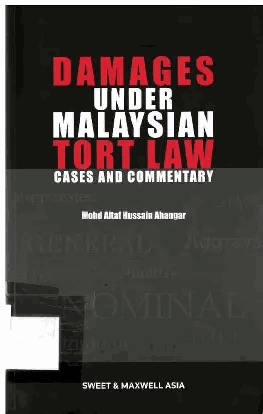


Description
Book Review
Book reviewed: Damages under Malaysian Tort Law: Cases and Commentary
Mohd Altaf Hussain Ahangar LLB, LLM, PhD (India) Professor Ahmad Ibrahim Kulliyyah of Laws International Islamic University Malaysia
Review author: marceljude.ai
I read the book. It is a case-centred legal text on the assessment of damages in Malaysian tort law, written by Mohd Altaf Hussain Ahangar. Its stated aim is to explain and illustrate the principles governing damages in Malaysia for personal injury, death, property damage, reputation damage, and economic loss.
List of Contents
Preface
Table of Cases
Table of Statutes
Chapter 1: Introduction
Chapter 2: Kinds of Damages
Chapter 3: Damages for Personal Injury
Chapter 4: Damages for Death
Chapter 5: Damages for Property Destruction/Loss
Chapter 6: Damages for Defamation
Chapter 7: Damages for Economic Loss
Appendix
Index
The contents show that the book moves from general principles to specific heads of tort damages: personal injury, death, property, defamation, and economic loss. The final chapter deals with consequential and pure economic loss, including special relationship, assumption of responsibility, governmental liability, defective products, and the “just, fair and reasonable” approach.
Overall Review of the Book
This book is best understood as a Malaysian tort damages handbook built around judicial reasoning. It is not merely a doctrinal summary. It is a guided tour through cases, statutory provisions, and judicial commentary. Its strength is that it places Malaysian law at the centre while still using English and Commonwealth authorities where necessary.
As a law professor, I would describe the book as practical, doctrinal, and argumentative. It is practical because it tells students and lawyers how courts actually assess damages. It is doctrinal because it explains the structure of tort compensation: restitutio in integrum, the once-and-for-all rule, nominal damages, exemplary damages, special damages, dependency claims, loss of future earnings, pure economic loss, and so on. It is argumentative because the author does not merely report cases; he often evaluates them, disagrees with reasoning, identifies uncertainty, and points out tensions between statutory language and judicial discretion.
The central intellectual theme of the book is that Malaysian tort damages law is a hybrid field. It borrows from common law, but it is repeatedly modified by Malaysian statutes, especially the Civil Law Act 1956. That statutory intervention is particularly important in personal injury and death claims, where the calculation of future earnings, dependency, multiplier, multiplicand, age limits, living expenses, and bereavement is not left wholly to common-law discretion.
The book’s greatest contribution is its focus on assessment. Many tort law texts explain liability: duty, breach, causation, remoteness, defences. This book is more concerned with what happens after liability is established. How much should the plaintiff receive? What losses count? What losses are excluded? What is the court allowed to estimate? What must be pleaded strictly? What is the difference between compensatory and non-compensatory damages? These are the questions the book repeatedly asks. Its limitation is also connected to its strength. Because it is built heavily around case extracts and commentary, the reading experience can feel dense. The book is not a light theoretical essay. It is a working lawyer’s text. It expects the reader to pay attention to facts, holdings, statutory provisions, and the exact legal significance of each case. For students, this is demanding; for practitioners, it is useful.
Chapter 1: Introduction
Chapter 1 lays the foundation for the whole book. It begins with the basic definition of damages as money awarded to compensate a plaintiff for loss or harm caused by the defendant. The chapter then places the entire subject under the principle of restitutio in integrum, meaning that damages should, so far as money can do it, restore the plaintiff to the position he or she would have occupied if the tort had not occurred. This chapter is important because it teaches the reader that damages are not random awards. They are controlled by legal principles. The court does not simply ask, “How badly do we feel for the plaintiff?” It asks: What loss was caused? Was it past, present, or future? Was it pecuniary or non-pecuniary? Can it be measured? Is it too remote? Has it already been claimed? Is there a continuing injury?
The discussion of restitutio in integrum is especially useful. The author uses Indata Equipment Supplies Ltd v ACL Ltd to distinguish tort damages from contract damages. In tort, the emphasis is on actual loss suffered, not necessarily on expected contractual gain. This distinction is fundamental. A law student who confuses contractual expectation damages with tort compensation will misunderstand much of private law. The chapter also explains the once-and-for-all rule. A plaintiff generally cannot sue repeatedly for the same cause of action. If the plaintiff has one cause of action, all damages flowing from it should be claimed in one proceeding. The classic case discussed is Fetter v Veal, where later-discovered seriousness of injury did not justify a second action for the same battery. This principle protects finality in litigation. Defendants should not be endlessly exposed to claims arising from the same wrong.
But the chapter wisely complicates the rule. It explains that successive actions may be possible where one act violates two distinct rights, as in Brunsden v Humphery, where damage to property and personal injury were treated as separate causes of action. Yet the author also shows that modern courts are cautious about abuse of process. Even where rights are technically distinct, a second action may be abusive if the issues could and should have been settled earlier.
The chapter ends with continuing injury, especially continuing trespass and continuing nuisance. This is a crucial exception to the once-and-for-all rule. If the wrong continues from day to day, the plaintiff may have fresh causes of action. Cases such as Cheah Kim Tong v Taro Kaur and Delaware Mansions Ltd v Westminster City Council illustrate that tort law must distinguish a completed wrong from an ongoing invasion of rights.
Law professor’s evaluation:
Chapter 1 is a strong opening because it establishes the architecture of damages law. It teaches the reader that assessment of damages depends not only on compassion for the plaintiff but on cause of action, timing, rights violated, procedural finality, and the nature of the injury. The author’s use of cases is effective because the principles are easier to understand when attached to facts. The chapter’s main weakness is that it is dense for beginners, but its density is justified by the subject matter.
Chapter 2: Kinds of Damages
Chapter 2 classifies damages. This is one of the most useful chapters for students because damages terminology can be confusing. The chapter divides damages into non-compensatory and compensatory categories . The non-compensatory forms include contemptuous damages, nominal damages, and exemplary damages. The compensatory forms include aggravated damages, general damages, and special damages.
The explanation of contemptuous damages is particularly interesting. These are tiny awards given where the plaintiff technically succeeds but the court disapproves of the claim. The example of Gurcharan Singh shows how a plaintiff may win on technical grounds but receive only a token sum because the court finds the claim morally or legally unattractive.
The discussion of nominal damages is also important. Nominal damages vindicate legal rights even where actual loss is not proved. The book shows that nominal damages are not always merely symbolic. In Malaysian cases, the court may award a meaningful sum where damage is obvious but not strictly quantified. This is a valuable point because students often assume “nominal” always means negligible. The treatment of exemplary damages turns the chapter from classification into legal policy. Exemplary damages punish and deter. The book discusses the famous categories from Rookes v Barnard: oppressive or unconstitutional conduct by government servants, conduct calculated to produce profit exceeding compensation, and statutory authorisation. The Malaysian cases show that courts have accepted the restrictive English framework but apply it in local contexts, especially where state power is abused. The chapter’s discussion of aggravated damages is doctrinally important because aggravated damages are often confused with exemplary damages. Aggravated damages compensate for additional injury to dignity, feelings, or pride. Exemplary damages punish. That distinction matters because the court’s purpose differs. A plaintiff may receive aggravated damages for humiliation, insult, or emotional injury caused by the manner of the tort.
The chapter then distinguishes general damages and special damages. General damages cover losses that cannot be precisely quantified, such as pain and suffering, loss of amenities, future loss, and loss of earning capacity. Special damages cover specific financial losses that must be pleaded and strictly proved, such as medical expenses, repair costs, and actual loss of income before judgment.
Law professor’s evaluation:
Chapter 2 is one of the most pedagogically valuable chapters. It clarifies vocabulary that students and even junior lawyers often misuse. The author is especially effective in showing that damages are not all compensatory in the same way. Some vindicate rights, some compensate actual loss, some respond to humiliation, and some punish outrageous conduct. The chapter could have benefited from a more theoretical comparison between private law compensation and public law punishment, but as a practical chapter it succeeds.
Chapter 3: Damages for Personal Injury
Chapter 3 is one of the most substantial chapters. It deals with damages for personal injury, and its importance lies in the fact that personal injury litigation is where damages assessment becomes most technically demanding.
The chapter begins by distinguishing non-pecuniary loss and pecuniary loss. Non-pecuniary loss includes pain and suffering, loss of amenities, and the injury itself. Pecuniary loss includes loss of earnings, loss of earning capacity, medical expenses, nursing care, and other reasonable expenses.
The discussion of pain and suffering explains that pain is physical hurt or discomfort, while suffering is mental or emotional distress caused by the injury. The chapter rightly notes that courts often treat these together. A plaintiff’s subjective awareness matters. A permanently unconscious plaintiff may not experience pain in the ordinary sense, but loss of amenities raises different issues.
The discussion of loss of amenities is conceptually rich. Loss of amenities concerns the deprivation of life’s ordinary enjoyments: sight, hearing, mobility, hobbies, social life, marriage prospects, and ordinary independence. Unlike pain and suffering, loss of amenities has a more objective component. The plaintiff may be deprived of life’s pleasures whether or not he fully understands the deprivation. The discussion of Lim Poh Choo is important because it addresses the difficult question of awards for plaintiffs with severe brain damage or unconsciousness.
The chapter then turns to pecuniary loss, especially loss of earnings. This is where Malaysian law becomes distinctive. The author explains that English law distinguishes pre-trial and post-trial loss of earnings. Malaysian law, however, is shaped by statutory provisions under the Civil Law Act 1956. The book explains requirements such as good health, earnings by one’s own labour or gainful activity, lawful earnings, age limits, multiplier, multiplicand, living expenses, and restrictions on future salary increments. The discussion of loss of future earnings is especially valuable because the author does not merely state the law; he criticises judicial reasoning. The treatment of “good health,” for example, shows how a seemingly simple statutory phrase can become controversial. The author questions decisions that impose too high a burden on plaintiffs to prove good health when employment before the accident may itself suggest it.
The book’s discussion of illegal earnings is also significant. It examines whether a plaintiff can recover loss of earnings from work that was illegal or irregular, such as work without a valid permit. The author shows that Malaysian courts have tended to be strict, often invoking public policy and the maxim ex turpi causa non oritur actio. This part of the chapter is important because it shows the moral limits of compensation: tort law does not always compensate every factual loss if the law considers the source of income illegitimate.
The section on multiplier is one of the strongest parts of the chapter. The book discusses Ibrahim bin Ismail v Hasnah bte Puteh Imat, where the Court of Appeal held that the statutory multiplier is mandatory and should not be reduced by judicial discretion. This is a major point. It shows the author’s central concern: courts must respect statutory language and should not smuggle common-law discretion back into a field where Parliament has legislated.
The treatment of living expenses is more critical. The author questions the logic of deducting living expenses from injured plaintiffs in the same way as from deceased persons. This criticism is persuasive. A living injured plaintiff still needs food, housing, transport, and daily care. In some cases, injury increases expenses rather than reduces them. The author’s critique shows a humane and analytical approach to compensation.
The chapter also explains loss of earning capacity, which differs from loss of future earnings. Loss of earning capacity applies where the plaintiff may still be earning but faces a real risk of reduced employment prospects in the future. The cases show that this head of damages is especially relevant where injury makes the plaintiff vulnerable in the labour market.
The final parts of the chapter deal with reasonable expenses: private hospital treatment, nursing care, undeductible sums, and inflation. The discussion of private hospital expenses is practical. The plaintiff may choose private treatment, but recovery depends on justification and reasonableness. The discussion of nursing care recognises that care provided by family members still has economic value.
Law professor’s evaluation:
Chapter 3 is the book’s most technically powerful chapter. It gives the reader a working understanding of how personal injury damages are calculated in Malaysia. It is also one of the most critical chapters because the author is willing to say when judicial reasoning is unfair, artificial, or inconsistent with statute. Its strength lies in connecting statutory interpretation with real human injury. Its weakness is that the amount of detail may overwhelm a first-time reader, but for practitioners and advanced students that detail is essential.
Chapter 4: Damages for Death
Chapter 4 deals with fatal accident claims and estate claims. It is closely connected to Chapter 3 but has its own logic because death changes the nature of the claim. Once the injured person dies, the law must decide who may claim, what may be claimed, and whether the claim belongs to dependants or to the estate.
The chapter begins with dependency claims. A dependency claim compensates those who lost financial support because of the deceased’s death. The book explains who qualifies as a dependant, including spouse, parents, children, and in some contexts grandparents. The discussion of customary marriage is especially important in Malaysian society because family forms may not always fit neatly into formal statutory categories. The book shows that courts have struggled with whether a customary wife whose marriage was not registered should be treated as a “wife” for dependency purposes.
The discussion of grandparents as dependants widens the scope of dependency. The author notes that where statutory wording includes grandparents, the court may allow them to benefit. However, the author also raises a critical concern: expanding dependency may reduce the practical share available to parents. This is a good example of the author’s method: he explains the legal rule but also asks whether it produces coherent policy.
The chapter also discusses adopted children. The author emphasises that an adopted child must be legally adopted to claim as a dependant. This prevents uncertain or fabricated claims. From a policy perspective, this section shows the law balancing compassion with evidentiary discipline.
The chapter then examines loss of support, which is the core financial claim in fatal accident cases. The method requires identifying the deceased’s earnings, deducting personal living expenses, and applying the statutory multiplier. As in Chapter 3, the Civil Law Act 1956 plays a central role.
The discussion of multiplier again relies heavily on Ibrahim bin Ismail. The author praises the decision for treating the statutory multiplier as mandatory. This is one of the recurring themes of the book: once Parliament has fixed a formula, courts should not reduce it by appealing to old common-law contingencies unless the statute allows it.
The chapter also considers multiplicand, meaning the earnings figure used in the calculation. The discussion shows that determining dependency is not simply mechanical. The court must consider salary, allowances, bonuses, tax, personal expenses, and actual support patterns. The author notes a judicial tendency to deduct one-third for living expenses, but he questions whether that approach always fits the statutory requirement that living expenses be proved or admitted.
The section on contingencies of life is one of the chapter’s most legally important discussions. At common law, courts reduce awards to account for uncertainty: the deceased might have died earlier, become unemployed, remarried, or changed income. But Malaysian statutory law changes this approach. The author argues that applying both statutory formulas and common-law deductions results in double reduction. This criticism is doctrinally persuasive.
The chapter then discusses housekeeping expenses. This is a humane and practical part of the book. It recognises that domestic services have economic value. If a wife or mother dies and the family must hire help, that cost may be recoverable. The law therefore recognises household labour as financially significant, not merely sentimental.
The treatment of bereavement is narrower. Bereavement damages are allowed only for specific statutory beneficiaries. The chapter shows that grief is not generally compensable at large. The law recognises it only within statutory limits.
Finally, the chapter discusses estate claims, including pain and suffering before death, funeral expenses, and the abolition or restriction of claims for lost years. The distinction between dependency claims and estate claims is crucial. Dependants claim for their own loss of support. The estate claims for losses suffered by the deceased before death or expenses recoverable by statute.
Law professor’s evaluation:
Chapter 4 is doctrinally strong because it explains the legal architecture of death claims with precision. It is also socially important because fatal accident claims often involve families, informal support, customary relationships, and domestic services. The author’s analysis is at its best when he criticises courts for using common-law discretion after statutory formulas have already spoken. This chapter would be especially useful for lawyers handling road accident and dependency claims.
Chapter 5: Damages for Property Destruction/Loss
Chapter 5 moves from bodily injury and death to property. Its focus is damage to property, destruction of property, illegal occupation, cost of repairs, diminution in value, reinstatement, and consequential financial loss.
The chapter begins with a threshold question: does the plaintiff have a legal interest in the property? This is essential. Tort law does not compensate every person affected by property damage. The claimant must usually have ownership, possession, or another legally recognised interest.
The discussion of property illegally acquired or unlawfully occupied is important. The book examines cases involving squatters and the principle of ex turpi causa non oritur actio. The author shows that a person who unlawfully occupies land may be denied damages for damage to structures erected illegally. This part of the chapter is controversial because it raises difficult questions: Should illegality bar all recovery? Should a wrongdoer defendant escape liability merely because the plaintiff’s occupation was unlawful? The Malaysian cases discussed lean toward strictness.
The chapter then explains destruction of property. Where property is totally destroyed, the usual measure is the value of the property at the time and place of destruction. The plaintiff should receive enough to obtain a replacement, subject to remoteness and mitigation.
For damage to property, the usual measure is diminution in value, often assessed by repair cost. But the chapter shows that repair cost is not always straightforward. If repair cost exceeds the value of the property, the court may limit recovery unless the property has special value or reinstatement is reasonable. The discussion of Alcoa Minerals v Broderick is especially important. It addresses when the cost of repairs should be assessed. The court may consider the earliest reasonable time for repairs, not necessarily the date of damage. The plaintiff’s financial inability to repair immediately may be relevant. This is a humane and commercially realistic doctrine. A wealthy plaintiff may repair quickly. A poorer plaintiff may have to wait for judgment. The law should not automatically punish the poorer plaintiff by freezing damages at an earlier, lower repair cost.
The chapter also discusses reinstatement versus diminution in value. Reinstatement restores the property physically. Diminution in value compensates for reduced market value. The book shows that courts have discretion and may even allow both where necessary to achieve restitutio in integrum. This is important because market value alone may not fully capture the plaintiff’s loss, especially where stigma, flooding risk, or reputational damage to land remains after repairs.
Law professor’s evaluation:
Chapter 5 is shorter than the personal injury and death chapters, but it is conceptually significant. It shows that property damages are not simply about repair bills. They involve legality of possession, valuation, market stigma, mitigation, impecuniosity, reinstatement, and fairness. The author’s treatment of repair timing and diminution in value is particularly useful. The chapter’s strongest insight is that property has both physical and economic dimensions.
Chapter 6: Damages for Defamation
Chapter 6 deals with damages for defamation, which protects reputation. This chapter differs from the earlier chapters because reputational injury is neither bodily injury nor ordinary property loss. It is social, dignitary, and often difficult to quantify.
The chapter begins by explaining that damages for defamation compensate for injury to reputation and hurt feelings. This is important because defamation damages serve several functions at once: compensation, vindication, and sometimes deterrence.
The author explains that assessment of damages in defamation depends heavily on judicial discretion. There is no precise formula. Courts consider the seriousness of the defamatory statement, the plaintiff’s standing, the mode and extent of publication, the defendant’s conduct, refusal to apologise, malice, repetition, and the harm caused.
The discussion of reasonable awards is central. The book traces a movement away from very large defamation awards toward more controlled, global awards. This is important because excessive defamation damages may chill freedom of expression. The author highlights the judicial concern that defamation actions should not become engines of oppression.
The chapter then discusses global awards. Instead of separate awards for general, aggravated, and exemplary damages, courts increasingly favour one overall award. The reason is to avoid runaway damages. The book explains that global awards also apply where multiple joint tortfeasors commit the same defamation. If the defendants are joint tortfeasors responsible for one libel, there should generally be one award, not separate duplicated awards against each defendant.
The discussion of the plaintiff’s standing in society is also important. A defamatory statement about a prominent businessperson, lawyer, politician, or corporation may cause greater reputational harm because of the plaintiff’s public role and the wider consequences of damaged reputation. But the book also cautions against treating high status as a blank cheque for massive awards.
The chapter gives attention to corporations. A corporation can suffer damage to goodwill or income, but it cannot suffer mental distress or hurt feelings. This distinction is doctrinally important. Human plaintiffs may receive damages for humiliation and distress. Corporate plaintiffs must prove reputational, commercial, or economic harm.
The chapter also deals with aggravated damages, quantification, and interest. Aggravated damages must be reasonable. General damages in defamation may be quantified in pleadings where appropriate. Interest may be awarded on damages, even in defamation.
Law professor’s evaluation:
Chapter 6 is one of the most policy-sensitive chapters. It understands that reputation matters deeply, but it also recognises the danger of excessive awards. The author’s treatment of global awards is especially valuable because it shows how courts try to control damages without denying plaintiffs vindication. As a professor, I would use this chapter to teach students that defamation damages sit at the intersection of private law, dignity, public speech, and judicial restraint.
Chapter 7: Damages for Economic Loss
Chapter 7 is the most theoretically ambitious chapter. Economic loss is one of the hardest topics in tort law because it tests the boundaries of liability. If a defendant’s negligence causes someone financial loss without physical injury or property damage, should the law compensate it? Sometimes yes, sometimes no. The chapter begins by distinguishing consequential economic loss from pure economic loss. Consequential economic loss follows physical injury or property damage. For example, if a plaintiff’s property is damaged and he loses profits because of that damage, the profit loss may be recoverable. Pure economic loss is different. It is financial loss without damage to the plaintiff’s person or property. The chapter uses Spartan Steel to explain the distinction. The plaintiff could recover for physical damage and profits directly connected to that damage, but not for profits lost during the power outage where there was no accompanying physical damage. This distinction is one of the classic boundaries in tort law. The treatment of pure economic loss is sophisticated. Courts fear indeterminate liability: liability to an unlimited number of people, for unlimited sums, over unlimited time. That fear explains why pure economic loss is often restricted. But the chapter also shows that the law has developed exceptions. One exception is special relationship, especially negligent misstatement under Hedley Byrne. If the defendant gives advice or information knowing that the plaintiff will rely on it, and the plaintiff reasonably relies on it, a duty may arise. This is the foundation of liability for careless professional advice. Another exception is assumption of responsibility. The defendant may be liable where he objectively assumes responsibility to the plaintiff. But the chapter also shows that Malaysian courts are careful. In Co-Operative Central Bank v KGV & Associates, the court denied liability where the valuer had not assumed responsibility to the particular plaintiff.
The chapter then examines governmental bodies and statutory duties. This is a major Malaysian issue. The author discusses when pure economic loss caused by breach of statutory duty may be recoverable, especially where the class of plaintiffs, amount, and time are not indeterminate. This is important because public authorities perform broad duties, and the law must decide when private damages should follow public failure.
The discussion of deserving cases is particularly interesting. The book considers situations where pure economic loss may be recoverable even without traditional reliance or assumption of responsibility, such as solicitor negligence affecting intended beneficiaries in White v Jones. This shows that courts sometimes create remedies to avoid obvious injustice.
The section on defective product economic loss explains the traditional rule: if the defect is only in the product itself, the loss is usually contractual, not tortious. But if the defective product causes damage to other property or persons, tort liability may arise. Malaysian developments, however, show a movement away from rigid English restrictions. The book discusses Lim Teck Kong, where the Court of Appeal showed willingness to allow recovery in defective building contexts where it is just, fair, and reasonable. The chapter’s final theme is Malaysian independence from English law. The author notes that Malaysian courts should not mechanically follow English authorities such as Murphy v Brentwood where local justice, consumer protection, defective buildings, and statutory context point in another direction. This is one of the book’s strongest jurisprudential points.
Law professor’s evaluation:
Chapter 7 is intellectually demanding and highly valuable. It shows the reader that tort law is not merely about accidents and injuries; it is also about the boundaries of economic responsibility. The chapter is strongest when it explains why courts fear pure economic loss, then shows why strict exclusion can create injustice. It is also important because it presents Malaysian law as capable of developing its own doctrine rather than merely following English law.
Major Strengths of the Book
The first major strength is its Malaysian focus. The book does not treat Malaysian law as a footnote to English law. It uses English cases, but Malaysian statutes and Malaysian appellate decisions are central. The second strength is its case-based method. By setting out facts, holdings, and commentary, the book teaches how legal principles operate in real disputes. This is especially useful for students preparing for exams and lawyers preparing submissions.
The third strength is the author’s willingness to criticise. The book does not simply praise every judgment. It identifies inconsistency, statutory misinterpretation, excessive damages, artificial deductions, and doctrinal uncertainty.
The fourth strength is its treatment of the Civil Law Act 1956. The book repeatedly shows how statutory provisions reshape common-law damages, especially in personal injury and death claims. The fifth strength is its practical usefulness. A practitioner can use the book to understand what must be pleaded, what must be proved, how courts calculate awards, and where judicial discretion remains. Weaknesses and Limitations
The book’s density may be difficult for beginners. Because it relies heavily on case extracts and doctrinal commentary, a reader without prior tort law knowledge may need to read slowly.
The structure is logical, but the book sometimes feels more like an annotated casebook than a flowing academic monograph. That is not necessarily a flaw, but it affects readability.
Some discussions could benefit from more comparative theory. For example, the book could say more about why tort damages should differ from contract damages, or how Malaysian public policy should shape future development of pure economic loss.
The book also reveals, rather than fully resolves, some uncertainties in Malaysian law. For example, dependency claims involving customary marriages, illegality, living expenses, and pure economic loss remain difficult. But this is partly because the law itself is unsettled.
Final Assessment
As a law professor, I would describe Damages under Malaysian Tort Law: Cases and Commentary as a serious and valuable contribution to Malaysian private law. Its best quality is that it treats damages as a sophisticated legal subject rather than a mechanical afterthought. It shows that assessment of damages requires statutory interpretation, factual judgment, policy reasoning, and moral sensitivity.
The book is especially strong on personal injury, death, defamation, and economic loss. Its repeated insistence that courts must respect statutory formulas is persuasive. Its critiques of excessive defamation awards, artificial deductions, and rigid exclusion of pure economic loss are also valuable.
This is not a casual reader’s book. It is a lawyer’s book, a student’s book, and a judge-facing commentary. For anyone studying Malaysian tort law, it explains not only what damages are, but how courts think when translating injury into money.
Overall judgment: an authoritative, practical, and critically engaged Malaysian tort damages text, especially useful for advanced law students, practitioners, and academics.
 marceljude.ai @ +60128285778 |
- MALAYSIA'S 1ST AI LAWYER - CLICK HERE
- ISMAIL – INTEGRATED SINGAPORE/MALAYSIA AI & LAW (Library)
- OPENING OF SINGAPORE MALAYSIA AI CENTRE AND LAW LIBRARY
- LIFT - LAW INSTRUMENTS FORMS & TEMPLATES
- LAWS OF MALAYSIA FOR SINGAPOREAN DUMMIES
- HANNAH YEOH'S ARTIFICIAL INTELLIGENCE LAW ENCYCLOPEDIA
- LEAD CR - Law Ecosystem Archive Databases on CD-ROM
- BREAKING NEWS FROM MJN
- CLICK HERE CO. PROFILE
- EXCITING NEW SERIES - THE ADVENTURES OF BOBBY TAN -ADVOCATE & SOLICITOR IN THE HIGH COURT OF NORTH BORNEO by marceljude.ai
- MEDICO LEGAL - BY PRISKILA AKWILA & GLORIOUS PETAL SDN BHD - powered by marceljude.ai
- MISCELLANOUS
- ANNOTATED STATUTES OF SABAH - A NEW SERIES
- e-library - marceljude.ai
- DRAFT - DOCUMENT RESEARCH & AUTOMATED FILING TECHNOLOGY
- CLARA – Case Law Analysis & Retrieval AI
- FOR RESEARCH REQUEST CLICK HERE
- CLICK HERE TO ASK ANYTHING
- RAMBO'S LAW - THE LAW OF THE LAW JUNGLE - EXCITING NEW SERIES - CASE ANALYSIS BY JOHN RAMBO @ +60138646786
- PRISKILA AKWILA ADVOCATES - High Court of Sabah & Sarawak @ Kota Kinabalu
- COLA - COMMONWEALTH ONLINE LAWCASES AI -marceljude.ai
- THE LAW LIBRARY THAT COMES TO YOU ANYWHERE AND ANYTIME
- marceljude.ai training academy
