
COMMERCIAL LEASES by W. D. DUNCAN - marceljude.ai 075
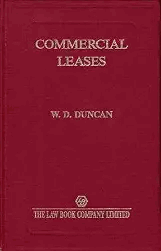


Description
Book Review of Commercial Leases
COMMERCIAL LEASES by
W. D. DUNCAN
LL.B. (Qld), LL.M. (Lond.) Solicitor, Queensland Feez Ruthning Professor of Property Law Director of Centre for Commercial and Property Law, Faculty of Law, Queensland University of Technology Consultant, Feez Ruthning Solicitors, Brisbane
Review author: marceljude.ai
I read the book. It is a dense, practitioner-oriented legal text on Australian commercial leasing, especially Queensland leasing law, written with the working solicitor, property lawyer, commercial landlord, and commercial tenant in mind. It is not a “theory of leases” book in the abstract; it is a legal operations manual for drafting, negotiating, construing, enforcing, assigning, and terminating commercial leases.
List of Contents with Printed Page Numbers
Preface, p. vii.
Table of Cases, p. xi.
Table of Statutes, p. xxxv.
Comparative Table of Statutes, p. xxxix.
Chapter 1, Negotiations, pp. 1–19.
Chapter 2, Construction of Lease, pp. 20–34.
Chapter 3, Subject Matter of Lease, pp. 35–41.
Chapter 4, Covenants, pp. 42–53.
Chapter 5, Rent and Rent Review, pp. 54–85.
Chapter 6, Outgoings, pp. 86–92.
Chapter 7, Repair, pp. 93–111.
Chapter 8, Quiet Enjoyment, pp. 112–123.
Chapter 9, Assignment, pp. 124–142.
Chapter 10, User, pp. 143–154.
Chapter 11, Insurance, pp. 155–171.
Chapter 12, Options, pp. 172–195.
Chapter 13, Default, pp. 196–220.
Chapter 14, Determination of Lease Other Than by Forfeiture, pp. 221–231.
Chapter 15, Recovery of Possession Upon Forfeiture, pp. 232–235.
Chapter 16, Guarantee of Lease, pp. 236–245.
Chapter 17, Miscellaneous Matters, pp. 246–256.
Index, p. 257.
Overall Review of the Entire Book
As a law professor, I would describe this book as a highly practical doctrinal treatment of commercial leasing. Its great strength is that it understands a commercial lease as both a conveyancing instrument and a contract. That dual character explains nearly every difficulty in the book: formation problems, implied terms, registration, assignment, privity of estate, privity of contract, options, forfeiture, relief against forfeiture, and remedies. The author repeatedly reminds the reader that a lease is not simply a document granting possession; it is a legal architecture for a continuing commercial relationship. The book’s structure is excellent. It begins where leasing disputes often begin: negotiations, representations, agents, mistake, misdescription, and pre-contractual conduct. It then moves into construction, the subject matter of the demise, covenants, rent, outgoings, repair, quiet enjoyment, assignment, use, insurance, options, default, termination, possession, guarantees, and formal matters. This order is pedagogically sound because it mirrors the life cycle of a commercial lease: negotiation, formation, operation, transfer, breach, termination, and enforcement.
Its strongest chapters are Chapter 5 on rent and rent review, Chapter 7 on repair, Chapter 12 on options, and Chapter 13 on default. These chapters are doctrinally rich and litigation-sensitive. They address the exact clauses that often generate disputes: rent review mechanisms, expert valuation, market rent, repair versus renewal, exercise of options, late exercise, repudiation, forfeiture notices, and relief against forfeiture. A practitioner using the book would be repeatedly warned that small drafting choices can have severe consequences.
The book’s style is conservative in the best legal sense. It does not indulge in unnecessary theory. It proceeds by issue, rule, case illustration, and drafting consequence. Its core message is that commercial leases must be drafted with precision because courts will often enforce the instrument as written. At the same time, the book shows where equity, statute, implied terms, and consumer-protection-style provisions intervene.
The main limitation is that the work is jurisdictionally specific and statute-heavy. Its discussion is especially useful for Queensland and Australian commercial leasing, but a reader from another jurisdiction would need to translate the statutory analysis carefully. Still, the common law discussions on covenants, assignment, quiet enjoyment, repair, options, forfeiture, waiver, and guarantees have wider value. My final judgment: this is a serious legal practitioner’s book. It is best read not as a casual introduction but as a clause-by-clause legal guide. It teaches that commercial leasing law is won or lost in drafting, timing, notice, registration, and evidence.
Chapter-by-Chapter Review
Chapter 1 — Negotiations, pp. 1–19
Subsections covered
Role of real estate agent, p. 1.
Authority to make representations limited, pp. 2–3 . Negotiations must be undertaken in good faith, p. 4.
Letter of intent, pp. 4–5.
“Usual covenants,” pp. 5–6.
Agreement subject to preparation of lease, pp. 6–8.
Draft lease subject to approval of solicitor, pp. 8–9.
Duty of solicitor to explain terms, pp. 9–10.
When do parties become bound?, pp. 10–12.
The duty to register, pp. 12–13.
Duty of lessee to be satisfied as to fitness of premises for purpose required, pp. 13–17.
“Misleading or deceptive conduct” in negotiations, pp. 17–19.
Review and explanation
This chapter is an excellent opening because it attacks the common misconception that the lease begins only when the formal lease is signed. In reality, liability may begin much earlier: through an agent’s statements, a letter of intent, possession, expenditure, estoppel, or a binding agreement for lease. The discussion of real estate agents is especially important. The author sharply distinguishes an agent’s practical role from legal authority. An agent may introduce parties, solicit offers, and communicate information, but that does not automatically mean the agent can bind the lessor to a lease. For students, this is a useful illustration of agency law in commercial property practice. For practitioners, it is a warning: do not assume that a leasing agent has power to create legal obligations unless the authority is clearly established.
The section on representations is equally significant. The book treats representations by agents as dangerous territory. A statement about the condition, value, permitted use, or commercial viability of premises can become the foundation of liability if it is inaccurate and relied upon. The analysis is strong because it links ordinary leasing negotiations with negligence, misrepresentation, and statutory misleading conduct.
The letter of intent discussion is one of the chapter’s best parts. The author makes clear that a letter of intent can be either a harmless preliminary document or a binding agreement, depending on certainty, essential terms, and the language used. The required essentials include identification of parties, premises, term, rent, and commencement. The book’s treatment of “usual covenants” shows how dangerous vague drafting can be.
The sections on “subject to formal lease” and “subject to solicitor’s approval” are particularly useful. The chapter explains that those phrases do not always mean the same thing. Sometimes the parties are already bound and simply intend a formal document later. Sometimes they intend no binding obligation until the formal document is executed. The difference is factual, linguistic, and commercial. The solicitor’s duty section is a professional responsibility lesson inside a leasing chapter. The book expects solicitors to explain unusual clauses and protect clients from clauses that materially affect commercial risk. This is especially important for rent review clauses, assignment restrictions, user clauses, repair obligations, and options.
The chapter’s final movement, dealing with fitness of premises and misleading conduct, is perhaps the most practically important. The author emphasizes that a lessee must satisfy itself that the premises are physically and legally fit for the intended use. This is a strict and sometimes harsh rule. Yet the chapter balances that harshness by showing how misrepresentation or misleading conduct can give a lessee remedies where the lessor or agent has created a false impression.
Professor’s assessment: Chapter 1 is a strong warning chapter. Its lesson is that commercial leasing disputes often begin before the lease is signed. The chapter teaches lawyers to control authority, document negotiations, avoid vague “subject to” language, investigate use permissions, and treat representations with discipline.
Chapter 2 — Construction of Lease, pp. 20–34
Subsections covered
Lease must operate as present demise, pp. 20–21.
The term must be readily ascertainable, p. 21.
Construing leases — general rules, pp. 21–22.
Lease should be construed as an entire document against the lessor, pp. 22–23.
Where terms may be implied, pp. 23–25.
Statutory rules of construction to be implied unless context otherwise requires, pp. 25–26.
Written words to take precedence over printed form, p. 26.
Important terms should be reduced to writing, pp. 26–27.
Rectification of written lease, pp. 27–30.
Application of the Retail Shop Leases Act, pp. 30–34.
Review and explanation
Chapter 2 moves from negotiation to interpretation. The central idea is that a lease must be construed as a legal instrument that creates an interest in land and imposes contractual obligations. This dual nature matters because an informal agreement may operate in equity, while a formal lease may require registration or compliance with prescribed forms.
The discussion of present demise is doctrinally important. The author explains when a document operates as a lease and when it is merely an agreement for lease. The distinction affects specific performance, registration, equitable interests, and remedies. This is foundational property law.
The requirement that the term be readily ascertainable is one of the most important lessons in the chapter. A lease cannot operate effectively if its essential elements are uncertain. This connects back to Chapter 1’s warning about letters of intent and incomplete agreements.
The construction sections are practical. The author emphasizes that courts generally construe the written lease as the full expression of the bargain. Prior negotiations are not freely admissible to contradict the final document. This is not merely evidence law; it is commercial discipline. Parties must put their real agreement in the lease.
The “contra proferentem” discussion, construing ambiguity against the lessor, is important but not overplayed. The author rightly treats it as a rule of last resort rather than a drafting substitute. A lessee should not rely on ambiguity; a lawyer should draft clarity.
The implied terms section is subtle. The book does not suggest that courts casually improve bad leases. Instead, implication occurs where necessary for business efficacy or where the nature of the lease relationship demands it. This is a restrained and orthodox approach.
The rectification section is one of the most technical parts of the chapter. It explains when a written lease may be corrected because it fails to reflect the parties’ true agreement. The author distinguishes mutual mistake, unilateral mistake, clerical error, and sharp practice. This is valuable because rectification is often misunderstood as a general fairness remedy; the chapter shows it is narrower and evidence-heavy. The Retail Shop Leases Act section is also critical. The author shows how statute can override lease drafting. This is one of the book’s recurring themes: commercial freedom is real, but it is not absolute. Professor’s assessment: Chapter 2 is a lawyer’s chapter. It teaches the discipline of interpretation: certainty, writing, whole-document construction, careful implication, and statutory override. It is less dramatic than the later chapters, but it supplies the interpretive tools needed for the entire book.
Chapter 3 — Subject Matter of Lease, pp. 35–41
Subsections covered
Description of demised premises, pp. 35–37.
Amenities, p. 37.
Lessee’s fixtures, pp. 37–38.
Are the demised premises leased with appurtenances?, pp. 38–40.
Access to demised premises, p. 40.
Advertising signs of the lessee, pp. 40–41.
Review and explanation
Chapter 3 is about the object of the lease: what exactly has been demised? The chapter’s importance lies in showing that “the premises” is not always obvious. A commercial lease may involve part of a building, common areas, airspace, walls, roofs, ceilings, fixtures, amenities, signage rights, access rights, and appurtenances.
The section on description of premises is practical and essential. The author stresses the need for precise plans, accurate boundaries, and clear identification of leased areas. This matters especially in shopping centres, office towers, and multi-tenancy commercial buildings. A poorly described lease can create disputes over maintenance, signage, roof access, common facilities, and repair responsibility.
The discussion of amenities shows that rights to toilets, washrooms, lifts, corridors, and common areas should not be assumed. They should be expressly dealt with. The chapter’s deeper point is that a commercial lease often grants more than a room; it grants a functioning commercial environment. The fixtures section is a classic property law topic. The author distinguishes lessee’s fixtures from the lessor’s property and explains the importance of removal rights. This is commercially significant because shop fit-outs, plant, signage, counters, machinery, and equipment can be expensive.
The appurtenances discussion asks whether rights attached to land pass with the lease. The author treats this carefully, especially where easements or access rights are involved. The lesson is that lawyers should not rely on implication where express drafting is available.
The access section is brief but significant. A shop without access is commercially useless. The book links access with quiet enjoyment and, in retail contexts, compensation. This anticipates Chapter 8. The signage section shows the intersection between property, contract, aesthetics, advertising, and competition. The author recognizes that signage rights can be commercially valuable and should be governed expressly.
Professor’s assessment: Chapter 3 is a drafting chapter disguised as a property chapter. Its central lesson is: define the premises, define the rights around the premises, and define who controls the spaces that make the premises commercially usable.
Chapter 4 — Covenants, pp. 42–53
Subsections covered
What is a covenant?, pp. 42–43.
Covenants distinguished from collateral contracts, p. 43.
Construction of covenants, pp. 43–44.
Joint and several covenantors and covenantees, p. 44.
Assignment of lease — effect upon enforceability of covenants, pp. 44–46.
Effect upon covenants in a lease upon assignment of the reversion, pp. 46–48.
Covenants which touch and concern the land, pp. 48–50.
Covenants which do not touch and concern the land, pp. 50–51.
Implied covenants, pp. 51–52.
Waiver of covenant, pp. 52–53.
Review and explanation
Chapter 4 is doctrinally central. The commercial lease is made up of covenants: promises to pay rent, repair, insure, use premises only for permitted purposes, avoid nuisance, obtain consent to assignment, and so on. The chapter explains how covenants are created, interpreted, assigned, enforced, and waived. The definition section is useful because “covenant” is often used casually. The author restores its technical meaning. A covenant can be express or implied, positive or negative, personal or proprietary, enforceable by original parties or successors depending on its nature.
The collateral contract distinction matters because pre-lease statements may not become lease covenants unless incorporated. This links Chapter 1 and Chapter 2. A party who wants a promise to be enforceable should put it in the lease.
The construction section reinforces the book’s overall method: read the actual words, read the whole instrument, and consider the legal nature of the obligation. Covenants are not interpreted in isolation. The assignment discussion is crucial. When a lease is assigned, the original tenant, assignee, landlord, and successor landlord may all be affected differently. The chapter explains privity of contract and privity of estate in practical terms. This is one of the most important areas in leasing law because liability may survive assignment.
The “touch and concern the land” sections are classic property law. The book explains which covenants run with the land and which remain personal. Rent, repair, use, quiet enjoyment, and renewal covenants usually have proprietary significance. Purely personal payment or collateral obligations may not. The waiver section is extremely practical. A landlord who knows of a breach but accepts rent or otherwise treats the lease as continuing may lose the right to rely on the breach for forfeiture. This is a vital warning for litigation practice.
Professor’s assessment: Chapter 4 is a bridge chapter. It links drafting to enforceability and contract to property. A student who understands this chapter understands why commercial leasing law is not simply contract law.
Chapter 5 — Rent and Rent Review, pp. 54–85
Subsections covered
Nature of rent — distinguished from other payments, pp. 54–56.
Gross and net rent, p. 56.
Setting off rent against damages for lessor’s breach, pp. 56–57.
Rent calculated as a fraction of turnover in retail shop leases, p. 57.
Factors influencing liability for rent — frustration, pp. 57–61.
Abandonment, pp. 57–58.
Destruction of improvements, pp. 58–60.
Illegality, pp. 60–61.
Rent review clauses — general principles, pp. 61–66.
Where time is of the essence of such clauses, pp. 62–64.
Provision for independent third-party determination, pp. 64–66.
Implied term that parties act reasonably to ensure rent review machinery operates, pp. 64–67.
Expert or arbitrator — who to appoint?, pp. 67–69.
Factors influencing selection of third party to determine rent, pp. 69–73.
Determination of market rent under retail shop lease legislation, pp. 73–76.
Commonly used expressions to define rent upon review, pp. 76–80.
“Reasonable rent,” p. 77.
“Current annual open market rental value,” p. 77.
“Current market rent,” pp. 77–78.
“Current annual market rent,” pp. 78–79.
“Having regard to rentals payable for comparable premises,” pp. 79–80.
“Fair rent” and “market rent” compared, p. 80.
Declaratory relief, p. 80.
When reviewed rent becomes payable, pp. 80–81.
Form of notice triggering review, p. 81.
Rent determined as a fraction of turnover under retail shop lease legislation, pp. 81–83.
Rental determined as a fraction of turnover — Trade Practices Act, p. 83.
Determination of market rental in case of retail shop lease, pp. 83–84.
Rental varied according to movements in consumer price index, pp. 84–85.
Review and explanation
Chapter 5 is one of the book’s strongest chapters. Rent is the commercial heart of the lease, and rent review is one of the most litigated areas of commercial leasing. The chapter is detailed because rent review clauses are often technically fragile.
The opening distinction between rent, premium, bonus, and other payments is important. The legal character of a payment determines remedies, apportionment, assignment consequences, and statutory treatment. The author shows that labels are not conclusive; courts examine substance.
The gross/net rent distinction is practical. A lease must make clear whether the stated rent includes outgoings or whether outgoings are additional. This anticipates Chapter 6.
The set-off discussion is significant because tenants often assume they can withhold rent if the landlord breaches. The author gives a more careful legal answer: rent obligations and landlord obligations may be independent, though equitable set-off may sometimes arise.
The frustration discussion is valuable because it addresses damage, destruction, resumption, illegality, and abandonment. The author treats leases as enduring estates in land but recognizes that modern commercial reality has placed pressure on older rules.
The rent review material is the chapter’s main achievement. The author shows that a rent review clause must have workable machinery. If parties cannot agree on rent, the clause needs a third-party mechanism. Without it, the review may fail or produce litigation.
The expert/arbitrator distinction is excellent. An arbitrator conducts a quasi-judicial process; an expert makes a professional determination. The choice affects procedure, reviewability, cost, speed, evidence, and challenge. This is a crucial drafting decision.
The market rent expressions section is especially useful. The author shows that phrases like “reasonable rent,” “current market rent,” and “fair rent” are not interchangeable. Each phrase may invite different evidence and assumptions.
The retail shop lease discussion demonstrates the book’s statutory awareness. The author recognizes that rent review in retail leasing is not merely a private contractual issue; legislation may regulate methods, disclosure, turnover rent, valuation, and market rent.
Professor’s assessment: Chapter 5 is essential reading. It teaches that rent review clauses must be drafted like dispute-resolution machinery, not like casual business language. The chapter’s highest value is its warning that imprecise rent language creates expensive litigation.
Chapter 6 — Outgoings, pp. 86–92
Subsections covered
“Rates, taxes and outgoings,” pp. 86–87.
Future outgoings, pp. 87–88.
Clause must be construed with lease as a whole, pp. 88–89.
“Other outgoings of the building,” pp. 89–90.
Provision for sharing of operating expenses in retail shop lease, pp. 90–92.
Review and explanation
Chapter 6 is short but commercially important. Outgoings are often the hidden economic burden in a lease. A tenant may focus on rent and later discover substantial liability for rates, taxes, levies, maintenance charges, management expenses, common area costs, and operating expenses.
The author’s first point is that leases should clearly distinguish rent from outgoings. That distinction affects not only economics but remedies, review, disclosure, and disputes.
The “rates, taxes and outgoings” section explains that broad language can capture many public charges, but precision matters. The chapter warns against assuming that every charge imposed on the landlord can automatically be passed to the tenant.
The future outgoings section is important because new statutory charges may arise after the lease is granted. A clause must be wide enough if the landlord intends to recover future charges. Conversely, a tenant’s lawyer should resist language that turns the tenant into an insurer against all future public burdens.
The whole-lease construction section is doctrinally consistent with Chapter 2. Outgoing clauses must be interpreted in context, not in isolation.
The retail shop lease operating expenses section is particularly useful. It shows how legislation may require disclosure, apportionment, estimates, and limits on recoverable expenditure. The chapter also distinguishes repair, replacement, improvement, structural work, sinking funds, and operating expense recovery.
Professor’s assessment: Chapter 6 teaches economic precision. It is a reminder that “rent” is not the whole price of occupation. The chapter is especially valuable for tenant-side lawyers reviewing shopping centre leases.
Chapter 7 — Repair, pp. 93–111
Subsections covered
The covenant to repair generally, pp. 93–94.
Qualified obligation of the lessor to repair, pp. 94–95.
Notification of need for repair, p. 95.
Relevance of nature of premises generally, pp. 95–98.
Implied repair provisions in retail shop leases, pp. 98–99.
Meaning of “repair,” pp. 99–100.
“Repair” contrasted with renewal and improvement, pp. 100–104.
Decorative repairs, pp. 104–105.
Measure of damages for breach by lessee, pp. 105–107.
Lessor’s obligation to repair, pp. 107–108.
Lessee’s measure of damages against lessor, pp. 108–109.
Other remedies of lessee besides damages, p. 109.
Lessee’s right to compensation under retail shop lease legislation, pp. 109–111.
Review and explanation
Chapter 7 is one of the book’s most valuable chapters. Repair covenants are deceptively simple. The word “repair” appears ordinary, but in law it carries distinctions between repair, renewal, replacement, reconstruction, improvement, inherent defect, fair wear and tear, decorative work, structural work, and reinstatement.
The chapter begins with the general covenant to repair. The author treats repair as a preservation obligation rather than a general obligation to create a better building. This distinction is essential. The qualified lessor obligation section shows that landlords are not automatically responsible for everything defective. Liability may depend on the lease, notice, control, knowledge, and statutory provisions. The notification section is practical. A landlord may not be liable for failure to repair if not notified of defects, unless the circumstances impose knowledge or control. This matters in litigation.
The section on the nature of the premises is doctrinally sound. What counts as repair depends on the age, character, condition, and use of the premises. A repair covenant in a modern office tower may not operate exactly like one in an old industrial building.
The retail shop lease section is important because legislation may imply obligations into leases that private drafting might otherwise avoid.
The chapter’s central conceptual discussion is repair versus renewal or improvement. Repair can involve replacement of parts, but not necessarily reconstruction of the whole. The difficulty is one of degree. This is where the author’s case-based approach is especially useful.
The damages sections are practically necessary. A landlord suing a tenant for breach of repair covenant may face limits where the landlord has suffered no real loss or intends demolition. A tenant suing a landlord must prove loss caused by the landlord’s breach.
Professor’s assessment: Chapter 7 is a model of practical legal analysis. It takes one common word — “repair” — and shows how much law sits inside it. This chapter is essential for drafting, disputes, expert evidence, and remedies.
Chapter 8 — Quiet Enjoyment, pp. 112–123
Subsections covered
Nature and extent of covenant for quiet enjoyment, pp. 112–113.
Nature of conduct constituting breach, p. 113.
Breach due to direct interference by lessor, pp. 113–114.
Breach due to acts of lessor upon adjoining premises or land — derogation from grant, pp. 114–115.
Breach due to obstruction of access, pp. 115–116.
Breach due to actions of another lessee from common lessor, pp. 116–117.
Local authority making requisitions upon lessor, pp. 117–118.
Overflow of water or other agents, pp. 118–120.
Derogation from grant compared with quiet enjoyment, pp. 120–121.
Third-party restriction or prohibition of particular use, pp. 121–122.
Damages for breach of quiet enjoyment, p. 122.
Alteration of premises by lessor, pp. 122–123.
Review and explanation
Chapter 8 examines the tenant’s right to possess and use the premises without substantial interference. The phrase “quiet enjoyment” does not mean silence; it means freedom from wrongful interference with the tenant’s lawful possession and enjoyment.
The opening section properly frames quiet enjoyment as a covenant connected with possession. It is not a general guarantee that the premises will be profitable, pleasant, or trouble-free. The interference must be legally significant.
The direct interference section covers classic landlord misconduct: physical interference, intimidation, removal of access, interference with services, or acts that substantially disturb possession. The adjoining premises section is important in commercial complexes. A landlord may own surrounding land and may undertake works or lease nearby premises. The chapter asks when those acts become a derogation from grant or breach of quiet enjoyment.
The obstruction of access discussion is commercially vital. Retail and office premises depend on entry, visibility, and customer flow. Interference with access may amount to breach, and in retail contexts may generate statutory compensation.
The common lessor section addresses multi-tenancy problems. If one tenant’s conduct disturbs another tenant, when is the landlord responsible? The answer depends on control, authorization, consent, knowledge, and lease terms.
The local authority section is nuanced. Work required by public authorities may affect the tenant but may not always be attributable to the landlord as a breach. The author’s treatment shows the importance of express drafting for statutory works and rent abatement.
The overflow of water or other agents section links quiet enjoyment with physical defects, repair, negligence, and control.
The derogation from grant comparison is doctrinally important. Quiet enjoyment and derogation from grant overlap but are not identical. A landlord may not grant a lease for a purpose and then act in a way that substantially deprives the tenant of that purpose.
Professor’s assessment: Chapter 8 is a sophisticated chapter because it treats quiet enjoyment as a functional doctrine. It protects possession, access, and practical use, but it does not make the landlord an insurer against all inconvenience.
Chapter 9 — Assignment, pp. 124–142
Subsections covered
The right to assign, pp. 124–125.
Standard covenant permitting qualified assignment, pp. 125–126.
Assignment of part of demised premises, p. 125.
Parting with possession and sub-letting compared, pp. 126–128.
Statutory intervention in interpretation of covenant, pp. 128–129.
Effect of breach of covenant, pp. 128–131.
Assignment by co-lessee, pp. 129–130.
Assignment without consent as a “once and for all” breach, pp. 130–131.
“Such consent not to be unreasonably withheld,” pp. 131–134.
Mechanics of gaining consent, pp. 134–136.
Attempts to avoid operation of statutory assignment controls, pp. 136–137 . Effect of stipulation for fine or premium to gain consent, pp. 137–139.
Fine, premium and key money, pp. 138–139.
Remedies for failure to obtain lessor’s consent to assignment, pp. 139–140.
Enforcement of assignment, pp. 140–141.
Assignment under the Real Property Acts in the case of registered lease, pp. 141–142.
Review and explanation Chapter 9 is a major commercial chapter. Assignment determines whether a tenant can transfer the lease and whether the landlord can control the identity of the incoming tenant.
The chapter begins with the default position: unless restricted, a leasehold interest is generally assignable. But most commercial leases restrict assignment, subletting, and parting with possession.
The standard covenant section is practically important. A lease will usually prohibit assignment without landlord consent, but often says consent must not be unreasonably withheld. That phrase becomes the central battleground.
The author carefully distinguishes assignment, subletting, licensing, and parting with possession. These distinctions matter because a tenant may breach one covenant even if it does not technically assign the lease.
The statutory intervention discussion shows how legislation modifies freedom of contract. The law may prevent arbitrary withholding of consent or prohibit premiums for consent.
The “once and for all” breach discussion is technical but important. If assignment without consent is a completed breach, questions arise about notice, remedy, waiver, and forfeiture.
The consent discussion is one of the chapter’s best parts. The author explains that the landlord’s reasons must relate to the landlord-tenant relationship and the proposed assignee’s suitability, solvency, respectability, and capacity to perform the lease. Collateral or ulterior motives may be unreasonable.
The mechanics section is valuable for practice. A tenant seeking consent must provide adequate information. A landlord needs enough material to assess the proposed assignee.
The fine, premium, and key money discussion is commercially significant, especially in retail leasing. The law is suspicious of payments demanded merely for consent.
The registered lease section connects assignment to land title formalities. It reminds the reader that assignment is not just a contractual event; it may require proper registration to operate fully. Professor’s assessment: Chapter 9 is essential for commercial leasing practice. It teaches that assignment is a controlled alienation problem: the tenant wants marketability, the landlord wants control, and the law tries to prevent abuse.
Chapter 10 — User, pp. 143–154
Subsections covered
Usual obligations, pp. 143–144.
Construing standard clauses, pp. 144–145.
No warranty implied that user lawful, pp. 145–146.
Annoying or injurious conduct or conduct constituting a nuisance, pp. 146–147.
Common expressions in user clauses — “permit” and “suffer,” pp. 147–148.
Lessor’s covenant not to lease for particular user, pp. 148–149.
Alteration in user, pp. 149–150.
Restriction on use as restraint of trade, pp. 150–151.
Alterations by lessee to demised premises, pp. 151–153.
Consent to the making of improvements, pp. 153–154.
Review and explanation
Chapter 10 concerns permitted use. This is one of the most commercially sensitive areas of leasing because use determines value, legality, competition, planning compliance, insurance, nuisance risk, and assignment suitability.
The usual obligations section explains that user clauses are often negative: the tenant must not use the premises except for the permitted purpose. That drafting style matters because breach of a negative covenant may have different remedial consequences.
The construction section emphasizes strict reading. A user clause should be precise. “Retail,” “office,” “restaurant,” “medical,” or “warehouse” may each carry legal and commercial ambiguity.
The no implied warranty section is a harsh but important rule. A landlord’s lease for a stated purpose does not automatically warrant that the use is lawful. The tenant must check planning, licensing, and statutory requirements unless protected by express warranty or misrepresentation law.
The nuisance section links user with tort and neighboring rights. A tenant may not use premises in a way that creates nuisance, annoyance, or injury.
The “permit” and “suffer” discussion is a classic example of legal language having technical meaning. These words affect whether a tenant is liable for conduct by others.
The landlord covenant not to lease for a particular user is commercially important in shopping centres. Tenants may bargain for exclusivity or protection from direct competitors. The chapter treats these clauses carefully because they may implicate restraint of trade and competition concerns.
The alteration in user section explains that a change of business may require consent even if the premises remain physically unchanged. Conversely, some changes in use may involve structural or planning consequences.
The alterations and improvements sections connect user with physical modification. A tenant may need fit-out works, but the landlord will want control over structure, appearance, reinstatement, and long-term value.
Professor’s assessment: Chapter 10 is about commercial identity. A lease is not only a right to occupy space; it is a right to conduct a defined activity in that space. The chapter wisely insists that use, legality, and alteration must be drafted with precision.
Chapter 11 — Insurance, pp. 155–171
Subsections covered
The covenant to insure, pp. 155–156.
Interaction with covenant to repair, pp. 156–157.
“Insurer approved by the lessor,” p. 156.
Insurance in joint names or to the extent of respective interests, pp. 157–159.
Type of insurance, pp. 159–160.
Right of lessee to reinstatement, pp. 160–161.
Where reinstatement not feasible, pp. 161–163.
Insurance taken out by either lessor or lessee, pp. 163–165.
Section 58, Property Law Act 1974, pp. 165–166.
Breach of covenant to insure, p. 166.
Covenant not to increase premium or void insurance, pp. 167–168.
Right of subrogation against lessee where negligence of lessee causes loss, pp. 168–171.
Review and explanation
Chapter 11 is a technical and highly practical treatment of risk allocation. Insurance clauses determine who bears the financial risk of fire, damage, destruction, negligence, reinstatement, premium increases, and insurer recovery.
The covenant to insure section explains why landlords in multi-tenancy buildings usually control structural insurance. This avoids inconsistent policies and protects the reversion. The interaction with repair is crucial. If premises are damaged by an insured risk, does the tenant still have to repair? Can the landlord insist on repair? Does insurance money have to be used for reinstatement? The chapter treats these as connected questions.
The joint names discussion is one of the most important parts. If both landlord and tenant are insured, the insurer’s ability to sue one party by subrogation may be affected. The legal structure of the policy matters. The type of insurance section reminds practitioners that “insurance” is not enough. The lease should identify risks, full replacement value, plate glass, public liability, loss of rent, and other relevant coverage. The reinstatement sections are commercially important. Insurance proceeds may not automatically give the tenant a right to reinstatement. The lease should say what happens after destruction, including rent abatement, termination rights, rebuilding obligations, and distribution of proceeds.
The breach section emphasizes that failure to insure can be serious even before any loss occurs. The covenant protects against risk, not merely actual damage. The premium and voiding insurance discussion addresses tenant conduct that increases risk. Certain uses, hazardous activities, or failure to comply with insurer requirements may increase premiums or invalidate coverage.
The subrogation discussion is sophisticated. It examines whether an insurer who pays the landlord can sue the tenant whose negligence caused the loss. This depends on policy structure, lease terms, and whether the tenant was intended to benefit from the insurance.
Professor’s assessment: Chapter 11 is one of the most practically valuable chapters. It teaches that insurance clauses are not boilerplate. They are the lease’s risk-transfer machinery.
Chapter 12 — Options, pp. 172–195
Subsections covered
A — The Option to Purchase, pp. 172–181.
What is an option to purchase?, pp. 172–173.
Option to purchase as caveatable interest, pp. 173–174.
Option to purchase must be exercisable within perpetuity period, pp. 174–176.
Effect of registration of lease, pp. 176–177.
Exercise of option, pp. 176–178.
Form of exercise, pp. 178–179.
Effect of assignment on option to purchase in lease, pp. 179–181.
B — The Option to Renew, pp. 181–195.
Nature of covenant, pp. 181–182.
Options contained in unregistered leases, pp. 182–186.
Rights of action of dispossessed lessee, pp. 186–189.
Loss of option to renew, pp. 189–191.
Option exercised out of time, pp. 190–191.
Statutory right to relief against loss of lessee’s option, pp. 191–193.
Options for renewal of a retail shop lease, pp. 193–195.
Review and explanation
Chapter 12 is divided between options to purchase and options to renew. This is one of the book’s strongest doctrinal chapters because options sit at the intersection of contract, property, equity, registration, time limits, and remedies.
The option to purchase section explains that an option is not merely a hope or expectation. It is a legal right that may create an equitable interest. This has consequences for caveats, registration, assignment, and enforceability against successors.
The perpetuity discussion is technical but necessary. An option to purchase may offend rules against perpetuities if not exercisable within the permitted period. This is a reminder that old property doctrines still affect commercial leasing.
The exercise sections are central. Options must be exercised strictly according to their terms. The notice must be clear, timely, and compliant. Courts are less forgiving with options than with ordinary contractual communications because an option is a unilateral power to create a new legal relationship.
The assignment discussion asks whether an option travels with the lease. The answer depends on construction, registration, and whether the option is personal or proprietary.
The option to renew section is even more commercially important. Renewal options preserve business location, goodwill, customer relationships, and investment in fit-out. Loss of a renewal option can be devastating.
The unregistered lease discussion is valuable in Torrens title practice. A tenant with an unregistered option may be vulnerable if the freehold is transferred. The dispossessed lessee section addresses remedies where a renewal option is defeated by sale or other conduct. Damages may be available, but specific relief may depend on registration, notice, and equitable principles.
The out-of-time exercise section is highly practical. Tenants frequently miss option deadlines. The chapter explains the strictness of time limits and the limited circumstances in which relief may be available. The retail shop lease section shows statutory intervention again. Retail tenants may receive protections not available under the general law.
Professor’s assessment: Chapter 12 is indispensable. Its lesson is simple: options are valuable but fragile. Lawyers must draft them clearly, diarize them carefully, register them where necessary, and exercise them exactly.
Chapter 13 — Default, pp. 196–220
Subsections covered
Default clauses generally, pp. 196–197.
Nature of covenant breached — concurrent right to damages, pp. 196–198.
Default constituting repudiation in absence of express provision, pp. 198–201.
Measure of damages for fundamental breach, pp. 201–203.
Injunction at suit of lessor to restrain or enforce performance of covenant, p. 203.
Notice required prior to enforcing right of re-entry or forfeiture, pp. 203–205.
Acts constituting re-entry, pp. 206–208.
Notice specifying the particular breach complained of, pp. 208–211.
Requirement to remedy breach if capable of remedy, pp. 211–214.
Service of notice, pp. 214–215.
The right to relief generally, pp. 215–217.
Relief in cases of failure to pay rent, pp. 217–218.
Proceedings in the lessor’s action or instituted by the lessee, pp. 218–219.
Protection of sublessee upon forfeiture of head lease, pp. 219–220.
Review and explanation
Chapter 13 is a litigation chapter. It concerns what happens when the tenant defaults and the landlord seeks remedies. The chapter is detailed because forfeiture is a severe remedy and the law controls it closely.
The default clauses section explains that a well-drafted lease should identify events of default clearly: non-payment of rent, breach of covenant, insolvency events, abandonment, unauthorized assignment, unlawful use, and similar matters.
The chapter distinguishes ordinary breach, essential breach, fundamental breach, and repudiation. This is legally important because not every breach justifies termination or forfeiture. Some breaches give damages only; others may justify re-entry or termination.
The repudiation discussion is one of the chapter’s central parts. A tenant’s conduct may show unwillingness or inability to perform the lease. Examples may include abandonment, persistent failure to pay rent, serious misuse, or other conduct inconsistent with the lease relationship.
The damages section explains how damages may be assessed for fundamental breach. The author treats the lease as a commercial bargain, not just a possession arrangement.
The injunction section is brief but useful. A landlord may restrain breach of negative covenants or compel performance where appropriate, though practical limits remain.
The forfeiture notice sections are crucial. Before enforcing a right of re-entry or forfeiture, a landlord usually must serve a proper notice specifying the breach, requiring remedy if possible, and requiring compensation where appropriate. Defective notices can defeat the landlord’s action.
The discussion of whether breach is capable of remedy is technical and important. Some breaches are once-and-for-all; others are continuing and remediable. This distinction affects notice requirements and relief.
The relief against forfeiture section is essential. Equity may protect a tenant from losing the lease if the breach can be remedied and justice requires relief. The chapter treats relief as discretionary, not automatic. The sublessee protection section recognizes that forfeiture of a head lease can unfairly destroy subordinate interests. Statutory and equitable protections may intervene.
Professor’s assessment: Chapter 13 is one of the book’s most important chapters. It teaches that default enforcement is procedural as well as substantive. A landlord may have a good grievance but lose because the notice, timing, waiver, or remedy analysis is wrong.
Chapter 14 — Determination of Lease Other Than by Forfeiture, pp. 221–231
Subsections covered
Surrender, p. 221.
Express surrender, pp. 221–222.
Consequences of express surrender, pp. 222–223.
Surrender distinguished from variation, pp. 223–224.
Surrender by operation of law, pp. 224–227.
Termination by merger, pp. 227–229.
Termination under a “demolition clause,” pp. 229–231.
Review and explanation
Chapter 14 addresses termination without forfeiture. This is important because leases can end by agreement, operation of law, merger, expiry, demolition clause, or other mechanisms.
The surrender section explains that surrender is the yielding up of the leasehold estate to the reversioner. It may be express or implied by conduct.
Express surrender is relatively straightforward but must comply with formal requirements. The chapter reminds practitioners that surrender is a conveyancing act, not just a business understanding.
The consequences section examines what happens to rent, covenants, subleases, fixtures, and accrued rights after surrender. This is where careless settlement agreements can create problems. The distinction between surrender and variation is subtle but important. A substantial variation may sometimes operate as a surrender and regrant. This can affect registration, priorities, guarantees, stamp duty, options, and third-party rights.
Surrender by operation of law is one of the chapter’s most practical discussions. Conduct such as abandonment, acceptance of keys, re-letting, or treating the lease as ended may imply surrender, but the result depends on objective conduct, not merely words.
Merger occurs when the leasehold and reversionary interests come into the same hands. The chapter explains that intention matters.
The demolition clause discussion is commercially important in redevelopment contexts. A landlord may reserve power to terminate for demolition, but such clauses are strictly construed and must be exercised bona fide and according to their terms.
Professor’s assessment: Chapter 14 is a valuable corrective to the idea that leases end only by expiry or forfeiture. It shows that termination can occur through formal act, conduct, merger, or redevelopment machinery.
Chapter 15 — Recovery of Possession Upon Forfeiture, pp. 232–235
Subsections covered
Nature and form of action, pp. 232–233.
Effect of issue of writ and termination of lease, pp. 233–234.
Choosing the proper defendant, p. 234.
Right of lessor to damages from date of forfeiture to date of actual recovery of possession, pp. 234–235. Review and explanation
Chapter 15 is short but procedurally important. Chapter 13 explains default and forfeiture; Chapter 15 explains the action to recover possession.
The nature of action section situates recovery of possession as the modern form of the old ejectment action. The landlord must use the correct procedure and establish standing.
The effect of issuing a writ is important because litigation itself may communicate election, termination, or enforcement of forfeiture. The chapter warns that procedural steps have substantive consequences. The proper defendant section is practical. The landlord must sue the party in possession or the party whose interest is to be defeated. In complex leasing structures, this may include assignees, subtenants, or occupants.
The damages section deals with mesne profits and compensation for the period between forfeiture and actual recovery. This matters because physical recovery may lag behind legal entitlement.
Professor’s assessment: Chapter 15 is a concise litigation guide. Its value lies in reminding lawyers that winning the right to forfeit is not the same as recovering possession lawfully and effectively.
Chapter 16 — Guarantee of Lease, pp. 236–245 Subsections covered
Minimum statutory requirements, p. 236.
Construction of guarantee, pp. 236–237.
Matters for consideration when drafting guarantee, pp. 237–238.
Extent of liability of guarantor, pp. 239–240.
Assignment of reversion subject to guaranteed lease, pp. 240–243.
Effect of assignment of lease upon guarantee, pp. 243–244.
Revocation of guarantee, pp. 244–245.
Review and explanation
Chapter 16 examines guarantees, which are central in commercial leasing where the tenant is a company or special-purpose entity. A landlord often requires directors, shareholders, or related entities to guarantee performance.
The statutory requirements section explains that guarantees must satisfy formal writing requirements. This is foundational because an unenforceable guarantee may leave the landlord exposed. The construction section is important because guarantees are often construed strictly. A guarantor’s liability depends on the precise words used. Ambiguity may benefit the guarantor.
The drafting section is highly practical. A well-drafted guarantee should specify whether it covers rent, outgoings, damages, interest, costs, renewals, variations, holding over, assignments, and post-termination liabilities. The extent of liability section explains that a guarantor may not automatically be liable for every tenant obligation unless the guarantee is broad enough. Changes to the lease may discharge the guarantor if they materially alter the risk without consent.
The assignment of reversion section asks whether the benefit of the guarantee passes to a purchaser of the landlord’s interest. This connects with Chapter 4’s discussion of covenants running with the land. The assignment of lease section asks whether the guarantee continues after the tenant assigns. The answer depends on construction and whether the guarantee covers assignees, renewed terms, or continuing obligations.
Revocation is important where a guarantee is continuing. The chapter considers when and how guarantor liability may be brought to an end.
Professor’s assessment: Chapter 16 is a strong risk-management chapter. It teaches that guarantees should never be treated as routine attachments. A guarantee is only as strong as its drafting and its compatibility with later lease events.
Chapter 17 — Miscellaneous Matters, pp. 246–256
Subsections covered
Mortgagee’s consent to lease, pp. 246–247.
Lease or licence?, pp. 247–249.
Unregistered lease for term exceeding three years, pp. 249–252.
Incorporation of provisions contained in memorandum, pp. 252–253.
Power of attorney, pp. 253–255.
Foreign ownership of Land Register Act, pp. 255–256.
Review and explanation
Chapter 17 collects formal and structural issues that do not fit neatly into the earlier chapters but are essential to proper leasing practice.
Mortgagee consent is important because a lease granted without required mortgagee consent may be vulnerable. A tenant must know whether the landlord has power to grant the lease free from mortgage enforcement risk.
The lease/licence distinction is foundational. A lease gives exclusive possession and creates an estate in land; a licence gives permission without an estate. The distinction affects remedies, registration, assignment, protection against third parties, and statutory coverage.
The unregistered lease discussion is one of the chapter’s most important sections. A lease exceeding the registrable threshold may fail to create the intended legal estate if not registered, though equity may still protect the tenant in some circumstances. This connects back to Chapters 1, 2, and 12. The memorandum incorporation section concerns drafting efficiency. Standard terms may be incorporated by reference, but the mechanism must be legally effective and clear.
The power of attorney section is practical in commercial leasing. Landlords often require attorney powers to execute documents or protect remedies after tenant default. The chapter reminds readers that such powers must be properly created and limited.
The foreign ownership registration section shows that leasing may trigger statutory notification duties. Even when the lease is commercially ordinary, public law obligations may arise. Professor’s assessment: Chapter 17 is a clean-up chapter, but not a minor one. It deals with formal validity, legal characterization, registration, authority, and statutory compliance. These are exactly the issues that can quietly destroy an otherwise sound commercial transaction.
Final Academic Judgment
This book is best understood as a commercial leasing lawyer’s working text. Its legal method is case-driven, statute-conscious, and drafting-focused. It does not merely state rules; it explains why clauses fail, why notices are defective, why options are lost, why rent review mechanisms break down, why guarantees are discharged, and why informal assumptions are dangerous.
The book’s greatest contribution is its insistence on precision. A commercial lease should identify the premises accurately, state rent and review machinery clearly, allocate outgoings expressly, define repair obligations carefully, regulate use and assignment thoughtfully, insure against foreseeable risks, protect options through proper drafting and registration, and enforce default only through proper procedure. As a law professor, I would assign selected chapters to students in property law, commercial law, and legal drafting. For practitioners, I would recommend reading it clause by clause before drafting or litigating a commercial lease. Its central lesson is that commercial leasing law is practical law: the parties’ rights depend on words, timing, notices, registration, and disciplined drafting.
 marceljude.ai @ +0128285778 |
- MALAYSIA'S 1ST AI LAWYER - CLICK HERE
- ISMAIL – INTEGRATED SINGAPORE/MALAYSIA AI & LAW (Library)
- OPENING OF SINGAPORE MALAYSIA AI CENTRE AND LAW LIBRARY
- LIFT - LAW INSTRUMENTS FORMS & TEMPLATES
- LAWS OF MALAYSIA FOR SINGAPOREAN DUMMIES
- HANNAH YEOH'S ARTIFICIAL INTELLIGENCE LAW ENCYCLOPEDIA
- LEAD CR - Law Ecosystem Archive Databases on CD-ROM
- BREAKING NEWS FROM MJN
- CLICK HERE CO. PROFILE
- EXCITING NEW SERIES - THE ADVENTURES OF BOBBY TAN -ADVOCATE & SOLICITOR IN THE HIGH COURT OF NORTH BORNEO by marceljude.ai
- MEDICO LEGAL - BY PRISKILA AKWILA & GLORIOUS PETAL SDN BHD - powered by marceljude.ai
- MISCELLANOUS
- ANNOTATED STATUTES OF SABAH - A NEW SERIES
- e-library - marceljude.ai
- DRAFT - DOCUMENT RESEARCH & AUTOMATED FILING TECHNOLOGY
- CLARA – Case Law Analysis & Retrieval AI
- FOR RESEARCH REQUEST CLICK HERE
- CLICK HERE TO ASK ANYTHING
- RAMBO'S LAW - THE LAW OF THE LAW JUNGLE - EXCITING NEW SERIES - CASE ANALYSIS BY JOHN RAMBO @ +60138646786
- PRISKILA AKWILA ADVOCATES - High Court of Sabah & Sarawak @ Kota Kinabalu
- COLA - COMMONWEALTH ONLINE LAWCASES AI -marceljude.ai
- THE LAW LIBRARY THAT COMES TO YOU ANYWHERE AND ANYTIME
- marceljude.ai training academy
