
Courts and Judicial System - Halsbury’s Laws of Malaysia


Description
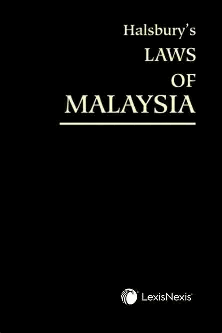
Halsbury’s Laws of Malaysia: Courts and Judicial System
Review by MarcelJude.ai
This is a formidable legal work, and it deserves to be judged for what it is: not a conventional “book” driven by narrative or a single thesis, but a full-scale doctrinal map of the Malaysian judicial system. Read in that light, it is immensely successful. Its ambition is large. It begins with first principles—what a court is, what judicial power means, how courts are classified, how proceedings are conducted in public, how reporting is regulated—and then expands outward into the architecture of the superior courts, the Federal Court, the Court of Appeal, the High Courts, the Special Court, the subordinate courts, Sessions Courts, Magistrates’ Courts, Penghulu’s Courts, Justices of the Peace, Courts for Children, Native Courts, Legal Aid, and offences touching the administration of justice. That range alone makes it more than a handbook. It is a legal ecosystem in book form.
Its strongest virtue is structure. The volume is arranged with the calm confidence of a reference work that knows exactly what it is doing. It does not lunge straight into statutes and case notes. It opens by defining the court itself, distinguishing courts from tribunals, tying adjudication to public authority rather than mere voluntary submission, then moving into procedure, creation of courts, judicial power, language, open justice, reporting, and defamation around judicial proceedings. That opening matters. It gives the rest of the volume an intellectual foundation. By the time the reader reaches the institutional chapters, the book has already made clear that courts are not simply buildings or benches; they are constitutional organs, procedural spaces, and public authorities whose legitimacy depends on law, jurisdiction, and form.
That early conceptual work is one reason the book is better than a bare digest. It does not merely tell you what exists. It makes you see why it exists. The discussion of judicial power, the distinction between superior and inferior courts, the treatment of proceedings in public and in camera, and the detailed explanation of reporting restrictions give the work real jurisprudential weight. Many legal reference books are useful but intellectually thin. This one is useful because it is intellectually organized. Even when the prose remains restrained, the editorial intelligence is visible: doctrine is introduced in a sequence that moves from concept, to institution, to jurisdiction, to administration, to special forums. That is excellent legal design.
The chapters on the superior courts are among the volume’s finest sections. The book does not confine itself to dry constitutional listing. It explores membership, officers, registrars, commissioners for oaths, the code of judicial ethics, the ethics committee, the council of judges, restrictions on parliamentary discussion of judicial conduct, contempt powers, and procedural rule-making. In other words, it treats the judiciary not just as a hierarchy of appeal, but as a disciplined institution with its own internal safeguards, vulnerabilities, and norms. That is a major strength. A lesser editor would have treated ethics, administration, and institutional protection as peripheral. This volume understands that they are central to the meaning of judicial independence.
Its treatment of the Federal Court, Court of Appeal, and High Courts is especially strong because it is both technical and readable—at least readable by legal standards. The Federal Court section, for example, is careful about original jurisdiction, constitutional questions, disputes between the Federation and States, costs, fees, appellate limits, and the absence of any inherent right of appeal absent statute. The chapters on the Court of Appeal and High Courts complement that by locating each court within the broader judicial order rather than describing them in isolation. The result is a volume that teaches hierarchy well. You come away with a sense not only of who sits where, but why particular powers belong where they do.
Where the book becomes most practically impressive, though, is in its treatment of the subordinate courts. These sections are the real engine room of the volume. The discussion of inherent powers, additional powers, the Subordinate Courts Rules Committee, judicial training, subordinate officers, protection of judicial officers, and the granular jurisdictions of Sessions Courts and Magistrates’ Courts gives the reader something close to an operating manual of lower-court justice. The text is attentive to local limits of jurisdiction, preliminary processes, interlocutory orders, civil and criminal competence, record-calling powers, execution, and administrative machinery. This is exactly the kind of material that often gets neglected in grand constitutional writing, yet it is where daily justice actually happens. The book treats it with seriousness, and that seriousness pays off.
Another notable achievement is breadth without total loss of coherence. Specialized and socially important forums are not bolted on as afterthoughts. Courts for Children are handled in a way that foregrounds protection, rehabilitation, trafficking, abduction, and supervision. Native Courts are treated not as curiosities, but as living legal institutions with their own constitutions, jurisdictions, revisionary powers, and procedural norms in Sabah and Sarawak. Legal Aid appears not as a moral flourish but as part of the judicial system’s real accessibility. This breadth makes the volume truer to Malaysian legal reality. It acknowledges that “the courts” are not one thing. They are plural, layered, and sometimes culturally specific.
The book’s weaknesses are mostly the weaknesses of its genre, but they are real. It is dense, heavily segmented, and often more encyclopedic than synthetic. The numbered propositions and relentless cross-references are excellent for retrieval and verification, but they can flatten momentum. A reader looking for sustained argument, historical narrative, or philosophical interpretation will sometimes feel that the book stops just short of its most interesting questions. It will tell you the law, the authorities, the qualifications, and the exceptions; it is less eager to pause and ask what all of that reveals about the judiciary as a political and constitutional culture. The result is authority without much rhetorical lift. That is useful, but it is also limiting.
There is another limitation worth stating plainly. Because the work is faithful to statutory language and inherited legal categories, some passages carry legacy formulations with little editorial distancing. The sections on Penghulu’s Courts, for instance, preserve jurisdictional descriptions that now read as historically sedimented and socially awkward. From one angle, that is a virtue: the book is reporting law, not laundering it. From another, the absence of more explicit contextual framing makes the volume feel occasionally mechanical where a sharper editorial voice might have acknowledged the legal history embedded in the language.
Still, these criticisms do not seriously diminish the book’s accomplishment. This is a powerful work of legal organization. It is exact, broad, disciplined, and plainly designed by people who understand that a judicial system is made not only of judges and appeals, but of jurisdictional thresholds, registries, procedure, ethics, legal aid, subordinate officers, reporting rules, and special courts. Its real triumph is that it turns a potentially shapeless mass of constitutional provisions, statutes, rules, and cases into a system the reader can actually navigate. That is a major editorial achievement.
My final judgment is simple: this is an outstanding legal reference volume—more authoritative than elegant, more exhaustive than interpretive, but deeply valuable because of exactly those qualities. It does not seduce; it equips. It does not dramatize; it clarifies. For practitioners, judges, researchers, and serious law students, it is first-rate. For ordinary readers, it will be demanding, but even they can recognize its seriousness and breadth. As a work of legal exposition, it is impressive; as a map of Malaysia’s judicial order, it is one of those books that earns respect by the sheer steadiness of its method.
- MALAYSIA'S 1ST AI LAWYER - CLICK HERE
- ISMAIL – INTEGRATED SINGAPORE/MALAYSIA AI & LAW (Library)
- OPENING OF SINGAPORE MALAYSIA AI CENTRE AND LAW LIBRARY
- LIFT - LAW INSTRUMENTS FORMS & TEMPLATES
- LAWS OF MALAYSIA FOR SINGAPOREAN DUMMIES
- HANNAH YEOH'S ARTIFICIAL INTELLIGENCE LAW ENCYCLOPEDIA
- LEAD CR - Law Ecosystem Archive Databases on CD-ROM
- BREAKING NEWS FROM MJN
- CLICK HERE CO. PROFILE
- EXCITING NEW SERIES - THE ADVENTURES OF BOBBY TAN -ADVOCATE & SOLICITOR IN THE HIGH COURT OF NORTH BORNEO by marceljude.ai
- MEDICO LEGAL - BY PRISKILA AKWILA & GLORIOUS PETAL SDN BHD - powered by marceljude.ai
- MISCELLANOUS
- ANNOTATED STATUTES OF SABAH - A NEW SERIES
- e-library - marceljude.ai
- DRAFT - DOCUMENT RESEARCH & AUTOMATED FILING TECHNOLOGY
- CLARA – Case Law Analysis & Retrieval AI
- FOR RESEARCH REQUEST CLICK HERE
- CLICK HERE TO ASK ANYTHING
- RAMBO'S LAW - THE LAW OF THE LAW JUNGLE - EXCITING NEW SERIES - CASE ANALYSIS BY JOHN RAMBO @ +60138646786
- PRISKILA AKWILA ADVOCATES - High Court of Sabah & Sarawak @ Kota Kinabalu
- COLA - COMMONWEALTH ONLINE LAWCASES AI -marceljude.ai
- THE LAW LIBRARY THAT COMES TO YOU ANYWHERE AND ANYTIME
- marceljude.ai training academy
