
Canada Digest – IP: Information Technology - mareljude.ai
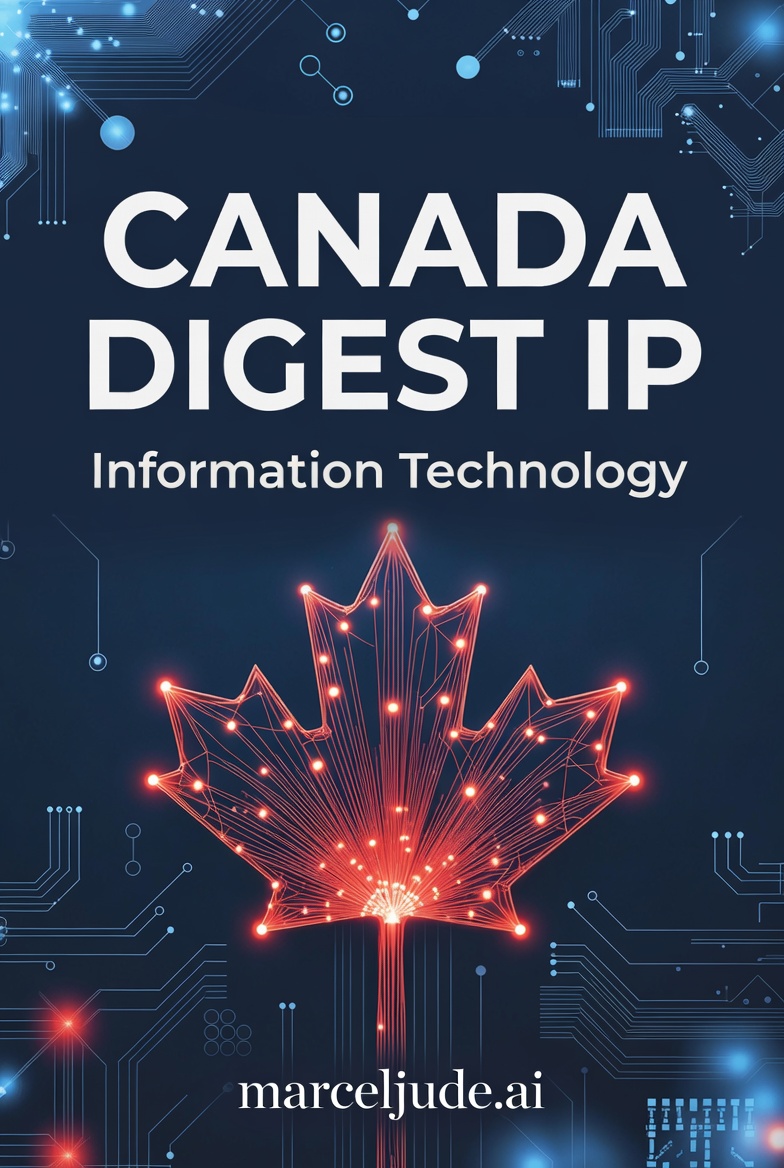
Review of Canada Digest – IP: Information Technology
Canada Digest – IP: Information Technology is a specialised legal research publication devoted to the rapidly developing relationship between law, intellectual property and digital technology. Its principal value lies in organising and summarising Canadian judicial decisions so that researchers can identify relevant authorities without having to read every reported case from beginning to end.
Unlike a conventional textbook, the Digest is primarily a case-finding and research tool. It does not seek merely to explain information technology law through extended academic discussion. Instead, it distils the legal principles established or applied in decided cases and arranges them under practical subject headings. This enables the reader to trace how Canadian courts have dealt with particular technological and intellectual-property disputes.
Scope of the Digest
The subject of information technology law extends far beyond disputes involving computers. Modern commercial activity depends upon software, electronic databases, digital communications, online platforms, cloud services and automated systems. Each of these may raise questions involving ownership, licensing, confidentiality, contractual responsibility, privacy and remedies.
The Digest is therefore potentially relevant to matters concerning:
ownership and licensing of computer software; copyright protection for computer programs and digital material; infringement through electronic copying or distribution; development, installation and maintenance of information systems; technology procurement agreements; internet and website disputes; electronic commerce and online contracting; databases and compilations of information; confidential information and trade secrets; domain names, trademarks and passing off in an online environment; liability arising from failed technology projects; privacy and the collection, storage or disclosure of personal data; electronic evidence and digital communications; and remedies such as injunctions, damages, delivery up and account of profits.
The precise boundaries of information technology law are constantly changing. This makes a digest especially useful because a dispute that appears to concern technology may actually be decided according to principles drawn from copyright, contract, confidentiality, tort, employment, evidence or administrative law.
Organisation and Research Value
A well-constructed digest performs an important intermediary function between a general legal search and the full judgment. It provides concise summaries of the material facts, issues and holdings of the courts. Decisions are classified according to the legal proposition for which they may be relevant.
This method helps the researcher answer several preliminary questions:
Has a Canadian court considered a similar technology or business arrangement? What legal principle did the court apply? Was the decision concerned with copyright, contract, confidentiality, privacy or another field? Was the claim successful, and what remedy was granted? Is the decision sufficiently relevant to justify reading the complete judgment?
This structured approach is particularly valuable when the researcher does not know the name or citation of the relevant case. Searching only by party names is ineffective in an unfamiliar field. The Digest permits research to begin with the legal subject and then proceed to the authorities.
The summaries should not, however, be treated as substitutes for the judgments. A digest necessarily compresses the facts and reasoning. Once a potentially relevant authority has been found, counsel must read the full decision, confirm its subsequent judicial treatment and determine whether any legislation relied upon has since been amended.
Intellectual Property and Software
One of the publication’s most important areas is the protection of computer software. Software disputes frequently involve overlapping proprietary and contractual rights. Copyright may protect the expression embodied in source code or object code, but it does not necessarily confer ownership over every underlying idea, function, process or method of operation.
The Digest assists the researcher in distinguishing between:
protected expression and unprotected ideas; original code and commonplace programming elements; ownership created by employment and ownership created by commission; copyright assignments and mere licences; authorised adaptation and unlawful reproduction; independent development and copying; proprietary software and open-source components; and infringement of copyright and breach of a contractual restriction.
These distinctions are commercially important. A software developer may claim ownership of a program, while the customer may argue that the program was commissioned and paid for as part of a larger development project. A former employee may retain technical knowledge while being prohibited from copying source code or disclosing confidential information. A licensee may be authorised to use software but not to reproduce, modify, sublicense or distribute it.
By directing researchers to cases involving such questions, the Digest provides a useful foundation for advising clients and preparing pleadings.
Technology Contracts
Information technology disputes often arise not because the governing law is completely novel, but because traditional contractual principles must be applied to complicated technical facts.
A technology project may involve specifications, development stages, acceptance testing, data migration, integration with existing systems, cybersecurity obligations, service levels, maintenance and continuing support. When the project fails, the parties may disagree over whether the failure arose from defective software, inadequate specifications, delayed cooperation, changes in scope or unrealistic expectations.
The Digest is valuable in identifying decisions concerning:
interpretation of software-development agreements; performance according to agreed specifications; implied terms and representations about functionality; acceptance testing; delay and project abandonment; limitation and exclusion clauses; warranties and service-level obligations; termination rights; causation and proof of loss; and assessment of damages for failed technology projects.
These cases are useful not only in litigation but also in transactional work. Lawyers drafting technology agreements can learn from the contractual weaknesses exposed in earlier disputes. Judicial decisions reveal which clauses produced uncertainty, which risks were inadequately allocated and what evidence was required when performance was challenged.
Confidential Information and Trade Secrets
Information technology businesses frequently depend upon material that may not qualify for conventional intellectual-property registration. Source code, algorithms, technical processes, architecture, customer information, pricing systems and development plans may instead be protected as confidential information or trade secrets.
The Digest helps to identify the factors considered by courts when deciding whether information possessed the necessary quality of confidence, whether it was communicated in circumstances importing an obligation of confidence and whether it was misused.
This area is especially important in disputes involving employees, consultants and commercial collaborators. Technology is easily copied and transferred, but not every use of knowledge obtained during employment is unlawful. Courts must distinguish between confidential proprietary information and the employee’s general knowledge, experience and skill.
The relevant cases can assist counsel in drafting confidentiality agreements, employment restrictions, intellectual-property assignments and protocols governing access to sensitive digital material.
Internet and Electronic Commerce
The internet has altered the way in which contracts are formed, products are advertised and intellectual property is distributed. The Digest provides a means of locating decisions in which established legal principles have been applied to online conduct.
Such cases may concern website terms, electronic acceptance, online representations, unauthorised copying, intermediary liability, domain names, digital advertising or cross-border transactions. They may also raise difficult jurisdictional questions because the operator, server, customer and alleged injury can be situated in different places.
The publication’s value lies in bringing these decisions into a coherent research structure. Without appropriate classification, an important information technology case might remain hidden under contract, copyright, privacy or civil procedure.
Remedies
Effective legal research must consider not only whether a right has been infringed but also what relief the court may grant. Technology disputes often require urgent intervention because digital material can be copied, transmitted or destroyed within a short time.
The Digest can assist researchers in locating authorities concerning:
interlocutory and permanent injunctions; preservation of electronic evidence; search and disclosure orders; delivery up or destruction of infringing material; damages for copyright infringement; damages for breach of contract or confidence; statutory damages where available; account of profits; tracing of confidential information; and costs.
The availability of an injunction may depend upon the adequacy of damages, the balance of convenience and the risk of irreparable harm. In a software or confidential-information case, delay in applying for relief may seriously weaken the claimant’s position. Digest summaries can help counsel locate comparable cases quickly, although the full decisions must be studied before any application is made.
Strengths of the Publication
The principal strength of Canada Digest – IP: Information Technology is its practical orientation. It reduces the time needed to identify cases and helps the researcher understand how a large body of decisions has been divided into manageable legal propositions.
Its further strengths include:
focused access to Canadian case law; logical subject classification; concise summaries of material decisions; identification of authorities across different courts and jurisdictions; assistance in tracing the development of a legal principle; coverage of overlapping areas such as copyright, contract and confidentiality; and usefulness both for litigation and commercial drafting.
The Canadian jurisdiction is particularly valuable because its courts operate within a common-law tradition while also dealing with federal intellectual-property legislation and rapidly changing technology. Canadian decisions can therefore offer careful and persuasive analyses of problems encountered in other common-law countries.
Limitations
The publication’s greatest limitation is inherent in the digest format. A case summary cannot reproduce the entire factual context, evidence or reasoning of the court. Subtle qualifications may disappear when a lengthy judgment is reduced to a short proposition.
Technology law also changes unusually quickly. A decision involving an earlier form of software distribution or data processing may remain legally important, but its factual setting may no longer correspond with cloud computing, artificial intelligence, blockchain systems or modern online platforms.
Researchers must also account for legislative change. A case decided under an earlier version of a copyright, privacy or electronic-transactions statute may no longer represent current law.
Accordingly, the Digest should be used as the beginning of legal research, followed by:
examination of the full judgment; confirmation of the decision’s subsequent treatment; verification of the applicable legislation; consideration of later technological developments; and comparison with authorities from the relevant local jurisdiction. Value to Malaysian Lawyers, Law Students, Professors and the General Public
For Malaysian lawyers, the Digest provides comparative common-law material on disputes that may not yet have produced an extensive body of reported Malaysian decisions. Canadian judgments can be particularly helpful when Malaysian legislation or precedent does not conclusively address a new technological problem.
Nevertheless, Canadian authorities are persuasive rather than binding in Malaysia. Counsel must first consider the Malaysian statutory framework, including legislation relating to copyright, trademarks, patents, personal data, electronic commerce, digital signatures, computer misuse and evidence. Differences between Canadian and Malaysian statutes must be carefully identified before a Canadian decision is relied upon.
For law students, the Digest demonstrates how conventional legal principles operate in a technological setting. It encourages issue-based research and teaches students to move from a digest entry to the complete authority.
For professors and researchers, it offers an organised starting point for comparative scholarship. It may assist in identifying trends in judicial treatment of software ownership, digital copying, online transactions, privacy and technological innovation.
For the general public and technology entrepreneurs, the publication can provide an initial understanding of the legal risks associated with software development, online business and the management of confidential information. However, digest summaries should not be treated as personalised legal advice.
Overall Assessment
Canada Digest – IP: Information Technology is a valuable specialist research resource for anyone examining the legal consequences of digital technology. Its importance lies less in extended commentary than in its ability to organise case law, identify relevant judicial decisions and guide the reader efficiently toward the full authorities.
The publication is most effective when used together with current legislation, authoritative textbooks and the complete judgments. It cannot replace close legal analysis, but it can substantially improve the speed and direction of that analysis.
For Malaysian legal practice, its principal contribution is comparative. It shows how Canadian courts have applied established principles of copyright, contract, confidentiality, privacy and remedies to new technological circumstances. Used carefully and with proper regard to differences in legislation, it can assist Malaysian lawyers in developing arguments for disputes that lie at the frontier between traditional legal doctrine and modern digital innovation.
- MALAYSIA'S 1ST AI LAWYER - CLICK HERE
- ISMAIL – INTEGRATED SINGAPORE/MALAYSIA AI & LAW (Library)
- OPENING OF SINGAPORE MALAYSIA AI CENTRE AND LAW LIBRARY
- LIFT - LAW INSTRUMENTS FORMS & TEMPLATES
- LAWS OF MALAYSIA FOR SINGAPOREAN DUMMIES
- HANNAH YEOH'S ARTIFICIAL INTELLIGENCE LAW ENCYCLOPEDIA
- LEAD CR - Law Ecosystem Archive Databases on CD-ROM
- BREAKING NEWS FROM MJN
- CLICK HERE CO. PROFILE
- EXCITING NEW SERIES - THE ADVENTURES OF BOBBY TAN -ADVOCATE & SOLICITOR IN THE HIGH COURT OF NORTH BORNEO by marceljude.ai
- MEDICO LEGAL - BY PRISKILA AKWILA & GLORIOUS PETAL SDN BHD - powered by marceljude.ai
- MISCELLANOUS
- ANNOTATED STATUTES OF SABAH - A NEW SERIES
- e-library - marceljude.ai
- DRAFT - DOCUMENT RESEARCH & AUTOMATED FILING TECHNOLOGY
- CLARA – Case Law Analysis & Retrieval AI
- FOR RESEARCH REQUEST CLICK HERE
- CLICK HERE TO ASK ANYTHING
- RAMBO'S LAW - THE LAW OF THE LAW JUNGLE - EXCITING NEW SERIES - CASE ANALYSIS BY JOHN RAMBO @ +60138646786
- PRISKILA AKWILA ADVOCATES - High Court of Sabah & Sarawak @ Kota Kinabalu
- COLA - COMMONWEALTH ONLINE LAWCASES AI -marceljude.ai
- THE LAW LIBRARY THAT COMES TO YOU ANYWHERE AND ANYTIME
- marceljude.ai training academy
