
The Annotated Malaysian Companies Act 2016 General Editor Cheah Foo Seong - marceljude.ai
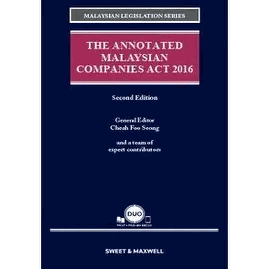


Description
Book Review of The Annotated Malaysian Companies Act 2016
Review author: marceljude.ai Perspective: law professor
I read the book. The work is not a conventional narrative textbook; it is an annotated statute organized by Parts, Divisions, Subdivisions, statutory sections, schedules, and internal auditor chapters. For that reason, this review treats the Parts, Divisions, Subdivisions, and internal Chapters as the book’s “chapter” structure.
The book presents the Companies Act 2016 as a major reconstruction of Malaysian company law, containing 620 sections and 13 schedules, with annotations designed to help readers move from the older company-law regime to the newer one. Its foreword emphasizes the Act’s significance, its relationship with earlier judicial pronouncements, and the value of comparative references to foreign company legislation. The preface explains the reform background: SSM’s Corporate Law Reform Committee process, public consultation, the policy statements behind the new Act, and major reforms such as no-par-value shares, simplified private-company decision-making, stronger governance, corporate rescue, and enhanced enforcement.
List of Contents, with Book Page Numbers
The front matter consists of the Foreword at page v, Preface at page vii, List of Contributors at page xi, Table of Cases at page xxxi, and Table of Statutes at page lix. The main statutory annotation begins at page 1.
Part I: Preliminary, sections 1–8, pages 1–20. This part defines the vocabulary and legal architecture of the Act: commencement, interpretation, corporations, holding/subsidiary relationships, related corporations, and interests in shares.
Part II: Formation and Administration of Companies, sections 9–68, pages 21–93. This part covers company types, incorporation, separate personality, unlimited corporate capacity, company names, constitutions, conversion of status, private/public/company-limited-by-guarantee rules, registered offices, registers, document execution, and annual returns. The book’s contents show Part II beginning at page 21 and running through section 68 at page 93.
Part III: Management of Company, sections 69–430, pages 94–576. This is the largest and most doctrinally dense part. It covers share capital, capital maintenance, share certificates and transfers, solvency statements, reduction of capital, financial assistance, dividends, substantial shareholding, scripless securities, prospectuses, debentures, directors and officers, accounts and audit, indemnity and insurance, meetings, remedies, charges, schemes of arrangement, receivership, and corporate rescue. The book’s contents place directors, duties, secretaries, accounts, and audit across pages 249–393, and meetings from page 398 onward.
Part IV: Cessation of Companies, sections 431–560, pages 577–739. This part covers voluntary and compulsory winding up, liquidators, Court powers, proof and priority of claims, voidable transactions, offences in liquidation, unregistered companies, striking off, and management of dissolved-company assets. The contents place corporate rescue ending at section 430 and Part IV beginning at page 577.
Part V: Miscellaneous, sections 561–620, pages 740–800. This part covers foreign companies, enforcement and sanctions, general evidentiary and filing rules, electronic lodgement, communications, regulations, exemptions, schedules, saving provisions, transitional provisions, and repeal/savings. The contents identify sections 561–579 on foreign companies and sections 580 onward on enforcement and general provisions.
The schedules begin at page 801 and run to page 825, followed by the index beginning at page 827.
Overall Review of the Entire Book
As a law professor, I would classify this book as a practitioner’s statutory commentary with academic usefulness, not as a purely theoretical company-law monograph. Its central strength is that it reads the Companies Act 2016 section by section while placing each provision within the transition from the Companies Act 1965. That makes it valuable for lawyers, company secretaries, directors, auditors, students, and judges who need to understand not only what a provision says but why the newer structure matters.
The book’s best feature is its legislative mapping. It does not merely reproduce the statute; it explains continuity and discontinuity. For example, it highlights the abolition of par value, the shift in private-company meeting requirements, the decoupling of annual returns and financial statements, the role of solvency tests in distributions and capital maintenance, and the introduction of corporate rescue mechanisms. The preface especially stresses audited financial statements, timely disclosure, dividend-solvency rules, winding-up reforms, judicial management, corporate voluntary arrangements, and stronger sanctions.
Doctrinally, the book is strongest where it joins statutory text with case law: separate legal personality, lifting the corporate veil, directors’ duties, auditors’ duties, oppression remedies, derivative actions, schemes of arrangement, receivership, and winding up. It also performs well as a comparative law tool. The foreword specifically praises the comparative approach between the former Malaysian statute and the 2016 regime, supplemented by foreign corporate legislation.
Its limitation is also tied to its format. Because it is an annotated statute, it can become dense, formal, and procedural. It is excellent for legal research but less easy for a beginner who wants a conceptual textbook. The reader must already understand basic company-law ideas such as legal personality, share capital, fiduciary duty, solvency, oppression, floating charges, receivership, and liquidation. For advanced students, however, this density is useful because it forces close reading of statutory language.
My overall judgment: this is a strong, serious, practically authoritative guide to the Malaysian Companies Act 2016, especially for transitional interpretation, compliance, governance, and insolvency practice. It is not light reading, but it is exactly the kind of book a corporate-law practitioner would keep beside the statute.
Chapter-by-Chapter Review Foreword and Preface
The Foreword frames the Companies Act 2016 as a major statutory reconstruction. It stresses that even lawyers familiar with the prior regime must re-examine older case law to decide whether it remains applicable under the new Act. That is a crucial point: corporate law is not only statutory text; it is statutory text interpreted through precedent. The book therefore positions itself as a bridge between statute, case law, and commercial practice.
The Preface is reform-oriented. It explains the CLRC background, stakeholder consultation, accepted recommendations, and policy statements. Its themes are modernization, simplification, accountability, shareholder protection, stronger audit and governance structures, better enforcement, and rescue of financially troubled companies. As a professor, I would say the Preface is not just introductory; it is a guide to the legislative philosophy of the Act.
Part I: Preliminary, sections 1–8, pages 1–20
Part I is the interpretive foundation. It defines the legal grammar of the Act. A student who skips this part will misunderstand the rest of the book because corporate-law consequences often depend on terms such as “company,” “corporation,” “member,” “director,” “subsidiary,” “holding company,” “related corporation,” and “interest in shares.”
The most important sections are sections 2, 4, 7, and 8. Section 2 supplies definitions. Section 4 determines corporate group relationships. Section 7 tells us when corporations are related. Section 8 is critical for disclosure because “interest in shares” extends beyond simple registered ownership. This matters for substantial shareholding, director disclosure, and beneficial-ownership transparency.
Review: Part I is technical but essential. Its legal value is high because it prevents casual reading. The book’s annotations properly treat definitions not as glossary entries but as operative legal rules.
Part II: Formation and Administration of Companies, sections 9–68, pages 21–93
Part II is about the birth, identity, internal constitution, records, and documentary acts of a company. It begins with company types and incorporation, then moves to company name, constitution, registered office, registers, execution of documents, and annual returns.
Its doctrinal heart is sections 18–21. Section 18 explains the effect of incorporation. Section 20 confirms separate legal personality. Section 21 gives companies broad capacity, reducing the old ultra vires problem except where a constitution restricts objects. The book’s treatment of separate legal personality is especially important because Malaysian company law often returns to Salomon-type reasoning and its exceptions.
Sections 31–39 on the constitution are also crucial. The Act changed the older memorandum-and-articles structure. The constitution becomes optional for many companies but remains significant where adopted and mandatory for companies limited by guarantee. Section 39’s non-application of constructive notice is important because it protects outsiders from being presumed to know internal company documents merely because they are registered.
Review: Part II is one of the book’s most useful practical chapters. It explains incorporation as more than a filing act: incorporation creates a legal person, allocates authority, and generates public records that third parties rely on.
Part III: Management of Company, sections 69–430, pages 94–576
Part III is the core of the book. It is almost a complete company-law course by itself.
Division 1: Share and Capital Maintenance, sections 69–191
This division explains shares, capital maintenance, dividends, disclosure of substantial shareholdings, scripless securities, prospectuses, debentures, and restrictions on allotment. Its central theme is capital integrity balanced with commercial flexibility.
The no-par-value regime, solvency statements, capital reduction mechanisms, and dividend-solvency controls show a modern approach. Instead of relying only on formal capital rules, the Act shifts toward solvency and disclosure. The book’s annotations make this shift clear.
Prospectus and debenture provisions are especially important for investor protection. Sections 167 and 168 on civil and criminal liability for prospectus misstatements show the Act’s insistence that capital raising must be truthful and accountable.
Division 2: Members, Directors and Officers, sections 192–242
This is the governance centre. Sections 210–220 on directors’ duties matter deeply. The Act expands the functional meaning of “director” for key duties, includes business judgment protection, reliance on information, delegation responsibility, nominee-director responsibility, and prohibitions against improper use of property, position, information, or opportunity. The book’s annotation to section 210 explains that chief executive, financial, operating, or other primary management officers may be treated as directors for specified duty provisions.
Sections 221–230 regulate conflicts, interested-director voting, disposals, loans, tax-free payments, compensation for loss of office, related-party transactions, and director fees. As a professor, I would stress that these provisions translate fiduciary principles into statutory compliance rules.
Division 3: Accounts and Audit, sections 243–287
This division links company law to financial truth. Sections 243–261 regulate financial statements, accounting standards, internal controls, directors’ reports, circulation, lodgement, and exempt private companies. Section 253 is especially modern because it permits a business review addressing performance, risks, environmental, social, and community matters; the annotation explains that the directors’ report must include required matters and may include a business review.
Sections 262–287 regulate auditors. The book divides auditor provisions into private-company auditors, public-company auditors, and general auditor provisions. This is one of the few places where the book itself uses “Chapter I,” “Chapter II,” and “Chapter III.” The result is doctrinally helpful because auditor appointment, removal, resignation, privilege, and reporting duties differ depending on company type.
Division 4: Indemnity and Insurance, sections 288–289
This division asks how far a company may protect officers and auditors from liability. The law must balance two policies: encouraging competent people to serve and preventing indemnity from becoming a shield for misconduct.
Division 5: Meetings, sections 290–344
This division covers resolutions, written resolutions, meetings, notices, procedures, proxies, class meetings, public-company AGMs, and records. Its importance lies in corporate democracy. The Act simplifies private-company decision-making while preserving formal safeguards for public companies and class rights.
Division 6: Remedies, sections 345–351
This is a major rights-protection chapter. The oppression remedy and derivative proceedings are central to minority protection. The book’s treatment is important because corporate wrongs often harm the company directly and shareholders indirectly; derivative proceedings solve part of that problem by allowing litigation on the company’s behalf with Court leave.
Division 7: Charges, Arrangements, Reconstructions and Receivership, sections 352–393
This division links company law to secured credit and restructuring. Registration of charges protects creditors and third parties. Schemes of arrangement allow compromise with creditors or members. Receivership provisions regulate who may be appointed, how receivers act, their liabilities, accounts, powers, and priorities.
Division 8: Corporate Rescue Mechanism, sections 394–430
This division is one of the Act’s most important reforms. Corporate voluntary arrangement and judicial management introduce rescue-oriented insolvency. Instead of treating insolvency only as liquidation, the Act gives distressed companies tools for rehabilitation. The preface identifies judicial management and corporate voluntary arrangement as new corporate rescue mechanisms intended to assist financially troubled companies.
Review of Part III: Part III is the book’s intellectual centre. It shifts Malaysian company law from formal incorporation and capital rules toward governance, solvency, disclosure, accountability, and rescue.
Part IV: Cessation of Companies, sections 431–560, pages 577–739
Part IV addresses corporate death. It covers voluntary winding up, compulsory winding up, liquidators, Court powers, proof and ranking of claims, voidable transactions, offences, unregistered companies, striking off, and management of residual assets.
The best parts are the winding-up provisions and priority rules. Sections 523–527 determine what debts can be proved, how secured and unsecured creditors rank, and which debts receive priority. Sections 528–535 address transactions that can distort creditor equality, such as undue preference, floating charges, onerous property, execution, attachment, and dissolution avoidance. Sections 536–542 add offence provisions for misconduct during liquidation.
The strike-off provisions in sections 549–555 are also important. They distinguish administrative removal from winding up. Sections 556–560 then solve the practical problem of assets discovered after dissolution or striking off.
Review: Part IV is highly procedural but very important. Its deeper policy is creditor equality, preservation of assets, orderly liquidation, and prevention of abuse by officers or creditors.
Part V: Miscellaneous, sections 561–620, pages 740–800
Part V handles foreign companies, enforcement, sanctions, evidence, electronic filing, communication, regulations, exemptions, schedules, and transitional rules.
Sections 561–579 regulate foreign companies. They require registration before carrying on business in Malaysia, agents, names, registered offices, branch registers, accounts, returns, service of notice, cessation, and property-holding capacity.
Sections 580–598 strengthen enforcement. They cover witnesses, relief, irregularities, investigations, false statements, fraud, and restrictions on public offers. Sections 599–617 handle evidence, registers, electronic lodgement, certified electronic information, filing time, communication, regulations, exemptions, and rule-making.
Sections 618–620 are transitional and historically crucial. They explain how no-par-value transition, old constitutions, pending proceedings, winding up, striking off, and repeal/savings operate. The book’s annotation to section 619 notes that existing memorandum and articles are treated as constitutions unless the company resolves otherwise.
Review: Part V is not merely miscellaneous. It is the machinery that makes the statute enforceable, usable, and transitional.
Every Section Explained with Book Page Numbers Part I: Preliminary
s. 1, p. 1 — Short title and commencement: identifies the Act and its commencement mechanism.
s. 2, p. 1 — Interpretation: supplies the definitions that control the whole statute.
s. 3, p. 10 — Corporation: defines the wider corporate bodies covered beyond ordinary local companies.
s. 4, p. 11 — Subsidiary and holding company: sets the legal tests for corporate control.
s. 5, p. 14 — Ultimate holding company: identifies the top corporate parent in a group.
s. 6, p. 15 — Wholly owned subsidiary: explains complete ownership through parent or nominee structures.
s. 7, p. 16 — Related corporations: connects companies through holding/subsidiary relationships.
s. 8, p. 18 — Interests in shares: extends shareholding analysis to beneficial, indirect, and controlled interests.
Part II: Formation and Administration of Companies
s. 9, p. 21 — Essential requirements: requires a name, members, shares where relevant, and directors.
s. 10, p. 22 — Types of companies: distinguishes companies limited by shares, limited by guarantee, and unlimited companies.
s. 11, p. 23 — Private or public company: classifies companies by public/private status.
s. 12, p. 24 — Guarantee company with share capital: prohibits that hybrid form.
s. 13, p. 24 — Unincorporated associations: restricts large profit-making associations from avoiding incorporation.
s. 14, p. 25 — Incorporation application: states what must be submitted to form a company.
s. 15, p. 26 — Registration for incorporation: gives legal recognition through the Registrar’s register.
s. 16, p. 27 — Refusal of incorporation: allows refusal where requirements are unmet or unlawful purposes appear.
s. 17, p. 28 — Certificate of incorporation: allows issuance of a certificate after registration.
s. 18, p. 29 — Effect of incorporation: turns applicants into a registered corporate body.
s. 19, p. 29 — Registration notice: makes registration conclusive evidence of due registration.
s. 20, p. 30 — Separate legal entity: codifies separate corporate personality.
s. 21, p. 34 — Unlimited capacity: gives the company broad legal capacity like a natural person.
s. 22, p. 35 — Subsidiary holding parent shares: prevents circular ownership that undermines capital and voting integrity.
s. 23, p. 37 — Participating dealer exception: permits certain market-dealer holdings.
s. 24, p. 38 — Third-party protection: protects good-faith securities dealings despite subsidiary-holding restrictions.
s. 25, p. 39 — Company name: regulates required name endings and naming status.
s. 26, p. 40 — Name availability: prevents undesirable, identical, reserved, or prohibited names.
s. 27, p. 41 — Name reservation: creates a procedure to confirm and reserve company names.
s. 28, p. 43 — Change of name: allows a company to alter its corporate identity by resolution and registration.
s. 29, p. 45 — Registrar-directed name change: lets the Registrar correct improper names.
s. 30, p. 45 — Publication of name: requires public display of name and registration number.
s. 31, p. 47 — Constitution: explains that most companies may choose whether to have one.
s. 32, p. 48 — Adoption of constitution: allows adoption by special resolution.
s. 33, p. 49 — Effect of constitution: makes the constitution binding between company and members.
s. 34, p. 50 — Form of constitution: explains what counts as a company constitution.
s. 35, p. 51 — Contents of constitution: allows objects, powers, restrictions, and internal rules.
s. 36, p. 52 — Altering constitution: permits amendment by special resolution unless restricted.
s. 37, p. 53 — Court alteration: allows Court intervention where ordinary alteration is impracticable.
s. 38, p. 54 — Guarantee-company constitution: makes constitutions mandatory for companies limited by guarantee.
s. 39, p. 56 — Constructive notice abolished: protects outsiders from being deemed to know registered internal documents.
s. 40, p. 57 — Unlimited to limited conversion: allows a change from unlimited liability to limited status.
s. 41, p. 58 — Public/private conversion: regulates conversion between public and private company status.
s. 42, p. 60 — Private companies: sets the legal conditions of private-company status.
s. 43, p. 61 — Private-company fundraising prohibition: prevents private companies from public offerings.
s. 44, p. 62 — Offer to the public: clarifies public-offer concepts.
s. 45, p. 63 — Company limited by guarantee: regulates objects, restrictions, and public-interest character.
s. 46, p. 64 — Registered office: requires an accessible official address.
s. 47, p. 65 — Documents at registered office: lists records to be kept available.
s. 48, p. 67 — Inspection: governs member or public access to company documents.
s. 49, p. 68 — Document form: allows modern methods of recording and storing documents.
s. 50, p. 68 — Register of members: makes membership traceable and legally evidenced.
s. 51, p. 71 — Changes in register: requires updating member particulars.
s. 52, p. 71 — Index of members: supports searchability of member records.
s. 53, p. 72 — Branch register: permits member records outside the principal register.
s. 54, p. 74 — Location of register: regulates where registers are kept.
s. 55, p. 75 — Inspection and closing: governs access and temporary closure of registers.
s. 56, p. 76 — Beneficial-interest disclosure: lets companies investigate true ownership of voting shares.
s. 57, p. 78 — Directors, managers, secretaries register: records key officers.
s. 58, p. 79 — Officer particulars: requires notification of changes in directors, managers, and secretaries.
s. 59, p. 81 — Directors’ shareholdings: records directors’ interests for conflict transparency.
s. 60, p. 83 — Debenture-holder register: protects creditors and trustees through records.
s. 61, p. 84 — Company seals: modernizes the role of the common seal.
s. 62, p. 85 — Official seal abroad: allows formal execution outside Malaysia.
s. 63, p. 86 — Seal for share certificates: regulates specialized sealing.
s. 64, p. 87 — Company contracts: explains how companies contract through authority.
s. 65, p. 88 — Pre-incorporation contracts: deals with contracts made before the company exists.
s. 66, p. 90 — Execution of documents: states how companies validly execute instruments.
s. 67, p. 92 — Execution of deeds: sets formal rules for deeds.
s. 68, p. 93 — Annual return: imposes periodic filing for corporate transparency.
Part III: Management of Company
s. 69, p. 94 — Types of shares: identifies permissible share categories.
s. 70, p. 95 — Nature of shares: treats shares as legal property interests.
s. 71, p. 96 — Rights and powers: links shares to voting, dividend, and other rights.
s. 72, p. 96 — Preference shares: regulates preferential economic or voting arrangements.
s. 73, p. 98 — Bearer warrants: prohibits bearer share warrants to improve transparency.
s. 74, p. 99 — No par value: abolishes nominal value and modernizes capital accounting.
s. 75, p. 99 — Directors’ allotment power: limits directors’ power to issue shares or rights.
s. 76, p. 101 — Company approval for allotment: requires shareholder approval for share issues.
s. 77, p. 102 — Registering allotment: records new shareholdings.
s. 78, p. 103 — Return of allotment: requires filing of allotment details.
s. 79, p. 105 — Commissions and discounts: prohibits improper issue-related payments.
s. 80, p. 105 — Permitted commissions: allows limited lawful commissions.
s. 81, p. 107 — Calls and payments: permits differences in payment arrangements.
s. 82, p. 108 — Calls on shares: governs demands for unpaid share capital.
s. 83, p. 110 — Forfeiture: allows shares to be forfeited for unpaid calls.
s. 84, p. 113 — Altering share capital: allows consolidation, subdivision, and stock conversion.
s. 85, p. 114 — Pre-emptive rights: protects existing shareholders from dilution.
s. 86, p. 115 — Shares into stock: regulates conversion of fully paid shares.
s. 87, p. 117 — Stockholders’ rights: preserves rights after conversion into stock.
s. 88, p. 117 — Rights attached to shares: confirms share rights as legally enforceable incidents.
s. 89, p. 118 — Classes of shares: permits differentiated rights.
s. 90, p. 118 — Different class descriptions: requires clarity in class rights.
s. 91, p. 119 — Variation of class rights: regulates changes affecting class shareholders.
s. 92, p. 121 — Notice of variation: requires informing shareholders of changed class rights.
s. 93, p. 121 — Court confirmation: allows challenge to class-right variations.
s. 94, p. 122 — Delivery of Court order: requires filing Court decisions with the Registrar.
s. 95, p. 123 — Registrar notification: ensures public record of variation.
s. 96, p. 124 — Abrogation: treats cancellation of class rights as variation.
s. 97, p. 124 — Share certificate issue: governs certificates as evidence of title.
s. 98, p. 125 — Certificate application: allows members to request certificates.
s. 99, p. 125 — Delivery of certificate: sets delivery obligations.
s. 100, p. 126 — Numbering shares: preserves identification of shares where needed.
s. 101, p. 127 — Register as title evidence: makes registered membership prima facie title.
s. 102, p. 127 — Secretary’s entry duty: requires recording share issues and transfers.
s. 103, p. 128 — Rectification: allows correction of the register.
s. 104, p. 129 — Lost certificates: provides replacement mechanisms.
s. 105, p. 129 — Transfer instrument: requires proper transfer documentation.
s. 106, p. 131 — Registering or refusing transfer: regulates acceptance or refusal of share transfers.
s. 107, p. 132 — Court order for registration: allows Court intervention in transfer disputes.
s. 108, p. 132 — Improperly issued shares: lets the Court validate defective issues.
s. 109, p. 133 — Transmission: governs transfers by death, bankruptcy, or operation of law.
s. 110, p. 135 — Trustee liability: limits liability of trustees registered as owners.
s. 111, p. 136 — Lien on shares: gives companies security over members’ shares where allowed.
s. 112, p. 137 — Solvency test: makes ability to pay debts central to capital decisions.
s. 113, p. 139 — Solvency statement: requires director certification of solvency.
s. 114, p. 140 — Solvency offences: penalizes false or improper solvency statements.
s. 115, p. 140 — Capital reduction: authorizes reduction subject to safeguards.
s. 116, p. 141 — Court reduction: uses judicial supervision for capital reduction.
s. 117, p. 144 — Company reduction procedure: permits private/public reductions outside full Court process.
s. 118, p. 146 — Creditor objection: protects creditors from prejudicial reduction.
s. 119, p. 146 — End of objection period: determines next steps after creditor objection time expires.
s. 120, p. 148 — Court power on objection: lets the Court protect creditor interests.
s. 121, p. 149 — False statements: penalizes groundless or false reduction-related statements.
s. 122, p. 149 — Reduced shares: defines member liability after reduction.
s. 123, p. 150 — Financial assistance: restricts company assistance for acquisition of its own shares.
s. 124, p. 151 — Non-compliance consequences: states effects of breach.
s. 125, p. 151 — General exceptions: permits legitimate assistance in defined cases.
s. 126, p. 152 — Ten-percent assistance: allows limited assistance subject to safeguards.
s. 127, p. 154 — Own-share purchase: regulates buy-backs.
s. 128, p. 157 — Options: governs options over unissued shares.
s. 129, p. 157 — Options register: requires recording options.
s. 130, p. 158 — Interest out of capital: permits capital-funded interest in specific circumstances.
s. 131, p. 159 — Distribution from profit: bars distributions except from profits.
s. 132, p. 161 — Solvent distribution: requires solvency after dividend or distribution.
s. 133, p. 162 — Recovery: allows recovery of unlawful distributions.
s. 134, p. 163 — Substantial-shareholding scope: defines the disclosure regime.
s. 135, p. 164 — Persons bound: identifies who must comply.
s. 136, p. 165 — Substantial shareholder: defines threshold and status.
s. 137, p. 166 — Initial notice: requires substantial shareholders to disclose interests.
s. 138, p. 167 — Change notice: requires notice of changes in interests.
s. 139, p. 168 — Cessation notice: requires disclosure when substantial status ends.
s. 140, p. 170 — Operation of interests: explains how interests are counted.
s. 141, p. 170 — Copy to Registrar: extends disclosure to public filing.
s. 142, p. 171 — Non-residents: adapts notice rules for foreign holders.
s. 143, p. 173 — Time extension: gives Registrar limited flexibility.
s. 144, p. 173 — Register of substantial shareholders: requires company-level disclosure records.
s. 145, p. 175 — Court powers: sanctions defaulting substantial shareholders.
s. 146, p. 177 — Depository interpretation: defines terms for scripless securities.
s. 147, p. 177 — Depositor as member: treats depository account holders as members for listed securities.
s. 148, p. 179 — Book-entry transfer: makes central depository records the transfer mechanism.
s. 149, p. 180 — Depositor rectification: allows correction of depository records.
s. 150, p. 180 — Winding-up disposition exception: protects book-entry transfers from section 472 issues.
s. 151, p. 181 — Exemption: permits exemptions from the depository subdivision.
s. 152, p. 182 — Prospectus application: defines when prospectus rules apply.
s. 153, p. 184 — Ministerial exemption: allows exemption from prospectus subdivision.
s. 154, p. 185 — Registering prospectus: requires registration and lodgement.
s. 155, p. 187 — Prospectus registration: sets registration process.
s. 156, p. 188 — Refusal: allows refusal of defective prospectuses.
s. 157, p. 189 — Document retention: preserves prospectus-related records.
s. 158, p. 190 — Public loans/deposits: treats public borrowing invitations as debenture-related.
s. 159, p. 193 — Prospectus contents: requires adequate disclosure.
s. 160, p. 194 — Expert consent: prevents use of statements without consent.
s. 161, p. 195 — Relief: allows relaxation of form/content requirements.
s. 162, p. 197 — Over-subscription: regulates excess debenture subscriptions.
s. 163, p. 198 — Advertisements as prospectuses: prevents avoidance through promotional material.
s. 164, p. 200 — Offer document deemed prospectus: extends liability to sale-offer documents.
s. 165, p. 202 — Information memorandum: treats certain memoranda as prospectuses.
s. 166, p. 203 — Supplemental/replacement prospectus: manages changed or corrected disclosure.
s. 167, p. 205 — Civil misstatement liability: compensates investors harmed by false prospectus statements.
s. 168, p. 209 — Criminal misstatement liability: penalizes false prospectus disclosure.
s. 169, p. 210 — Non-authorizing persons: protects persons not responsible for issue.
s. 170, p. 211 — Stop order: allows intervention against defective offerings.
s. 171, p. 213 — Debenture rules: defines application of debenture subdivision.
s. 172, p. 214 — Specific performance: allows enforcement of debenture contracts.
s. 173, p. 215 — Perpetual debentures: validates perpetual debt instruments.
s. 174, p. 216 — Re-issue redeemed debentures: permits reissue in defined circumstances.
s. 175, p. 217 — Deposited debentures: treats security deposits as not automatically redeemed.
s. 176, p. 218 — Trustee qualifications: protects debenture holders through trustee rules.
s. 177, p. 220 — Trustee duties: imposes obligations on debenture trustees.
s. 178, p. 223 — Trustee retirement: regulates exit from trusteeship.
s. 179, p. 225 — Trust deed contents: sets minimum protective terms.
s. 180, p. 226 — Irredeemable debentures: gives Court power over unfair irredeemable instruments.
s. 181, p. 228 — Trustee directions: allows trustees to seek Court guidance.
s. 182, p. 229 — Borrowing corporation obligations: requires reporting and information to trustees.
s. 183, p. 232 — Guarantor information: requires guarantor corporations to supply information.
s. 184, p. 233 — Immediate refundability: protects lenders/depositors on specified events.
s. 185, p. 234 — Trustee liability: defines liability of debenture trustees.
s. 186, p. 236 — Minimum subscription: bars allotment unless the required subscription is received.
s. 187, p. 239 — Application money trust: protects subscription money before allotment.
s. 188, p. 240 — Allotment restrictions: imposes conditions before allotment.
s. 189, p. 240 — Statement in lieu: governs substitute disclosure documents.
s. 190, p. 242 — Commencement restrictions: prevents premature business commencement in specified cases.
s. 191, p. 244 — Varying prospectus contracts: restricts changes to disclosed contracts.
s. 192, p. 245 — Member liability: defines member exposure.
s. 193, p. 246 — Calls and forfeiture liability: maintains unpaid-capital obligations.
s. 194, p. 246 — No forced extra shares: protects shareholders from compulsory acquisition of new shares.
s. 195, p. 247 — Management review: gives members a governance-review right.
s. 196, p. 249 — Directors: sets minimum director requirements.
s. 197, p. 249 — Connected persons: defines who is connected with directors.
s. 198, p. 252 — Disqualification: bars unsuitable persons from directorship.
s. 199, p. 254 — Court disqualification: empowers Court to disqualify directors/promoters.
s. 200, p. 257 — Registrar removal: permits removal of disqualified directors from records.
s. 201, p. 257 — Director consent: requires consent to act.
s. 202, p. 258 — Named/subsequent directors: regulates first and later appointments.
s. 203, p. 259 — Public-company individual voting: prevents bundled director elections.
s. 204, p. 260 — Valid acts: protects acts despite appointment defects.
s. 205, p. 261 — Retirement: regulates rotational retirement.
s. 206, p. 263 — Removal: allows removal of directors.
s. 207, p. 264 — Right to be heard: protects public-company directors facing removal.
s. 208, p. 265 — Vacancy: states when office becomes vacant.
s. 209, p. 267 — Sole/last director: protects continuity after resignation, death, or vacancy.
s. 210, p. 268 — Director-duty interpretation: extends key duties to senior managers in specified cases.
s. 211, p. 269 — Board functions: identifies board authority.
s. 212, p. 270 — Board proceedings: regulates internal board process.
s. 213, p. 273 — Directors’ duties: codifies good faith and proper purpose duties.
s. 214, p. 276 — Business judgment rule: protects informed, honest, disinterested decisions.
s. 215, p. 278 — Reliance: permits reasonable reliance on officers and experts.
s. 216, p. 279 — Delegatee actions: regulates responsibility after delegation.
s. 217, p. 280 — Nominee directors: requires nominee directors to serve the company, not merely appointors.
s. 218, p. 281 — Improper use: prohibits misuse of property, position, information, or opportunity.
s. 219, p. 283 — Disclosure duty: requires disclosure of interests.
s. 220, p. 285 — Other law: preserves overlapping duties.
s. 221, p. 287 — Interest disclosure: regulates disclosure of contracts, property, and offices.
s. 222, p. 290 — Interested director voting: restricts conflicted participation.
s. 223, p. 292 — Disposal approval: requires approval for major undertaking/property disposals.
s. 224, p. 295 — Loans to directors: restricts director loans.
s. 225, p. 298 — Loans to connected persons: extends loan controls to connected persons.
s. 226, p. 301 — Tax-free payments: prohibits tax-free director payments.
s. 227, p. 301 — Loss-of-office payments: controls compensation to directors.
s. 228, p. 304 — Director/substantial-shareholder transactions: regulates major related-party non-cash transactions.
s. 229, p. 308 — Exceptions: narrows section 228 through permitted cases.
s. 230, p. 310 — Director fees: requires approval for fees.
s. 231, p. 313 — Service contracts: governs director service contracts.
s. 232, p. 313 — Inspection of contracts: makes contracts available.
s. 233, p. 314 — Member inspection right: lets members inspect and copy.
s. 234, p. 315 — Sole member/director contracts: records contracts where the same person is sole member and director.
s. 235, p. 317 — Secretary requirement: requires company secretarial office.
s. 236, p. 318 — Secretary appointment: regulates appointment.
s. 237, p. 319 — Secretary resignation: sets resignation procedure.
s. 238, p. 320 — Secretary disqualification: bars unsuitable secretaries.
s. 239, p. 321 — Secretary removal: permits removal.
s. 240, p. 321 — Vacancy: prevents prolonged absence of secretary.
s. 241, p. 322 — Registrar registration: establishes registration of practising secretaries.
s. 242, p. 324 — Dual capacity: prevents one person from acting as both director and secretary where separate acts are required.
s. 243, p. 324 — Accounts interpretation: defines accounting terms for the division.
s. 244, p. 325 — Accounting standards: requires compliance with approved standards.
s. 245, p. 328 — Accounts kept: imposes accounting-record duties.
s. 246, p. 331 — Internal control: requires systems to safeguard accounting reliability.
s. 247, p. 332 — Group accounting periods: aligns group financial periods.
s. 248, p. 334 — Directors prepare statements: makes directors responsible for accounts.
s. 249, p. 335 — Financial-statement requirements: sets true-and-fair requirements.
s. 250, p. 338 — Consolidation: includes subsidiaries in group accounts.
s. 251, p. 340 — Board approval: requires board approval of financial statements.
s. 252, p. 341 — Directors’ report: requires directors to report with accounts.
s. 253, p. 342 — Report contents: specifies directors’ report information and possible business review.
s. 254, p. 343 — Banking corporations: adapts reporting for regulated financial institutions.
s. 255, p. 344 — Relief: allows relief from form/content requirements.
s. 256, p. 345 — Valuation statement: lets Registrar require asset valuation.
s. 257, p. 346 — Circulation: requires sending accounts and reports to members.
s. 258, p. 347 — Time allowed: sets timing for circulation.
s. 259, p. 348 — Lodgement: requires filing with Registrar.
s. 260, p. 349 — Exempt private company certificate: regulates exempt private-company filing.
s. 261, p. 350 — Auditor statements: requires auditor-related statements.
s. 262, p. 352 — Outgoing auditor: defines the term for audit-transition rules.
s. 263, p. 352 — Approved auditors: requires approval by the responsible Minister.
s. 264, p. 353 — Company auditors: regulates eligibility and appointment.
s. 265, p. 356 — Auditor firms: governs registration of auditor firms.
s. 266, p. 357 — Auditor powers/duties: sets audit access, reporting, and duty obligations.
s. 267, p. 373 — Private-company auditor appointment: governs private-company auditors.
s. 268, p. 375 — Registrar appointment for private companies: fills auditor vacancies.
s. 269, p. 375 — Private-company auditor term: determines office tenure.
s. 270, p. 376 — Deemed reappointment prevention: lets members block automatic reappointment.
s. 271, p. 377 — Public-company auditor appointment: governs public-company auditors.
s. 272, p. 378 — Registrar appointment for public companies: fills public-company auditor gaps.
s. 273, p. 379 — Public-company auditor term: determines public auditor tenure.
s. 274, p. 380 — Auditor remuneration: fixes how fees are determined.
s. 275, p. 380 — Payment particulars: requires disclosure of payments to auditors.
s. 276, p. 382 — Auditor removal resolution: governs removal.
s. 277, p. 382 — Special notice: protects auditor through notice requirements.
s. 278, p. 384 — Registrar notice of removal: requires filing removal resolution.
s. 279, p. 384 — Written-resolution appointment: regulates appointment by written resolution.
s. 280, p. 386 — Meeting appointment: regulates appointment at member meetings.
s. 281, p. 387 — Auditor resignation: governs resignation.
s. 282, p. 388 — Registrar notice of resignation: requires filing resignation.
s. 283, p. 388 — Resigning public auditor rights: protects outgoing auditors.
s. 284, p. 390 — Cessation notice: requires information when auditor office ends.
s. 285, p. 391 — AGM attendance: gives auditors participation rights when accounts are laid.
s. 286, p. 392 — Qualified privilege: protects auditors and others for proper statements.
s. 287, p. 393 — Duties to debenture trustees: extends audit duties to trustee protection.
s. 288, p. 394 — Indemnity provisions: restricts improper indemnification of directors/officers.
s. 289, p. 394 — Insurance and indemnity: permits limited protection within statutory boundaries.
s. 290, p. 398 — Passing resolutions: establishes resolution methods.
s. 291, p. 400 — Ordinary resolutions: defines ordinary-majority decisions.
s. 292, p. 401 — Special resolutions: defines higher-threshold decisions.
s. 293, p. 403 — Voting rules: sets baseline voting rules.
s. 294, p. 404 — Proxy votes: allows voting through proxies.
s. 295, p. 406 — Joint holders: governs votes where shares are jointly held.
s. 296, p. 407 — Voting objection: regulates challenges to voting entitlement.
s. 297, p. 408 — Private-company written resolutions: enables decisions without meetings.
s. 298, p. 409 — Eligibility: identifies who receives written resolutions.
s. 299, p. 410 — Circulation date: fixes timing.
s. 300, p. 411 — Circulation manner: governs distribution.
s. 301, p. 412 — Directors’ written resolutions: allows director-proposed written resolutions.
s. 302, p. 413 — Member-requested circulation: gives members proposal power.
s. 303, p. 414 — Member-proposed circulation: regulates member initiatives.
s. 304, p. 415 — Expenses: allocates circulation costs.
s. 305, p. 416 — Non-circulation application: allows refusal of abusive or improper proposals.
s. 306, p. 417 — Signifying agreement: states how members approve written resolutions.
s. 307, p. 418 — Agreement period: sets deadline for approval.
s. 308, p. 418 — Electronic means: permits electronic documents.
s. 309, p. 419 — Meeting resolutions: governs resolutions passed at meetings.
s. 310, p. 420 — Convening meetings: identifies who may call meetings.
s. 311, p. 421 — Members require meeting: gives members requisition power.
s. 312, p. 423 — Directors’ duty to call: makes directors respond to requisitions.
s. 313, p. 424 — Member-convened meeting: lets members act at company expense.
s. 314, p. 425 — Court-ordered meeting: allows Court to solve impracticability.
s. 315, p. 426 — Adjourned meeting resolution: fixes effective date.
s. 316, p. 427 — Meeting notice: sets notice periods.
s. 317, p. 429 — Notice contents: requires place, date, time, and business.
s. 318, p. 430 — Adjourned meeting notice: requires new notice for long adjournments.
s. 319, p. 430 — Manner of notice: governs delivery.
s. 320, p. 431 — Website notice: permits website publication.
s. 321, p. 432 — Entitled recipients: identifies who must receive notice.
s. 322, p. 433 — Special notice resolution: governs resolutions requiring special notice.
s. 323, p. 434 — Member statements: lets members require circulation of statements.
s. 324, p. 436 — Directors’ circulation duty: requires directors to circulate proper statements.
s. 325, p. 437 — Court non-circulation: prevents abuse of circulation rights.
s. 326, p. 438 — Electronic meeting documents: permits electronic delivery.
s. 327, p. 439 — Multiple venues: allows meetings at more than one venue.
s. 328, p. 439 — Quorum: sets minimum attendance.
s. 329, p. 442 — Chairperson: regulates meeting chair.
s. 330, p. 443 — Show of hands declaration: evidences voting outcome.
s. 331, p. 445 — Poll demand: preserves more accurate voting.
s. 332, p. 446 — Poll voting: governs poll mechanics.
s. 333, p. 447 — Corporate representatives: allows corporations to attend through representatives.
s. 334, p. 449 — Proxy appointment: regulates proxy authorization.
s. 335, p. 452 — Proxy-right statement: requires notices to mention proxy rights.
s. 336, p. 453 — Proxy as chair: allows proxy to chair meetings.
s. 337, p. 453 — Proxy poll demand: gives proxy poll rights.
s. 338, p. 455 — Proxy authority termination: governs cancellation.
s. 339, p. 455 — Class meetings: applies meeting rules to class-right meetings.
s. 340, p. 457 — Public-company AGM: requires AGMs for public companies.
s. 341, p. 460 — Records of resolutions and meetings: requires minutes and resolution records.
s. 342, p. 461 — Inspection of records: gives inspection rights.
s. 343, p. 462 — Records as evidence: treats records as proof of decisions.
s. 344, p. 463 — Sole-member decisions: records decisions by sole members.
s. 345, p. 464 — Remedies interpretation: defines terms for remedies division.
s. 346, p. 465 — Oppression remedy: protects members from unfairly prejudicial conduct.
s. 347, p. 466 — Derivative proceedings: allows actions on behalf of company.
s. 348, p. 467 — Leave of Court: controls derivative actions through permission stage.
s. 349, p. 468 — Ratification effect: deals with member approval of challenged conduct.
s. 350, p. 469 — Court powers: grants remedial powers in derivative proceedings.
s. 351, p. 470 — Injunction: allows restraint of unlawful acts.
s. 352, p. 471 — Registration of charges: requires security interests to be registered.
s. 353, p. 475 — Types of charge: identifies charges requiring registration.
s. 354, p. 477 — Foreign property charges: regulates charges over property outside Malaysia.
s. 355, p. 478 — Series debentures: governs charge registration for debenture series.
s. 356, p. 479 — Acquired-property charges: requires registration of existing charges on acquired property.
s. 357, p. 480 — Registrar’s charge register: creates public record.
s. 358, p. 482 — Endorsement: requires certificate endorsement on debentures.
s. 359, p. 483 — Assignment/variation: records changes to charges.
s. 360, p. 485 — Satisfaction/release: records discharge of charges.
s. 361, p. 486 — Extension/rectification: allows correction of charge registration.
s. 362, p. 487 — Company charge records: requires internal charge instruments and registers.
s. 363, p. 488 — Foreign documents: deals with documents made outside Malaysia.
s. 364, p. 489 — Foreign-company charges: applies charge rules to foreign companies.
s. 365, p. 490 — Arrangement interpretation: defines arrangement/reconstruction terms.
s. 366, p. 490 — Court compromise/arrangement: permits schemes with creditors or members.
s. 367, p. 494 — Liquidator appointment: lets Court appoint liquidator to assess scheme viability.
s. 368, p. 495 — Restraining proceedings: supports schemes through moratorium-like restraint.
s. 369, p. 497 — Information for arrangement: requires explanatory disclosure.
s. 370, p. 499 — Reconstruction/amalgamation: facilitates corporate restructuring.
s. 371, p. 502 — Offeror buy-out: regulates compulsory acquisition after takeover-like offers.
s. 372, p. 505 — Receiver qualification: sets eligibility.
s. 373, p. 506 — Receiver disqualification: bars unsuitable appointees.
s. 374, p. 507 — Receiver appointment: regulates appointment.
s. 375, p. 508 — Instrument appointment: governs appointment under security instruments.
s. 376, p. 509 — Court appointment: allows judicial appointment.
s. 377, p. 511 — Notice of appointment: requires notification.
s. 378, p. 512 — Vacancy: regulates receiver office vacancy.
s. 379, p. 513 — Cessation notice: requires notice when office ends.
s. 380, p. 514 — Appointment statement: requires statement of appointment circumstances.
s. 381, p. 515 — Receiver liability: defines personal exposure.
s. 382, p. 516 — Contract liability: allocates liability for receiver contracts.
s. 383, p. 517 — Receiver powers: states powers over company property.
s. 384, p. 519 — Court directions: lets receiver seek guidance.
s. 385, p. 520 — Liquidator as receiver: coordinates receivership and winding up.
s. 386, p. 521 — Receiver powers on liquidation: regulates receiver role after liquidation.
s. 387, p. 522 — Remuneration: lets Court fix receiver fees.
s. 388, p. 523 — Information after appointment: requires information to affected parties.
s. 389, p. 525 — Company/director information duty: requires cooperation with receiver.
s. 390, p. 526 — Statement of affairs: requires financial position statement.
s. 391, p. 528 — Receiver accounts: requires lodging accounts.
s. 392, p. 530 — Floating-charge priority: gives certain debts priority over floating charge claims.
s. 393, p. 532 — Enforcement of receiver duties: compels returns and compliance.
s. 394, p. 534 — Corporate rescue interpretation: defines rescue terms.
s. 395, p. 535 — CVA non-application: identifies companies excluded from voluntary arrangements.
s. 396, p. 536 — CVA proposers: identifies who may propose a voluntary arrangement.
s. 397, p. 538 — CVA proposal: sets contents and process.
s. 398, p. 539 — Moratorium: protects company during proposal period.
s. 399, p. 541 — Meetings: summons creditor/member meetings.
s. 400, p. 542 — Meeting decisions: governs approval decisions.
s. 401, p. 543 — Implementation: gives approved proposal effect.
s. 402, p. 545 — Premature ending: addresses failure or early termination.
s. 403, p. 546 — Judicial-management non-application: identifies excluded companies.
s. 404, p. 546 — JM application: allows application for judicial management and manager appointment.
s. 405, p. 547 — JM order: gives Court power to make order and appoint manager.
s. 406, p. 549 — Duration: limits and extends judicial-management orders.
s. 407, p. 550 — Nomination: regulates proposed judicial manager.
s. 408, p. 551 — Notice: requires notice of application.
s. 409, p. 552 — Dismissal: lets Court reject application.
s. 410, p. 553 — Application effect: protects company pending application.
s. 411, p. 554 — JM order effect: creates statutory moratorium and management shift.
s. 412, p. 555 — Notification: requires public indication of judicial management.
s. 413, p. 556 — Vacancy: handles manager vacancy.
s. 414, p. 557 — Manager powers/duties: defines judicial manager authority.
s. 415, p. 560 — Charged property: regulates dealing with secured assets.
s. 416, p. 561 — Agency/liability: treats manager as company agent with defined liability.
s. 417, p. 562 — Vacation/release: governs end of office.
s. 418, p. 563 — Information: requires information flow to and from manager.
s. 419, p. 564 — Statement of affairs: requires company financial statement.
s. 420, p. 565 — Proposals: requires rescue proposals.
s. 421, p. 566 — Creditors’ meeting: considers proposals.
s. 422, p. 567 — Creditors’ committee: enables oversight committee.
s. 423, p. 568 — Managing by proposals: binds management to approved plan.
s. 424, p. 569 — Discharge application: requires discharge where purpose achieved or impossible.
s. 425, p. 570 — Protection of interests: protects creditors and members.
s. 426, p. 572 — Undue preference: imports avoidance principles into judicial management.
s. 427, p. 573 — Delivery/seizure: empowers recovery of property.
s. 428, p. 574 — Cooperation: requires company officers to assist manager.
s. 429, p. 574 — Inquiry: allows investigation into dealings.
s. 430, p. 576 — Winding-up provisions applied: borrows liquidation rules for judicial management.
Part IV: Cessation of Companies
s. 431, p. 577 — Winding-up application: defines scope of winding-up provisions.
s. 432, p. 577 — Modes: distinguishes voluntary and Court winding up.
s. 433, p. 578 — Liquidator qualification: sets eligibility.
s. 434, p. 580 — Government bound: applies selected winding-up rules to Government.
s. 435, p. 581 — Contributory liability: defines past and present member contribution.
s. 436, p. 583 — Nature of contributory liability: characterizes contribution obligations.
s. 437, p. 584 — Death of member: deals with estate liability.
s. 438, p. 584 — Bankruptcy of member: handles bankrupt contributories.
s. 439, p. 585 — Voluntary winding up: states when voluntary winding up may occur.
s. 440, p. 586 — Interim liquidators: permits temporary liquidator appointment.
s. 441, p. 587 — Commencement date: fixes when voluntary winding up begins.
s. 442, p. 588 — Effect: states consequences of voluntary winding up.
s. 443, p. 588 — Declaration of solvency: separates solvent from insolvent voluntary winding up.
s. 444, p. 590 — Members vs creditors winding up: distinguishes the two forms.
s. 445, p. 591 — Liquidator appointment/removal: regulates members’ voluntary liquidator.
s. 446, p. 591 — Vacancy: fills liquidator office.
s. 447, p. 592 — Creditors’ meeting if insolvent: protects creditors when solvency fails.
s. 448, p. 593 — Conversion: turns members’ winding up into creditors’ winding up.
s. 449, p. 594 — Creditors’ meeting: governs creditors’ voluntary winding-up meeting.
s. 450, p. 595 — Liquidators in creditors’ winding up: appoints and controls liquidators.
s. 451, p. 597 — Property/proceedings: regulates company property and litigation.
s. 452, p. 599 — Property distribution: distributes assets in voluntary winding up.
s. 453, p. 601 — Court appointment/removal: lets Court intervene in liquidator office.
s. 454, p. 602 — Remuneration: fixes liquidator payment.
s. 455, p. 603 — Valid acts: preserves acts despite appointment defects.
s. 456, p. 604 — Liquidator powers: lists voluntary liquidator powers.
s. 457, p. 604 — Shares as consideration: permits reconstruction-style sale consideration.
s. 458, p. 606 — Annual meetings: requires reporting during prolonged winding up.
s. 459, p. 607 — Final meeting/dissolution: closes winding up.
s. 460, p. 609 — Creditor arrangement: makes certain arrangements binding.
s. 461, p. 610 — Court questions: allows Court determination.
s. 462, p. 610 — Costs: allocates costs.
s. 463, p. 611 — Limitation: restricts voluntary winding up in some circumstances.
s. 464, p. 612 — Winding-up petition: identifies who may petition.
s. 465, p. 614 — Grounds for Court winding up: lists circumstances for compulsory winding up.
s. 466, p. 616 — Inability to pay debts: defines insolvency trigger.
s. 467, p. 618 — Commencement by Court: fixes start date.
s. 468, p. 619 — Preliminary costs: petitioner must address costs.
s. 469, p. 620 — Court powers on petition: gives Court options after hearing.
s. 470, p. 622 — Stay/restraint before order: protects process before winding-up order.
s. 471, p. 624 — Stay after order: restricts proceedings after winding-up order.
s. 472, p. 625 — Avoidance of dispositions: protects estate after petition/order.
s. 473, p. 627 — Lis pendens: treats petition as pending litigation affecting property.
s. 474, p. 628 — Lodgement of order: requires filing winding-up order.
s. 475, p. 629 — Effect of order: states consequences of winding-up order.
s. 476, p. 630 — Interim liquidator: permits temporary appointment.
s. 477, p. 631 — Liquidator appointment/style: governs Court liquidators.
s. 478, p. 632 — Other liquidator: allows approved liquidator instead of Official Receiver.
s. 479, p. 634 — Remuneration: regulates Court liquidator payment.
s. 480, p. 635 — Official Receiver control: supervises approved liquidators.
s. 481, p. 636 — Minister control: supervises Official Receiver.
s. 482, p. 637 — Resignation/removal: governs Court-liquidator exit.
s. 483, p. 637 — Custody/vesting: transfers control of property.
s. 484, p. 639 — Statement of affairs: requires financial disclosure.
s. 485, p. 640 — Liquidator report: requires investigation/reporting.
s. 486, p. 641 — Liquidator powers: lists powers in Court winding up.
s. 487, p. 642 — Control of powers: supervises liquidator powers.
s. 488, p. 643 — Bank account: requires money handling.
s. 489, p. 644 — Contributories/assets: settles list and applies assets.
s. 490, p. 645 — Release/dissolution: ends liquidator responsibility and company existence.
s. 491, p. 646 — Release/dissolution orders: formalizes release or dissolution.
s. 492, p. 648 — Stay winding up: allows suspension of winding up.
s. 493, p. 649 — Termination: allows winding up to be terminated.
s. 494, p. 650 — Stay/termination matters: sets considerations.
s. 495, p. 651 — Debts by contributory: handles set-off against contributories.
s. 496, p. 653 — Calls: Court may call unpaid capital.
s. 497, p. 653 — Payment into bank: directs company money into named bank.
s. 498, p. 654 — Contributory order: makes order conclusive.
s. 499, p. 654 — Special manager: allows special management of business/property.
s. 500, p. 655 — Claims/distribution: governs creditor claims and asset distribution.
s. 501, p. 656 — Inspection: allows creditors/contributories to inspect books.
s. 502, p. 657 — Summons persons: enables examination of persons connected with company.
s. 503, p. 658 — Public examination: investigates promoters, directors, and officers.
s. 504, p. 660 — Arrest: allows arrest of absconding contributory.
s. 505, p. 661 — Delegation: Court may delegate powers to liquidator.
s. 506, p. 662 — Cumulative powers: preserves overlapping Court powers.
s. 507, p. 663 — Surplus investment: manages surplus liquidation funds.
s. 508, p. 664 — Unclaimed assets: pays unclaimed assets to revenue receiver.
s. 509, p. 665 — Liquidator books: requires record-keeping.
s. 510, p. 666 — Court control: supervises liquidators.
s. 511, p. 667 — Property delivery: compels delivery to liquidator.
s. 512, p. 668 — Official Receiver powers: fills committee-of-inspection gaps.
s. 513, p. 669 — Liquidator notice/address: requires public notice.
s. 514, p. 670 — Liquidator accounts: requires accounting.
s. 515, p. 672 — Defaults: compels liquidator to remedy default.
s. 516, p. 673 — Liquidation notice: requires indication company is in liquidation.
s. 517, p. 674 — Appeal: allows appeal against liquidator decision.
s. 518, p. 674 — Books/papers: governs preservation of company records.
s. 519, p. 676 — Insufficient assets: deals with winding-up expenses when assets are short.
s. 520, p. 677 — Adjourned meeting resolutions: validates adjourned-meeting decisions.
s. 521, p. 677 — Wishes of creditors/contributories: lets liquidator ascertain stakeholder wishes.
s. 522, p. 678 — Evidence commission: allows special evidence-taking.
s. 523, p. 679 — Provable debts: defines debts admitted in winding up.
s. 524, p. 681 — Secured creditors: states rights and duties.
s. 525, p. 683 — Unsecured creditors: states rights and duties.
s. 526, p. 684 — Mutual credit/set-off: allows set-off for mutual dealings.
s. 527, p. 685 — Priorities: ranks preferential debts.
s. 528, p. 689 — Undue preference: avoids preferential transactions.
s. 529, p. 691 — Floating charge: controls floating charges near insolvency.
s. 530, p. 693 — Certain sales recovery: lets liquidator recover value from suspect sales.
s. 531, p. 694 — Onerous property: permits disclaimer.
s. 532, p. 696 — Interpretation: defines terms for execution/attachment rules.
s. 533, p. 697 — Execution/attachment restriction: limits creditor enforcement.
s. 534, p. 698 — Bailiff duties: regulates seized goods.
s. 535, p. 699 — Void dissolution declaration: allows Court to undo dissolution.
s. 536, p. 700 — Officer offences: criminalizes misconduct in liquidation.
s. 537, p. 702 — Liquidator inducement: prohibits improper inducement.
s. 538, p. 703 — Falsification: criminalizes falsifying books.
s. 539, p. 703 — Poor accounts: imposes liability where proper accounts are not kept.
s. 540, p. 704 — Fraudulent trading: imposes liability for fraudulent business.
s. 541, p. 707 — Delinquent officers: allows damages assessment.
s. 542, p. 708 — Prosecution: enables prosecution of delinquent officers and members.
s. 543, p. 710 — Cumulative provisions: applies unregistered-company winding-up rules cumulatively.
s. 544, p. 711 — Unregistered company: defines covered entities.
s. 545, p. 713 — Winding up unregistered companies: permits winding up of such entities.
s. 546, p. 717 — Contributories: identifies contributors in unregistered company winding up.
s. 547, p. 719 — Stay/restraint: gives Court protective powers.
s. 548, p. 721 — Outstanding assets: deals with assets of dissolved unregistered companies.
s. 549, p. 722 — Registrar strike-off: permits administrative removal from register.
s. 550, p. 725 — Strike-off application: allows application to strike off.
s. 551, p. 726 — Intention notice: requires notice before strike-off.
s. 552, p. 728 — Objection: allows objections to strike-off.
s. 553, p. 729 — Withdrawal: permits withdrawal of strike-off application.
s. 554, p. 730 — Effect of strike-off: states legal consequences.
s. 555, p. 731 — Reinstatement: allows Court restoration to register.
s. 556, p. 733 — Registrar representation: lets Registrar act for dissolved company.
s. 557, p. 734 — Outstanding assets vesting: vests assets in Registrar.
s. 558, p. 736 — Disposal of interests: governs disposal of vested property.
s. 559, p. 738 — Registrar/Government liability: limits liability over vested property.
s. 560, p. 739 — Accounts/audit: requires accounting for vested assets.
Part V: Miscellaneous
s. 561, p. 740 — Foreign companies carrying business: requires registration before business in Malaysia.
s. 562, p. 741 — Foreign-company registration: sets registration process.
s. 563, p. 742 — Agent requirement: requires local agent.
s. 564, p. 744 — Name/publication: regulates foreign-company name use.
s. 565, p. 745 — Name, limitation, origin: requires disclosure of incorporation origin and liability status.
s. 566, p. 746 — Registered office: requires Malaysian registered office.
s. 567, p. 747 — Altered documents: requires filing changes.
s. 568, p. 748 — Branch register: allows foreign-company branch register.
s. 569, p. 750 — Share registration: governs branch-register share entry.
s. 570, p. 750 — Share removal: regulates removal from branch register.
s. 571, p. 751 — Index/inspection/closing: governs branch-register access.
s. 572, p. 752 — Transfer/rectification: regulates branch-register transfers and corrections.
s. 573, p. 752 — Prima facie evidence: gives branch register evidential status.
s. 574, p. 753 — Accounts: requires foreign-company accounting records.
s. 575, p. 754 — Financial statements: requires lodgement of financial statements.
s. 576, p. 755 — Annual return: requires yearly foreign-company return.
s. 577, p. 756 — Service of notice: states valid service methods.
s. 578, p. 757 — Cessation: governs stopping business in Malaysia.
s. 579, p. 759 — Immovable property: permits registered foreign companies to hold land subject to law.
s. 580, p. 760 — Witness representation: allows legal representation for examined witnesses.
s. 581, p. 760 — Relief: gives Court power to relieve from liability in proper cases.
s. 582, p. 762 — Irregularities: allows validation of procedural irregularities where justice permits.
s. 583, p. 764 — Unknown shareholder shares: permits disposal where shareholder cannot be found.
s. 584, p. 765 — Shareholding information: compels information on shareholding.
s. 585, p. 766 — Compliance order: lets Court compel statutory compliance.
s. 586, p. 767 — Translation: requires translations of instruments where necessary.
s. 587, p. 768 — Officer protection: protects certain disclosures.
s. 588, p. 769 — General penalty: supplies default penalty.
s. 589, p. 770 — Proceedings: governs how and when proceedings are taken.
s. 590, p. 771 — Ministerial investigation: allows investigation of company affairs.
s. 591, p. 773 — False statements: penalizes false or misleading statements.
s. 592, p. 774 — False reports: penalizes false reporting.
s. 593, p. 775 — False report to Registrar: protects registry integrity.
s. 594, p. 776 — Fraudulent inducement: criminalizes inducing investment by fraud.
s. 595, p. 776 — Officer fraud: targets fraud by officers.
s. 596, p. 777 — Offering restrictions: limits door-to-door/public securities solicitation.
s. 597, p. 780 — Restricted words: controls use of “Limited,” “Berhad,” and “Sendirian.”
s. 598, p. 781 — Delinquent officer prosecution: supports enforcement.
s. 599, p. 782 — Certified copies: gives evidentiary value to certified copies.
s. 600, p. 782 — Statutory requirements evidence: proves compliance matters.
s. 601, p. 783 — Registers/inspection: regulates statutory registers.
s. 602, p. 784 — Register rectification: allows correction.
s. 603, p. 786 — Old records: permits disposal of old records.
s. 604, p. 787 — Electronic lodgement: authorizes electronic filing.
s. 605, p. 788 — Electronic documents: permits electronic issuance.
s. 606, p. 788 — Certified electronic information: makes certified electronic information admissible.
s. 607, p. 789 — Returns enforcement: enforces duty to make returns.
s. 608, p. 790 — Lost/destroyed documents: requires relodgement.
s. 609, p. 791 — Lodgement time: sets filing deadlines and extensions.
s. 610, p. 791 — Lodged particulars: governs manner and content of lodged information.
s. 611, p. 792 — Compliance time: sets compliance periods.
s. 612, p. 792 — Company-member communication: modernizes communication methods.
s. 613, p. 793 — Regulations: empowers regulation-making.
s. 614, p. 794 — Terms and conditions: allows conditions on approvals/exemptions.
s. 615, p. 794 — Exemption: permits statutory exemptions.
s. 616, p. 795 — Rules: empowers procedural rules.
s. 617, p. 795 — Schedule amendment: permits amendment of schedules.
s. 618, p. 796 — Nominal-value transition: handles abolition of par value.
s. 619, p. 798 — General transition: carries forward old acts, constitutions, proceedings, and registrations.
s. 620, p. 800 — Repeal and savings: repeals the old statute while preserving necessary rights and acts.
Final Law-Professor Evaluation
This book succeeds because it does three things at once: it gives the statutory text, annotates the legal meaning, and places the 2016 Act in transition from the older regime. It is strongest on corporate personality, governance, capital maintenance, financial reporting, auditor duties, minority remedies, secured credit, restructuring, and insolvency. Its practical value is very high.
For teaching, I would use it as a reference work rather than a first textbook. For practice, I would treat it as a working companion to the Act. For judicial or advisory work, it is particularly useful because its annotations connect statutory provisions with cases, related provisions, defined terms, and comparative legislation.
The book’s central message is that modern Malaysian company law is no longer only about incorporation and formal compliance. It is about transparent ownership, responsible directors, truthful financial reporting, creditor protection, shareholder remedies, rescue before liquidation, and stronger enforcement. That is why the book matters.
- MALAYSIA'S 1ST AI LAWYER - CLICK HERE
- ISMAIL – INTEGRATED SINGAPORE/MALAYSIA AI & LAW (Library)
- OPENING OF SINGAPORE MALAYSIA AI CENTRE AND LAW LIBRARY
- LIFT - LAW INSTRUMENTS FORMS & TEMPLATES
- LAWS OF MALAYSIA FOR SINGAPOREAN DUMMIES
- HANNAH YEOH'S ARTIFICIAL INTELLIGENCE LAW ENCYCLOPEDIA
- LEAD CR - Law Ecosystem Archive Databases on CD-ROM
- BREAKING NEWS FROM MJN
- CLICK HERE CO. PROFILE
- EXCITING NEW SERIES - THE ADVENTURES OF BOBBY TAN -ADVOCATE & SOLICITOR IN THE HIGH COURT OF NORTH BORNEO by marceljude.ai
- MEDICO LEGAL - BY PRISKILA AKWILA & GLORIOUS PETAL SDN BHD - powered by marceljude.ai
- MISCELLANOUS
- ANNOTATED STATUTES OF SABAH - A NEW SERIES
- e-library - marceljude.ai
- DRAFT - DOCUMENT RESEARCH & AUTOMATED FILING TECHNOLOGY
- CLARA – Case Law Analysis & Retrieval AI
- FOR RESEARCH REQUEST CLICK HERE
- CLICK HERE TO ASK ANYTHING
- RAMBO'S LAW - THE LAW OF THE LAW JUNGLE - EXCITING NEW SERIES - CASE ANALYSIS BY JOHN RAMBO @ +60138646786
- PRISKILA AKWILA ADVOCATES - High Court of Sabah & Sarawak @ Kota Kinabalu
- COLA - COMMONWEALTH ONLINE LAWCASES AI -marceljude.ai
- THE LAW LIBRARY THAT COMES TO YOU ANYWHERE AND ANYTIME
- marceljude.ai training academy
