
UM NOOOOOOO! Akmal: Puppet of PAS? Why UMNO Should Leave the Unity Government – A Prophetic Imperative BY marceljude.ai
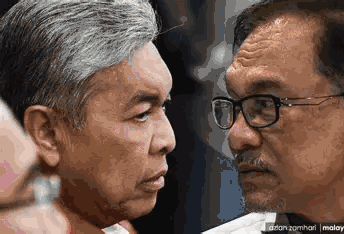
Akmal: Puppet of PAS? Why UMNO Should Leave the Unity Government – A Prophetic Imperative by marceljude.ai
In the swirling vortex of Malaysian politics, few figures embody the contradictions and fractures of the current landscape quite like Datuk Dr Muhamad Akmal Saleh, the UMNO Youth chief. On January 3, 2026, Akmal made headlines with a bold call at the UMNO Youth Special Convention, urging his party to abandon the unity government and forge a new alliance with PAS. Citing compromises on "red lines" involving Malay rights and Islam, he painted a picture of UMNO as a diminished force, merely "making up the numbers" in Prime Minister Anwar Ibrahim's (PMX) administration. But beneath this rhetoric lies a deeper question: Is Akmal merely a puppet of PAS, pulling strings to destabilize the unity government from within? And more crucially, can the government survive without UMNO? As we delve into this, it becomes clear that this moment is not just political—it's prophetic, echoing ancient warnings of division and the need for separation.
Akmal's Call: A Puppet's Strings or Genuine Cry?
Akmal's advocacy for a UMNO-PAS partnership isn't new, but its timing raises eyebrows. He insists that Malay unity demands leadership from the two largest Malay-based parties, dismissing smaller players as prolonging fragmentation. "Umno and Pas must become the main drivers," he declared, invoking divine will for a reunited Malay community. Yet, this smacks of orchestration. PAS, often dubbed the "runaway bride" of Malaysian coalitions, has a history of fleeting alliances. They flirted with UMNO in the Muafakat Nasional pact, only to dump it for Bersatu in forming Perikatan Nasional (PN). Now, with Akmal championing their cause, one can't help but wonder if he's channeling PAS's agenda to erode UMNO's commitment to the unity government.
Critics point to Akmal's inflammatory rhetoric as evidence of external influence. His past outbursts—over issues like socks printed with religious symbols and upside-down flags—have alienated non-Malay voters and even moderate Malays. This was starkly evident in the 2025 Sabah state election, held on November 29, where UMNO and Barisan Nasional (BN) suffered a humiliating defeat. BN was advised to remain in opposition to rebuild trust, but Akmal's "racist and mindless" comments played a pivotal role in the loss. They sparked panic among Sabahans, who value multiracial harmony over divisive peninsular politics. As one analysis noted, the election results showed PH claiming only a single seat, with Akmal's influence weakening federal coalitions' bargaining power in the state. Another opinion piece traced the rot back to PMX allowing Akmal's unchecked behavior, which drove away Chinese voters from Pakatan Harapan (PH). If Akmal continues to drag UMNO down with such tactics, it's no surprise that whispers of him being PAS's proxy grow louder. PAS benefits from UMNO's internal chaos, positioning itself as the true guardian of Malay-Islamic interests while UMNO flounders.
Can the Unity Government Survive Without UMNO? An Analysis Akmal himself provided the ammunition for this debate, claiming the coalition would retain a parliamentary majority even without UMNO's 26 seats. Is this bravado or fact? Malaysia's 15th Parliament, with 222 seats, requires 112 for a simple majority. The unity government, formed post-2022 general election, initially boasted a comfortable buffer through PH (around 82 seats), BN (30, predominantly UMNO), GPS, GRS, and smaller allies. By January 2026, shifts have occurred—defections, by-elections, and regional dynamics like the Sabah polls have tested stability..
Without UMNO's 26 MPs, the math still favors survival. PH, DAP, and allies hold the core, bolstered by East Malaysian blocs like GPS (23 seats) and others committed to federal stability. Recent speculation highlights the government's fragility, with MCA expressing unhappiness and potential exits, but experts deem a full UMNO rupture improbable.Anwar has emphasized that reforms can't assume total control, reminding allies that the government doesn't hold all 222 seats. Yet, the Sabah earthquake—where GRS dominated and PH faltered—shows vulnerabilities, but not collapse. If UMNO leaves, PMX could pivot, courting elements from Bersatu to fill the gap. But not under Muhyiddin Yassin, the "old school" figurehead whose stale leadership echoes past failures. Instead, Hamzah Zainudin, energetic and forward-looking, could lead a reformed Bersatu into the fold. This isn't just strategy—it's tit-for-tat; if Akmal can play at alliances, so can PMX.
The unity government's endurance hinges on economic recovery, political stability, and adherence to the King's decree, as surveys indicate. A 2025 Ilham Centre poll showed eroding Malay support for BN due to DAP cooperation, with only 15% accepting it. But without UMNO's baggage, the government might streamline reforms, unburdened by concessions like the controversial DNAA (Discharge Not Amounting to Acquittal) for UMNO president Zahid Hamidi—a "great favor" that reeks of compromise.
The Prophetic Dimension: Time for UMNO to Go
This isn't mere politics; it's prophetic. As outlined in a reflective piece on Malaysian divisions, the current fractures mirror the Gospel's warnings in Matthew 24:7: "For nation shall rise against nation, and kingdom against kingdom. This verse, from the prophecies of end-times tribulations, speaks to internal strife and alliance breakdowns—much like the infighting in Harapan, Perikatan, and Sabah's narrow margins risking defections. In Malaysia's context, it foretells upheaval if coalitions cling to toxic elements. The gospel quotation resonates: It's time for UMNO to go—those who want to go, that is. PMX has made too many sacrifices to accommodate UMNO, from policy bends to legal leniencies like Zahid's DNAA. Those yearning for PAS's embrace should leave; holding on only prolongs fragmentation.
UMNO's preoccupation with Najib Razak exemplifies this prophetic stall. The party's fixation on his house arrest, pardon board appeals, and legacy acts as an umbilical cord, binding UMNO to corruption scandals and hindering Reformasi. Cutting these ties is essential for UMNO to redefine itself, but as long as Akmal's PAS-puppetry dominates, reform remains elusive. The Sabah loss should be a lesson: Akmal's rhetoric caused panic, leading to BN's opposition role.Continuing this path will only drag UMNO—and potentially the nation—into deeper division.
Conclusion: PMX Must Cut Ties for Malaysia's Future
As 2026 unfolds, the prophetic call is clear: Separation may be painful, but necessary. PMX should let UMNO go if they insist, fortifying the unity government with fresh alliances like a Hamzah-led Bersatu. This isn't abandonment; it's evolution. Echoing Matthew 24:7, Malaysia's kingdoms are rising against each other—UMNO versus progress, PAS's shadows versus unity. By cutting ties with UMNO's dead weight, PMX can steer toward true Reformasi, ensuring the government's survival and the nation's harmony. The time has come: Those who want to go, let them.
- MALAYSIA'S 1ST AI LAWYER - CLICK HERE
- ISMAIL – INTEGRATED SINGAPORE/MALAYSIA AI & LAW (Library)
- OPENING OF SINGAPORE MALAYSIA AI CENTRE AND LAW LIBRARY
- LIFT - LAW INSTRUMENTS FORMS & TEMPLATES
- LAWS OF MALAYSIA FOR SINGAPOREAN DUMMIES
- HANNAH YEOH'S ARTIFICIAL INTELLIGENCE LAW ENCYCLOPEDIA
- LEAD CR - Law Ecosystem Archive Databases on CD-ROM
- BREAKING NEWS FROM MJN
- CLICK HERE CO. PROFILE
- EXCITING NEW SERIES - THE ADVENTURES OF BOBBY TAN -ADVOCATE & SOLICITOR IN THE HIGH COURT OF NORTH BORNEO by marceljude.ai
- MEDICO LEGAL - BY PRISKILA AKWILA & GLORIOUS PETAL SDN BHD - powered by marceljude.ai
- MISCELLANOUS
- ANNOTATED STATUTES OF SABAH - A NEW SERIES
- e-library - marceljude.ai
- DRAFT - DOCUMENT RESEARCH & AUTOMATED FILING TECHNOLOGY
- CLARA – Case Law Analysis & Retrieval AI
- FOR RESEARCH REQUEST CLICK HERE
- CLICK HERE TO ASK ANYTHING
- RAMBO'S LAW - THE LAW OF THE LAW JUNGLE - EXCITING NEW SERIES - CASE ANALYSIS BY JOHN RAMBO @ +60138646786
- PRISKILA AKWILA ADVOCATES - High Court of Sabah & Sarawak @ Kota Kinabalu
- COLA - COMMONWEALTH ONLINE LAWCASES AI -marceljude.ai
- THE LAW LIBRARY THAT COMES TO YOU ANYWHERE AND ANYTIME
- marceljude.ai training academy
