
Agency and Distribution By LAM KAR HAN
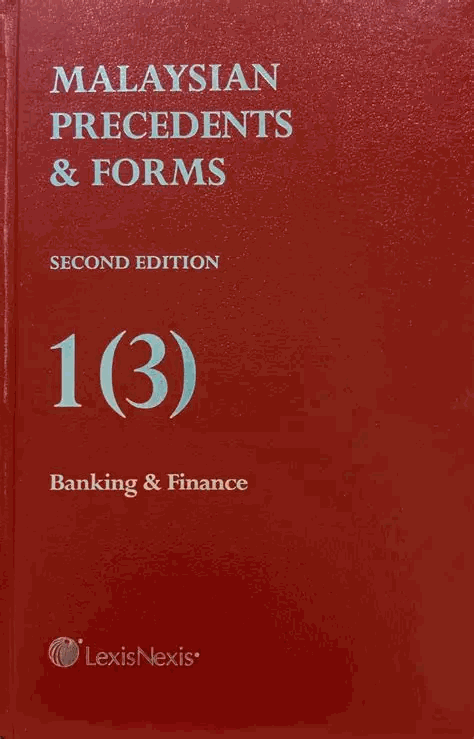


Description
Agency and Distribution
By
LAM KAR HAN
B Econ (University of Sydney) LLB (University of Sydney) Advocate and Solicitor, High Court (Malaya)
Agency and Distribution — Extensive Book Review
Author of review: MarcelJude.ai Perspective: Law professor’s review
I read the book. This is a legal-academic review of Part H.l: Agency and Distribution, a section of Malaysian Precedents & Forms dealing with commercial agency, distribution, drafting checklists, and model agreements. The book itself explains that references are primarily to paragraph numbers, not ordinary page-only citations, and it uses a looseleaf page system with printed H.l page numbers such as H.l 1, H.l 501, and H.l 1001
The book is not arranged like a narrative textbook with “Chapter 1, Chapter 2, Chapter 3.” It is arranged as a professional legal title with Commentary, Checklists & Aids, and Precedents & Forms. For review purposes, I treat each main heading as a chapter and each paragraph heading as a subsection.
Printed page map of the book
The printed page structure for this title is:
Contents: H.l i–H.l ii
Commentary: H.l 1–H.l 500
Checklists & Aids: H.l 501–H.l 1000
Precedents & Forms: H.l 1001–H.l 2400, with the text read through H.l 2309 for the Agency and Distribution title.
The book’s own checklist confirms the major page bands for Part H.l: contents, commentary, checklists, and precedents/forms.
Because this is a looseleaf work, page numbers are not always continuous in the ordinary textbook sense. Some printed page ranges are reserved or skipped for later insertion. That is why the commentary moves from early pages such as H.l 1, H.l 3, H.l 5, H.l 7, H.l 9 to later bands such as H.l 51, H.l 53, H.l 57, H.l 59, H.l 101, H.l 103, H.l 105, H.l 107, and then to the checklist and precedent bands.
List of Contents
Commentary
GENERAL
Introduction — [1] — starts at printed page H.l 1 Meaning and definition of terms — [2]–[50] — H.l 1 onward
CONTRACTS ACT 1950
General — [51] — around H.l 3
Appointment and authority of agents — [52] — around H.l 3
Sub-agents — [53] — around H.l 5
Ratification — [54] — around H.l 5
Revocation of authority — [55] — around H.l 5–H.l 9
Agent’s duty to principal — [56] — around H.l 9
Principal’s duty to agent — [57] — around H.l 51
Effect of agency on contract with third persons — [58] — around H.l 53
Licensing/registration requirements — [59]–[100] — around H.l 57
DISTRIBUTION
General — [101] — around H.l 57
Guidelines — [102] — around H.l 57–H.l 59
Sale of Goods Act 1957 — [103] — around H.l 59
Reservation of title — [104]–[200] — around H.l 59
GENERAL PRINCIPLES IN THE FORMATION OF AGENCY
General — [201] — around H.l 59–H.l 101
Express appointment — [202] — around H.l 59–H.l 101
Agency by estoppel — [203] — around H.l 101
Ratification — [204] — around H.l 101
Agency of necessity — [205] — around H.l 103
Presumption of agency in the case of co-habitation — [206]–[300] — around H.l 103
GENERAL PRINCIPLES AS TO AUTHORITY OF AGENT
Actual authority — [301] — around H.l 103–H.l 105
Apparent or ostensible authority — [302] — around H.l 105
Comparison between implied authority and apparent/ostensible authority — [303]–[400] — around H.l 105–H.l 107
ADDITIONAL COMMENTS ON COMPETENCY OF PARTIES
Capacity to act as principal — [401] — around H.l 107
Capacity to act as agent — [402] — around H.l 107
Delegation — [403]–[450] — around H.l 107
DISPOSITION OF PROPERTY BY AN AGENT
General — [451]–[500] — around H.l 107
Checklists & Aids
Checklist: drafting agency agreements — [501] — H.l 501
Checklist: drafting distribution agreements — [502] — H.l 501
Checklist: licensing — [503]–[1000] — H.l 503
Precedents & Forms
Agreement for master agency — [1001] — H.l 1001 onward
Agreement for master distribution — [1002] — H.l 1101 onward
Agency agreement for goods on consignment — [1003] — H.l 1201 onward
Agency agreement with promotional/marketing duties — [1004] — H.l 1301 onward
Appointment of agent in foreign country — [1005] — H.l 1403 onward
Novation agreement relating to rights and obligations of principal under agency agreement — [1006] — H.l 1505 onward
Tripartite agreement for appointment of sub-agent — [1007] — H.l 1553 onward
Appointment of marketing agent to negotiate character merchandising licences — [1008] — H.l 1655 onward
Agreement for public relations — [1009] — H.l 1757 onward
Agreement for telesales agency — [1010] — H.l 1853 onward
Appointment of agent to manage block of apartments — [1011] — H.l 1953 onward
Appointment of agent to manage commercial property — [1012] — H.l 2053 onward
Appointment of agent to manage shopping centre — [1013] — H.l 2153 onward
Letter from solicitors to foreign lawyers appointing the latter as their agents — [1014] — H.l 2251 onward
Agreement between tour operators and retail travel agents — [1015]–[2000] — H.l 2255–H.l 2309
Overall review of the book
This is a practitioner’s book, not a purely theoretical academic text. Its strongest feature is that it moves from doctrine to drafting consequences. A student reading only the commentary would learn the legal structure of agency and distribution; a practitioner reading the forms would see how that structure is turned into clauses. That dual design is the book’s main intellectual virtue.
As a law professor, I would describe the book as a bridge text. It bridges the Contracts Act 1950, common law agency principles, Malaysian case law, statutory licensing requirements, and the drafting of commercial agreements. The book is especially useful because agency law is a law of consequences: one sentence in an agreement may determine whether the principal is bound, whether an agent is personally liable, whether a sub-agent is validly appointed, whether the principal may terminate, and whether goods remain the supplier’s property.
Its limitation is also clear: because it is a precedents-and-forms work, its explanations are sometimes concise. It gives enough law to guide drafting, but it does not always pause for deeper policy analysis. It assumes the reader is either a lawyer or a legally trained commercial user. In classroom terms, it is better as an advanced drafting companion than as a first beginner’s textbook.
Chapter 1 — General: Introduction and definitions
Printed pages: H.l 1 onward
Paragraphs: [1]–[50]
The opening chapter performs a crucial classificatory function. It distinguishes agency from distribution, and that distinction controls much of the rest of the book.
The book’s introduction explains that agency creates legal relations between a principal and a third party, sometimes without the agent personally acquiring rights or liabilities. Distribution, by contrast, does not ordinarily create a contract between the supplier and the final consumer; the distributor buys and resells on its own account. That distinction is foundational because it determines who is bound, who can sue, who can be sued, and who bears risk in the commercial chain.
The discussion of definitions is also important. The book defines agency in functional terms: the agent acts with authority, express or implied, for the principal. The Contracts Act 1950 definition is broader and practical: an agent is employed to do an act for another or represent another in dealings with third persons. The principal is the person for whom the act is done or who is represented. The distributor, however, is treated differently: the distributor buys and resells as an independent trader.
From a professor’s perspective, this chapter is valuable because it warns against relying on labels. Calling someone an “agent” does not necessarily make that person an agent in law. Courts examine the substance of the relationship. This is one of the book’s recurring lessons: drafting must reflect legal reality, not commercial shorthand.
The key subsection here is Meaning and definition of terms [2]–[50]. It gives the conceptual vocabulary for the rest of the book. Without it, later discussions on authority, ratification, estoppel, distribution, and retention of title would be unstable.
Chapter 2 — Contracts Act 1950 and statutory agency doctrine
Printed pages: approximately H.l 3–H.l 57 Paragraphs: [51]–[59]
This is the doctrinal core of the book. The chapter summarizes how Malaysian agency law is organized under the Contracts Act 1950, especially Part X, sections 135–191. The book does not try to provide a full treatise on every statutory provision; instead, it selects the provisions most relevant to drafting agency and distribution agreements.
General [51]
This subsection states that Malaysian agency law is principally set out in the Contracts Act 1950. It frames the chapter as a practical overview, combining statutory provisions with Malaysian case law. The tone is deliberately concise: enough law to help draft, review, and negotiate commercial documents.
As a law professor, I would say this subsection is modest but important. It reminds the reader that agency is not merely common law imported from England; in Malaysia, it has a statutory spine.
Appointment and authority of agents [52]
This subsection deals with capacity, appointment, authority, and the meaning of “sole” and “exclusive.” It explains that a person of majority age and sound mind may appoint an agent, and that an agent’s authority may be express or implied. It also notes that, generally, no consideration is required to create agency.
The book’s treatment of “sole” and “exclusive” appointments is one of its most commercially useful passages. It warns that these labels can be ambiguous. “Sole” may mean the principal appoints only one agent but still reserves the right to sell directly. “Exclusive” may mean the principal itself will not sell in the territory, though other complexities may arise. The book’s drafting lesson is strong: do not rely on shorthand labels; define the consequences expressly.
This subsection is excellent for contract drafting classes because it shows how doctrinal ambiguity becomes commercial risk.
Sub-agents [53]
The sub-agent discussion explains when an agent may delegate performance and what legal consequences follow. The default rule is restrictive: an agent cannot freely appoint another person to perform duties personally undertaken, unless custom, implication, or the nature of the agency allows it.
The book distinguishes between a properly appointed sub-agent and an improperly appointed one. If properly appointed, the principal may be represented by the sub-agent. If not, the original agent may bear responsibility. This is critical in chains of distribution, property management, overseas agency, travel agency, and marketing arrangements.
As a professor, I would emphasize that this subsection teaches a broader legal principle: agency authority is not automatically transferable. Delegation is a legal event, not merely an operational convenience.
Ratification [54]
The statutory ratification section explains how a principal may later adopt unauthorized acts done on its behalf. If ratified, the act is treated as if originally authorized. The book lists classic prerequisites: the principal must exist and be identifiable; the agent must have had a competent principal; the act must be capable of ratification; and ratification must occur within a reasonable time.
This subsection is doctrinally rich. Ratification is one of agency law’s most elegant devices because it allows law to validate acts after the fact, but only within strict limits. The book rightly emphasizes that a principal cannot selectively ratify only the beneficial parts of a transaction and reject the burdens.
The drafting implication is clear: agreements should regulate unauthorized acts, reporting duties, approval mechanisms, and the consequences of later acceptance.
Revocation of authority [55]
This is one of the most practically important subsections. It explains how agency ends: revocation by the principal, renunciation by the agent, completion of the business, death or unsoundness of mind, or bankruptcy/insolvency.
The most significant issue is termination. The book discusses the tension between contractual termination clauses and statutory rules requiring sufficient cause or reasonable notice in certain circumstances. It cites Malaysian authorities dealing with whether an agency for a fixed period can be terminated early and what compensation consequences follow.
From a professor’s perspective, this subsection shows the real danger of careless termination drafting. A clause saying “either party may terminate by notice” may not answer every statutory issue. The book’s practical value is high here because commercial disputes often arise not at formation but at exit.
Agent’s duty to principal [56]
This subsection covers fiduciary and operational duties. The agent must follow the principal’s directions, act according to business custom where directions are absent, exercise skill and diligence, account properly, communicate in difficulty, avoid secret profits, and avoid self-dealing.
The book correctly treats agency as a fiduciary relationship. This is important because fiduciary law imposes obligations stricter than ordinary contract law. The agent is not merely a contractor performing tasks; the agent is a legal intermediary entrusted with another person’s interests.
This subsection is one of the book’s strongest doctrinal passages. It connects statutory duties with equitable concepts such as loyalty, no secret profit, and accounting.
Principal’s duty to agent [57]
The principal’s obligations are shorter but no less important. The principal must indemnify the agent for lawful acts done within authority and may need to compensate the agent for injury caused by the principal’s neglect or lack of skill.
The book also draws a boundary: a principal is not bound to indemnify an agent for criminal acts. That distinction is morally and legally necessary. Agency law does not protect unlawful enterprise merely because a principal requested it.
This subsection balances the previous one. Agency law is not only about controlling agents; it also protects agents who act lawfully within authority.
Effect of agency on contract with third persons [58]
This subsection is the heart of external agency relations. It explains that contracts made through an agent may bind the principal as though the principal acted personally. It deals with situations where the agent exceeds authority, where parts of the transaction are severable, where notice to the agent counts as notice to the principal, and when an agent may be personally liable.
The book’s discussion of disclosed and undisclosed principals, personal liability, foreign merchants, and statutory presumptions is especially valuable. These are not merely theoretical distinctions; they determine litigation strategy. A claimant may need to decide whether to sue the principal, agent, or both.
The subsection also deals with agency by estoppel and misrepresentation by agents. If the principal’s conduct leads third parties to believe the agent has authority, the principal may be bound. If the agent commits fraud or misrepresentation within the scope of agency business, the principal may be affected.
As a professor, I would describe this as the most litigation-sensitive subsection in the commentary.
Licensing/registration requirements [59]–[100]
This subsection moves from general agency doctrine to regulated professions. It covers estate agents, patent agents, trade mark agents, and travel agents. The book notes that certain agency activities require registration or licensing, and failure to comply may affect enforceability or lead to penalties.
This is one of the book’s most important practical warnings. A well-drafted agency agreement may still fail if the agent lacks the required legal status. The law of agency is therefore not only a law of authority; it is also a law of regulatory eligibility.
Chapter 3 — Distribution
Printed pages: approximately H.l 57–H.l 59 Paragraphs: [101]–[104]
This chapter is shorter than the agency chapter but commercially significant. It explains how distribution differs from agency and why sale-of-goods principles become central.
General [101]
The book notes that appointing a sole distributor may imply that the distributor should not handle rival products. This is commercially logical because sole distribution often assumes loyalty, investment, and market development.
The subsection is brief, but the implication is large: distribution arrangements may carry implied obligations even when they are not phrased as agency. That is why distribution agreements must be drafted carefully.
Guidelines [102]
This subsection addresses foreign participation in distributive trade services in Malaysia. It explains the regulatory framework for wholesale and retail trading and describes distributive trade as the channeling of goods and services through the supply chain.
The value of this subsection is regulatory. A distribution agreement is not only a private law document. It may also be affected by approvals, investment rules, and market-entry conditions.
Sale of Goods Act 1957 [103]
The book correctly links distribution to sale-of-goods law. A distributor usually buys and resells. Therefore, implied conditions, warranties, exclusion clauses, title, quality, fitness, and risk become essential.
The subsection warns that statutory rights and liabilities may arise by implication unless varied by contract, course of dealing, or usage. It also notes that courts construe exclusion of statutory conditions and warranties strictly.
This is a crucial drafting lesson: a distribution agreement must not be drafted as if it were merely an appointment document. It is also a sale contract framework.
Reservation of title [104]–[200]
This subsection discusses reservation of title, commonly associated with Romalpa clauses. The book’s practical concern is continuity of supply. If a distributor becomes financially distressed or goods are seized, a supplier may want to recover goods and keep the market supplied.
The book also notes the limits of such clauses: title protection may be lost if goods are mixed, affixed, or become fixtures. That is an excellent practical insight. A clause is only as strong as the factual traceability of the goods it protects.
As a professor, I would assign this subsection in a commercial law class because it connects contract drafting, insolvency risk, property concepts, and supply-chain continuity.
Chapter 4 — General principles in the formation of agency
Printed pages: approximately H.l 59–H.l 103 Paragraphs: [201]–[206]
This chapter is doctrinally elegant. It explains how agency can arise even when the parties did not neatly sign an agency agreement.
General [201]
The book identifies five ways in which agency may arise: express appointment, estoppel, ratification, implication of law, and presumption of law.
This is a compact but important roadmap. It teaches that agency is not purely formal. It may arise from words, conduct, necessity, later adoption, or legal presumption.
Express appointment [202]
The book explains that an oral appointment may be effective, even where the transaction the agent is authorized to enter would itself require writing. Formal appointment may also occur through a power of attorney or letter of appointment.
This subsection is valuable because it separates two issues often confused by students: the form required for appointing the agent and the form required for the transaction the agent enters. They are not always the same.
Agency by estoppel [203]
This subsection explains that a person may be prevented from denying an agency relationship if their conduct made another person appear authorized and a third party relied on that appearance.
The burden is on the person alleging agency. That is important: agency by estoppel is not automatic. It requires representation, reliance, and legal consequence.
From a drafting perspective, this is why principals must control titles, letterheads, email signatures, public announcements, and negotiation conduct.
Ratification [204]
This subsection returns to ratification at common law and explains how a person can become bound by later adopting a contract made without prior authority. It highlights full knowledge, intention to adopt, and the rule that ratification must be of the transaction as a whole.
The book’s treatment is strong because it links ratification with corporate pre-incorporation contracts. It notes the statutory alteration of common law principles for companies that ratify contracts made before formation.
As a professor, I would note that this subsection is a useful example of how statute modifies common law doctrine.
Agency of necessity [205]
Agency of necessity is treated narrowly. The book explains that a person may bind another in urgent circumstances, but the actor must show necessity and impracticality of communication.
The doctrine is not a license for strangers to interfere. It usually presupposes some existing relationship or commercial context. This is a sensible restraint because otherwise necessity could become a dangerous excuse for unauthorized action.
Presumption of agency in co-habitation [206]–[300]
The book discusses the English law presumption involving a wife living with her husband and pledging his credit for necessaries. It also notes the limited relevance of this presumption in Malaysia.
This subsection is historically interesting but less central to modern commercial agency. Its value lies in showing how agency doctrines once reflected domestic presumptions and how those presumptions must be treated carefully in a Malaysian context.
Chapter 5 — General principles as to authority of agent
Printed pages: approximately H.l 103–H.l 107 Paragraphs: [301]–[303]
This chapter is one of the book’s most important theoretical sections because agency turns on authority.
Actual authority [301]
Actual authority is authority created by agreement between principal and agent. It may be express or implied. Express authority comes from clear words; implied authority is inferred from conduct, office, course of business, or ordinary incidents of the role.
The book’s treatment is orthodox and useful. It reminds lawyers that authority is interpreted like contract: scope matters. If an agent is authorized to negotiate, that does not necessarily mean authorized to sign. If authorized to manage, that may or may not include litigation authority.
The drafting lesson is simple: define the mandate precisely.
Apparent or ostensible authority [302]
Apparent authority concerns how the agent’s authority appears to third parties because of the principal’s representation. The agent may bind the principal even if privately restricted, unless the third party knows of the restriction.
This subsection is vital for commercial risk. Companies frequently suffer disputes where someone signs, negotiates, approves, or represents authority informally. The law protects reasonable third-party reliance, but only where the principal’s conduct justifies it.
As a law professor, I would emphasize that apparent authority is not created by the agent’s self-description alone. It must be traced to the principal’s representation.
Comparison between implied authority and apparent authority [303]–[400]
The book correctly notes that implied authority and apparent authority are not mutually exclusive. Implied authority concerns the internal relationship between principal and agent. Apparent authority concerns the external relationship between principal and third party.
This distinction is one of the most important conceptual tools in agency law. Students often confuse the two because both can operate without express words. But their source is different: implied authority comes from the principal-agent relationship; apparent authority comes from the principal-third party representation.
Chapter 6 — Competency of parties
Printed pages: approximately H.l 107 Paragraphs: [401]–[403]
This chapter is short but foundational.
Capacity to act as principal [401]
The principal must have capacity to do the act personally before appointing someone else to do it. The book connects this to majority age and sound mind under the Contracts Act 1950.
This is legally obvious but practically necessary. Agency cannot be used to enlarge a principal’s own legal capacity.
Capacity to act as agent [402]
The book explains that as between principal and third persons, any person may become an agent; but responsibility to the principal under the Act depends on majority and sound mind.
This distinction is subtle. The agent may effectively bind the principal in external dealings, yet may not be fully responsible internally if lacking capacity. That distinction protects third parties while preserving capacity principles.
Delegation [403]–[450]
Delegation repeats and deepens the sub-agent issue. An agent cannot delegate without express or implied assent. Assent may be implied from trade usage, business nature, or parties’ conduct.
This subsection matters in modern commerce because agents often operate through employees, affiliates, outsourced service providers, and sub-agents. The book’s conservative approach is legally sound: if personal trust, skill, or discretion is involved, delegation should not be assumed.
Chapter 7 — Disposition of property by an agent
Printed pages: approximately H.l 107 Paragraphs: [451]–[500]
This chapter explains when an agent’s disposition of property is effective. If the agent acts within actual authority, the transfer is effective under general principles. If the agent acts within apparent authority, the disposition may also be effective. But mere possession of goods does not necessarily create authority to dispose of them.
This is a concise but powerful subsection. It connects agency law with property law and commercial reliance. The book correctly resists the simplistic idea that possession equals authority. In commercial life, possession may be evidence, but it is not always power.
As a professor, I would call this a high-value reminder for sale-of-goods and secured transactions. Whoever entrusts goods to another must draft and manage authority carefully.
Chapter 8 — Checklists & Aids
Printed pages: H.l 501–H.l 503, with reserved range H.l 504–H.l 1000 Paragraphs: [501]–[503]
The checklists are among the most practically useful parts of the book. They translate doctrine into drafting questions.
Checklist: drafting agency agreements [501]
This checklist asks the drafter to consider the agent’s identity, control of the business, territory, restrictive covenants, insurance, trademarks/business names, and minimum performance.
The checklist is strong because it forces the drafter to confront the business architecture of the relationship. Agency is not only a legal label; it is a system of control, territory, brand use, performance standards, and risk allocation.
The most important items are territory and authority. If those are vague, the parties may later litigate exclusivity, commission entitlement, and power to bind the principal.
Checklist: drafting distribution agreements [502]
This checklist parallels the agency checklist but changes the parties’ roles: supplier and distributor rather than principal and agent. It asks about distributor identity, business control, territory, restrictive covenant, and minimum performance.
Its value lies in preventing the drafter from accidentally drafting a distribution agreement like an agency agreement. In distribution, the distributor usually buys and resells; that affects title, payment, inventory, warranties, and risk.
Checklist: licensing [503]–[1000]
The licensing checklist is detailed. It asks about licensee identity, business address, representatives, territory, language, goods or services, subcontracting, supply obligations, distribution route, intellectual property, materials provided, royalties, payment currency, starting dates, initial fee, quality control, term, trademarks, and compatibility with other licensees.
This checklist is excellent because licensing is where agency/distribution law meets intellectual property and brand control. The strongest items are quality control and trademark registration. In licensing, failure to control quality can harm brand value, while failure to regulate trademark use can create long-term disputes.
Chapter 9 — Precedents & Forms: general assessment
Printed pages: H.l 1001–H.l 2309 in the read text, with the looseleaf band extending to H.l 2400
Paragraphs/forms: [1001]–[1015]
The forms section is the book’s practical engine. It provides model agreements for common commercial situations. As a law professor, I would not tell students to copy these mechanically. Instead, I would teach them to identify the architecture of each precedent: definitions, appointment, scope of authority, obligations, indemnities, restrictions, title, termination, consequences, notices, governing law, variation, costs, assignment, counterparts, binding effect, cumulative rights, and no partnership.
The forms are valuable because they repeatedly reinforce core principles: limit authority, define territory, regulate intellectual property, prohibit unauthorized representations, address sub-agency, provide indemnities, and specify termination consequences.
Form 1 — Agreement for master agency [1001]
Printed pages: H.l 1001 onward, reaching the H.l 1050s and H.l 1101 area
Review
This is the central agency precedent. It appoints an agent, defines the agent’s mandate, regulates rights, sets obligations, and includes provisions on indemnity, restrictions, retention of title, force majeure, termination, post-termination consequences, notices, governing law, assignment, no partnership, and other boilerplate.
The form is strongest in its attempt to prevent accidental authority. It states that the agent is not appointed for activities beyond the defined activities and does not have implied or ostensible authority outside that scope. This is a crucial drafting move because apparent authority disputes often arise from vague appointment language.
The agent’s obligations reflect fiduciary principles: loyalty, diligence, protection of intellectual property, no unauthorized use of marks, no pledging of principal’s credit, no secret profit, reporting, accounts, legal compliance, no unauthorized warranties, no sub-agents without consent, and minimum sales. This mirrors the commentary’s treatment of the agent’s statutory and fiduciary duties.
The termination provisions are detailed, but they also raise a teaching point: a long termination clause must still be read against statutory agency principles on sufficient cause and reasonable notice.
Form 2 — Agreement for master distribution [1002]
Printed pages: H.l 1101 onward, reaching H.l 1201
Review
The master distribution form is structurally similar to the master agency form, but it must be understood differently. A distributor is not normally an agent who binds the supplier; the distributor trades on its own account.
The form tries to preserve that distinction by limiting the distributor’s authority and stating that the distributor does not have implied or ostensible authority to bind the supplier. It also reserves supplier rights: refusal of orders, direct sales, variation of selling price, variation of products, and reduction of territory if minimum sales are not met.
The form’s most important legal device is retention of title. It includes obligations designed to preserve title, such as keeping products separate and preventing commingling, affixation, or fixture status. This connects directly to the commentary’s reservation-of-title analysis.
From a professor’s viewpoint, this form is useful because it shows how distribution agreements combine sales law, agency avoidance, intellectual property control, and insolvency planning.
Form 3 — Agency agreement for goods on consignment [1003]
Printed pages: H.l 1201 onward
Review
This form is for goods supplied to an agent on consignment. It is legally different from a simple sale to a distributor because ownership remains with the principal until sale or other defined event.
The central issue is control of goods. The form includes appointment, definitions, agent obligations, principal obligations, indemnities, restrictions, retention of title/consignment provisions, stock control, stock checks, responsibility for damaged or unmerchantable products, transport costs, recovery rights, termination, and post-termination accounting.
This is one of the most commercially useful forms in the book. It recognizes that consignment creates risk: goods are physically with the agent but legally owned by the principal. The drafting must therefore protect title, require accurate records, and allow inspection/recovery.
The form also reinforces fiduciary obligations. Since the agent handles goods that belong to the principal, accounting and stock control become central duties.
Form 4 — Agency agreement with promotional/marketing duties [1004]
Printed pages: H.l 1301 onward
Review
This form adapts the master agency structure for agents who have promotional and marketing responsibilities. Its distinctive feature is the express obligation to advertise, market, and promote products through visits, correspondence, media advertising, trade shows, and sales personnel.
The form is useful because promotional agents often create legal risk through statements made to customers. The form therefore restricts representations and warranties to those approved by the principal. This is good drafting: marketing authority should not become warranty authority.
As a law professor, I would use this form to teach the difference between promotional authority and contractual authority. A marketing agent may be authorized to generate demand, but not to bind the principal to contractual promises.
Form 5 — Appointment of agent in a foreign country [1005]
Printed pages: H.l 1403 onward
Review
This form extends the agency model into cross-border transactions. It includes conditions precedent, choice of governing law and jurisdiction, and appointment of process agents. These additions are essential in international agency.
The legal difficulty in foreign agency is enforceability. It is not enough to appoint an overseas agent; the parties must consider local approvals, regulatory permissions, service of process, litigation forum, applicable law, and practical enforcement.
This is one of the most sophisticated forms in the book because it recognizes that cross-border agency creates private international law issues. Its conditions precedent are particularly important because foreign regulatory approvals may determine whether the relationship can legally operate.
Form 6 — Novation agreement relating to rights and obligations of principal under agency agreement [1006]
Printed pages: H.l 1505 onward
Review
The novation agreement transfers the principal’s rights and obligations under an existing agency agreement to a transferee, with the agent’s agreement. The form includes definitions, novation, passing of interest, transferee representations, indemnity, preservation of the underlying agency agreement, notices, governing law, variation, costs, further assurances, counterparts, binding effect, and cumulative rights.
This form is doctrinally important because novation is not mere assignment. Assignment may transfer benefits; novation substitutes a party and requires consent. The form correctly structures the transaction as a three-party arrangement: original principal, agent, and transferee.
As a professor, I would highlight this form as an example of contractual continuity. It preserves the agency agreement while changing the identity of the principal.
Form 7 — Tripartite agreement for appointment of sub-agent [1007]
Printed pages: H.l 1553 onward
Review
This form operationalizes the commentary on sub-agents. It involves a principal, original agent, and sub-agent. The original agent appoints the sub-agent with the principal’s agreement.
The form is well-designed because sub-agency is legally sensitive. It identifies the sub-agent’s activities, limits authority, regulates intellectual property, prohibits unauthorized representations, requires reporting and accounts, regulates minimum sales, sets original agent obligations, provides indemnities, restricts competition, retains title, and deals with termination.
Its main teaching value is that sub-agency should not be handled informally. If the original agent appoints a sub-agent without authority, responsibility can shift dramatically. This form prevents uncertainty by making the principal’s consent express.
Form 8 — Appointment of marketing agent to negotiate character merchandising licences [1008]
Printed pages: H.l 1655 onward
Review
This form is specialized and intellectually interesting. It concerns an agent appointed to negotiate licences for character merchandising rights. It combines agency, licensing, intellectual property, royalties, quality control, and approval rights.
The form gives the principal broad discretion to refuse licences negotiated by the agent. This is appropriate because intellectual property owners must control who uses their property and under what terms. The agent’s role is negotiation and procurement, not final grant of rights.
The definitions of licence, merchandising rights, property, products, territory, and standard form are central. This precedent is especially useful because it shows how agency can be used in the commercialization of intangible rights, not merely goods.
From a law professor’s perspective, this is one of the more sophisticated precedents. It demonstrates that agency law remains relevant in intellectual property commercialization.
Form 9 — Agreement for public relations [1009]
Printed pages: H.l 1757 onward
Review
This form is not a classic product-sales agency agreement. It appoints a public relations consultant to provide services. Its key concerns are media dealings, confidentiality, budget control, client approvals, publication outcomes, indemnities, termination, and post-termination goodwill protection.
The form is useful because public relations work creates reputational and defamation risks. The consultant must not exceed the budget, disclose confidential information, misrepresent authority, or cause illegal acts. The client must cooperate by providing information, representatives, materials, and timely instructions.
This form broadens the book’s scope. It shows that “agency” in commercial practice may include service-based representative relationships, not just sale of goods.
Form 10 — Agreement for telesales agency [1010]
Printed pages: H.l 1853 onward
Review
The telesales agreement is highly operational. It defines calls, targets, pitch, territory, minimum performance, commission, and confidential information. Its distinctive feature is control of communications: the agent must make calls only to defined targets, in the defined territory, using the approved pitch.
This is excellent drafting because telesales creates risks of misrepresentation, privacy issues, consumer complaints, and unauthorized warranties. The form controls those risks through script discipline, reporting obligations, and limits on authority.
From a professor’s standpoint, this form teaches how agency agreements should control not merely legal authority but also the factual conduct through which liability may arise.
Form 11 — Appointment of agent to manage block of apartments [1011]
Printed pages: H.l 1953 onward
Review
This form appoints an agent to manage a block of apartments. It is a property management agency. The agent collects rent and service charges, keeps records, maintains accounts, handles repairs, supervises contractors, manages insurance, negotiates tenancies, takes recovery action, and reports to the principal.
The form is detailed because property management is continuous and fiduciary. Money flows through the agent; tenants rely on the agent; repairs and insurance affect property value; and legal proceedings may be required.
The notes connect this precedent to statutory limits on who may carry on property management. This is important because property management may require professional qualification or authorization.
As a professor, I would stress that this form shows agency as administration of another’s property, not merely contract formation.
Form 12 — Appointment of agent to manage commercial property [1012]
Printed pages: H.l 2053 onward
Review
This form is similar to the apartment management form but adapted to commercial property. It defines units, amenity areas, plant, management information, and management obligations. It covers rent collection, service charges, repairs, plant maintenance, insurance, leases, contractors, accounts, and legal action.
The commercial property context heightens complexity. Commercial buildings involve plant such as escalators, lifts, air-conditioning, fire systems, security, and communication systems. The agent’s obligations therefore extend beyond simple rent collection.
The form’s strength is its operational detail. It recognizes that commercial property management is a legal, financial, and technical role.
Form 13 — Appointment of agent to manage shopping centre [1013]
Printed pages: H.l 2153 onward
Review
This form adapts property management to a shopping centre. It uses the term “Centre” and focuses on the management of commercial retail space, common areas, plant, tenants, service charges, repairs, insurance, and lettings.
The shopping centre context is especially demanding because the agent manages not just property but a commercial ecosystem. Tenant mix, foot traffic, common area maintenance, safety systems, service standards, and reputational quality all affect value.
The form resembles Form 12, but its retail setting makes management obligations more commercially sensitive. The legal architecture remains agency, but the business reality is asset management.
Form 14 — Letter from solicitors to foreign lawyers appointing the latter as their agents [1014]
Printed pages: H.l 2251 onward
Review
This is a practical professional-services precedent. It is not a long commercial agreement but a letter appointing foreign lawyers as agents in a foreign jurisdiction.
The form requires client details, enclosed documents, confirmation of terms, trust/client account handling, conflict checks, fee arrangements, expenditure control, reporting, and identification of the responsible lawyer.
The legal value is professional risk management. Solicitors appointing foreign lawyers must control client money, conflicts, authority, fees, reporting, and scope of work. This form is concise but important because cross-border legal agency can create professional responsibility issues.
Form 15 — Agreement between tour operators and retail travel agents [1015]–[2000]
Printed pages: H.l 2255–H.l 2309
Review
This final form concerns tour operators and retail travel agents. It covers appointment, term, entire agreement, duties of the agent, principal’s undertakings, termination, consequences of termination, notices, waiver, acknowledgement, governing law, assignment, no partnership, and commission mechanism.
The form is highly industry-specific. The agent must display brochures, promote travel arrangements, handle client money, ensure booking forms and deposits, refer clients to booking conditions, communicate amendments, advise on insurance, pass complaints and correspondence, collect payments, and avoid unauthorized use of the principal’s name or intellectual property.
The principal must provide promotional materials, ensure brochures comply with law, confirm bookings, pay commission, and issue tickets or vouchers. The form also ties termination to loss of a valid travel agent licence.
This is a strong closing precedent because it combines agency, consumer-facing obligations, regulated travel business, money handling, commission, and documentation. It shows the book’s practical orientation at its best.
Major themes across the whole book
1. The label “agent” is never enough
The book repeatedly teaches that courts and lawyers must look beyond labels. A relationship called “agency” may actually be distribution, consultancy, property management, or another commercial arrangement. Legal consequences depend on authority, control, representation, and the structure of the transaction.
2. Authority is the central legal risk
Nearly every chapter turns on authority: express authority, implied authority, apparent authority, authority to appoint sub-agents, authority to dispose of property, authority to make representations, authority to bind the principal, and authority after termination.
3. Drafting must prevent accidental liability
The forms repeatedly limit the agent’s authority, prohibit unauthorized warranties, restrict use of intellectual property, require reporting, prohibit sub-agents without consent, and provide indemnities. This is not repetition for its own sake; it is risk control.
4. Agency is fiduciary, not merely contractual
The book’s discussion of duties to the principal shows that agency carries loyalty obligations. The agent must not make secret profits, self-deal, misuse property, or fail to account.
5. Distribution is structurally different from agency
The book properly separates distribution from agency. Distribution involves resale, title, sale-of-goods obligations, retention of title, and inventory risk. Agency involves representation and authority to affect the principal’s legal relations.
6. Regulatory compliance matters
The licensing discussion is essential. Estate agents, patent agents, trade mark agents, travel agents, and property managers may be subject to statutory registration or licensing requirements. A contract cannot be evaluated only as a private bargain.
7. The precedents are teaching instruments
The forms are not merely templates. Each one demonstrates a legal theory in drafting form. Master agency demonstrates authority control. Master distribution demonstrates reseller status and title retention. Consignment demonstrates property and accounting. Foreign agency demonstrates jurisdiction and process. Sub-agency demonstrates consent. Public relations and telesales demonstrate communications risk. Property management demonstrates fiduciary administration. Travel agency demonstrates regulated consumer-facing agency.
Critical evaluation
The book’s great strength is practical precision. It does not waste space on abstract theory when drafting consequences are more urgent. It understands that commercial lawyers need clauses that respond to actual disputes: authority, termination, indemnity, title, intellectual property, accounts, and regulatory compliance.
Its second strength is organization. The paragraph-number system allows the reader to move from commentary to forms and back again. The cross-referencing method is deliberate; the book explains that commentary paragraphs and forms use part-and-paragraph references such as H.l [301] or H.l [1001].
Its weakness is that some sections are very compressed. For example, distribution receives much less doctrinal treatment than agency, even though distribution disputes can be highly complex. Likewise, competition law, consumer protection, data protection, and modern digital platform agency issues are not developed in depth in the sections reviewed. That does not make the book poor; it reflects its function as a precedents and forms work.
As a classroom text, it would need supplementation with cases and statutes. As a practitioner’s drafting reference, it is strong.
Final judgment
Agency and Distribution is a highly useful legal drafting title. It succeeds because it treats agency as both a doctrinal relationship and a drafting problem. It teaches the lawyer to ask: Who is principal? Who is agent? Who can bind whom? What is the territory? What authority exists? What happens if authority is exceeded? Who owns the goods? Who bears risk? Who must be licensed? What happens on termination?
As a law professor, I would rate the book highly for advanced commercial drafting, Malaysian agency law practice, and contract-risk analysis. Its value lies not in literary style but in professional utility. It is a working lawyer’s map of agency and distribution risk.
- MALAYSIA'S 1ST AI LAWYER - CLICK HERE
- ISMAIL – INTEGRATED SINGAPORE/MALAYSIA AI & LAW (Library)
- OPENING OF SINGAPORE MALAYSIA AI CENTRE AND LAW LIBRARY
- LIFT - LAW INSTRUMENTS FORMS & TEMPLATES
- LAWS OF MALAYSIA FOR SINGAPOREAN DUMMIES
- HANNAH YEOH'S ARTIFICIAL INTELLIGENCE LAW ENCYCLOPEDIA
- LEAD CR - Law Ecosystem Archive Databases on CD-ROM
- BREAKING NEWS FROM MJN
- CLICK HERE CO. PROFILE
- EXCITING NEW SERIES - THE ADVENTURES OF BOBBY TAN -ADVOCATE & SOLICITOR IN THE HIGH COURT OF NORTH BORNEO by marceljude.ai
- MEDICO LEGAL - BY PRISKILA AKWILA & GLORIOUS PETAL SDN BHD - powered by marceljude.ai
- MISCELLANOUS
- ANNOTATED STATUTES OF SABAH - A NEW SERIES
- e-library - marceljude.ai
- DRAFT - DOCUMENT RESEARCH & AUTOMATED FILING TECHNOLOGY
- CLARA – Case Law Analysis & Retrieval AI
- FOR RESEARCH REQUEST CLICK HERE
- CLICK HERE TO ASK ANYTHING
- RAMBO'S LAW - THE LAW OF THE LAW JUNGLE - EXCITING NEW SERIES - CASE ANALYSIS BY JOHN RAMBO @ +60138646786
- PRISKILA AKWILA ADVOCATES - High Court of Sabah & Sarawak @ Kota Kinabalu
- COLA - COMMONWEALTH ONLINE LAWCASES AI -marceljude.ai
- THE LAW LIBRARY THAT COMES TO YOU ANYWHERE AND ANYTIME
- marceljude.ai training academy
